
Your Guide to the 10 Shilling Note Value and History
Posted by: Ian Stainton • 30 Mar 2026
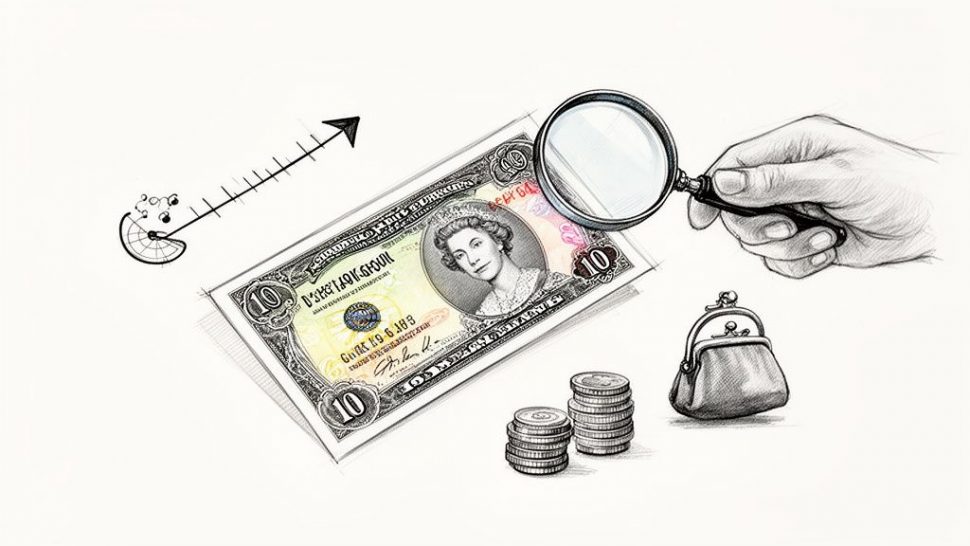
Ever stumbled across an old 'ten bob note' tucked away in a book or drawer and wondered what it was? The 10 shilling note was a staple of British life for more than forty years, but it’s no longer legal tender. While you can't use it in shops today, it often has value for collectors or can be exchanged for cash with the right service.
From Pocket Money to Prized Collectable

The 10 shilling note, or the ‘ten bob note’ as it was fondly known, was a common sight in purses and wallets all over Britain for decades. For many, it's a real piece of history, connecting them to a time before the UK switched to decimal currency back in 1971.
The Bank of England first rolled out its version in 1928, making it the smallest denomination banknote the central bank ever issued. It packed a punch, too; back in the 1960s, a single ten bob note could get you about six pints of beer or ten loaves of bread. After a 40-year run, it was finally taken out of circulation on 22 November 1970 to make way for the new 50p coin. You can dive deeper into its fascinating journey by exploring the story of the Bank of England 10 shilling note.
What Should I Do with My Old Currency?
So you’ve found a 10 shilling note, or maybe you have a whole jar of leftover foreign currency from holidays past. It’s easy to assume it’s worthless now, but those old coins and notes can often be turned back into cash. At We Buy All Currency, we offer a fast, easy, and hassle-free way to exchange your old money.
Our service is designed to be as simple as possible. You don't need to spend hours sorting through piles of coins or trying to identify different notes. We make it easy to exchange foreign coins and notes, whether they're obsolete, from pre-euro countries, or just leftover holiday money. This covers everything from a single 10 shilling note to a big collection of mixed currency.
We offer a 100% guaranteed service, so you can be confident you’ll get the value we quote. Our reputation is built on trust, and we’re proud to be the go-to partner for major UK organisations, including:
- Leading supermarkets and airports
- National charities and police forces
These well-known brands count on us for our transparent and efficient process. Whether you want to convert foreign coins and banknotes for yourself or donate foreign coins to charity, we provide a simple path forward. To get started, just pop over to our homepage for a quick quote and see how easy it is to turn forgotten money into real cash.
The Wartime Story Behind the First Ten Bob Notes
The familiar brown and red 10 shilling note has a surprisingly dramatic origin, one born not in peacetime but from the chaos of the First World War. The note we think of as the 'ten bob note' wasn't a Bank of England idea—it was an emergency measure rushed out by the British government in 1914.
Back then, the smallest banknote you could get was the Bank of England £5 note. As the country slid towards war, a wave of panic buying hit. People started hoarding gold and silver coins, and banks held onto their reserves, creating a massive shortage of cash for everyday shopping. Suddenly, there wasn't enough money around to pay for groceries or even a bus fare.
An Unprecedented Government Intervention
With the economy on the verge of grinding to a halt, the government knew it had to act decisively. In a move that was unheard of at the time, HM Treasury took matters into its own hands and began issuing its own banknotes—a role usually reserved for the Bank of England. It was a bold step, born out of pure necessity.
These first emergency notes, known as Treasury Notes, were issued in denominations of £1 and 10 shillings. They were printed as quickly as possible to get usable currency back into people's hands and restore a bit of public confidence. Featuring a portrait of King George V, they became the very first small-denomination banknotes to be widely used across England.
The 10 shilling note's journey from an emergency wartime fix to a piece of history reveals a fascinating chapter in British money. It started not with the Bank of England, but with the Government stepping in during the First World War. These Treasury notes were pioneers, becoming the first small banknotes widely circulated in England. You can learn more about the ten bob note's history and its critical role during the war.
The Legacy of the Wartime Note
These early Treasury notes were much more than just a temporary solution; they changed how Britain thought about paper money forever. They stayed in circulation for 14 years, seeing the country through the war and the difficult years that followed. Their success paved the way for the Bank of England to finally take over printing 10 shilling and £1 notes in 1928, leading to the iconic designs most of us recognise.
Because they were produced in a rush and hold such historical weight, the original 1914 Treasury notes are now incredibly rare and highly sought after by collectors. They are a tangible piece of history, representing a moment when the government acted directly to keep the nation’s finances afloat.
If you happen to have one of these historical treasures, or any other leftover foreign currency, you could be sitting on something of real value. We know that trying to exchange old or obsolete money can seem like a hassle, but our service is designed to be fast, easy, and hassle-free.
There’s no need for you to sort through different coins or try to identify old notes—we handle everything. As a trusted partner for major UK charities, supermarkets, and even police forces, we offer a 100% guaranteed service to exchange foreign coins and notes. Whether you want to convert foreign coins and banknotes into cash for yourself or donate foreign coins to charity, we provide a simple, credible solution. Find out just how easy it is to unlock the value in your old currency by visiting our homepage.
How to Identify Your 10 Shilling Note Series
Found an old 'ten bob' note tucked away and wondering what you've got? Figuring out which version you have is the first step in uncovering its story and what it might be worth. The 10 shilling note actually covers three different series issued over many decades, and each one has its own unique character.
Don't worry, telling them apart is easier than you think. The main clues are who issued it (the Treasury or the Bank of England), the portrait, the main colour, and the signature of the Chief Cashier. Let's walk through what to look for.
This simple chart shows how the crisis of the First World War forced the government's hand, leading directly to the creation of the very first Treasury-issued 10 shilling notes.

It’s a great visual reminder that without the emergency measures of WWI, the government wouldn't have stepped in to print its own money, setting the stage for all the notes that followed.
To make identifying your banknote even easier, here's a quick comparison of the three main series.
Key Features of 10 Shilling Note Series
| Feature | Treasury Emergency Issue (1914-1928) | Bank of England Series A (1928-1960) | Bank of England Series C (1961-1970) |
|---|---|---|---|
| Issuer | "United Kingdom of Great Britain and Ireland" | "Bank of England" | "Bank of England" |
| Portrait | King George V | Seated Britannia | Queen Elizabeth II |
| Main Colour | Black and White | Red-Brown / Orange | Brown |
| Key Signatory | John Bradbury | 5 different Chief Cashiers | 3 different Chief Cashiers |
This table gives you a quick snapshot, but let's dive into the details of each version.
The Treasury Emergency Issue (1914-1928)
The very first 10 shilling notes weren't from the Bank of England at all. They were emergency currency printed by the UK Treasury at the outbreak of World War I. Because of this, they are the rarest and often the most valuable.
- Issuer: Look for "United Kingdom of Great Britain and Ireland" at the top.
- Portrait: It features a striking portrait of King George V on the right.
- Signature: Signed by John Bradbury, the Secretary to the Treasury. His famous signature is a key identifier.
- Colour: These early notes were simply printed in black ink on special watermarked paper.
If your note has these features, you're holding a genuine piece of history. Collectors prize these Treasury notes for their rarity and direct connection to a pivotal moment for Britain.
The Bank of England 'Red-Brown' Note (Series A)
In 1928, the Bank of England took over and issued its first-ever 10 shilling note. This is the design many people picture when they think of the pre-war and post-war years, as it stayed in circulation for over 30 years.
- Issuer: The note clearly states "Bank of England" at the top.
- Design: It features a classic image of a seated Britannia on the left, not a monarch.
- Colour: You can't miss its distinctive red-brown and orange colour scheme.
- Signatures: These notes were issued under five different Chief Cashiers, from B.G. Catterns to L.K. O'Brien. The signature can make a big difference to a collector.
A special emergency version of this note was printed during World War II. It had a metal security thread woven into slightly pinker paper to foil Nazi forgery efforts. Finding one of these wartime issues is a fantastic discovery!
The Final Portrait Note with Queen Elizabeth II (Series C)
Introduced in 1961, the final version of the 10 shilling note is probably the most familiar to anyone who remembers pre-decimal currency. It was smaller and had a much more modern feel.
- Issuer: Once again, it’s clearly marked "Bank of England".
- Portrait: This was the first 10 shilling note to feature a portrait of a young Queen Elizabeth II.
- Colour: It kept the traditional brown colour but with a more complex and intricate design.
- Signatures: Issued under three Chief Cashiers: L.K. O'Brien, J.Q. Hollom, and J.S. Fforde.
Once you've identified your note, you might wonder what to do with it, especially if you have other leftover foreign currency sitting in a drawer. Turning old notes and coins into cash can seem like a hassle, but our service makes it fast, easy, and stress-free.
We are trusted by major brands, including national charities, supermarkets, airports, and police forces, who all rely on our credible and efficient process. You don't even need to sort your currency; just send it all to us. Whether you want to exchange foreign coins and notes for yourself or donate foreign coins to charity, we provide a 100% guaranteed solution. See how simple it is by visiting our homepage.
What Factors Determine Your Note's Value
So, you’ve figured out which 10 shilling note you're holding. The next big question is, what’s it actually worth? The journey from everyday pocket money to a sought-after collectable comes down to a few key details. While it’s easy to hope you've found a hidden jackpot, having a realistic idea of these factors will help you get a much better sense of your note's true value.
By far, the most important factor is condition. A crisp, clean note that looks like it just rolled off the printing press will always be worth far more than one that’s been folded, stained, or torn. Collectors use a specific grading scale to describe a note's physical state, and this has a direct impact on its market price.
Understanding Note Condition and Grading
Think of it like buying a second-hand car—a few tiny scratches might be okay, but major damage is going to sink the price. The same logic applies to your 10 shilling note. There's a formal grading system, but you can get a good feel for your note's condition just by looking for these common signs of wear:
- Mint or Uncirculated (UNC): This is a perfect note. No folds, no creases, no marks, and no signs it was ever handled. It’s as flawless as the day it was printed.
- Almost Uncirculated (AU): Looks nearly perfect, but on close inspection, you might find a single light fold or some very minor handling marks.
- Extremely Fine (EF): A clean, bright note that still feels crisp. It may have a few light folds but no heavy wear and tear.
- Very Fine (VF): This note has clearly been in circulation. It will have several folds and creases and won't be crisp anymore, but it shouldn’t have any major tears or stains.
- Fine (F) and Below: The note is well-worn and soft to the touch. It likely has significant folding, small tears, discolouration, or even writing on it.
A common Series C note from the 1960s in heavily circulated condition might only be worth a pound or two. But that exact same note in pristine, uncirculated condition could fetch £15 to £20 or more. For the rarer issues, that difference can easily be hundreds of pounds.
Signatures, Serial Numbers, and Errors
Beyond its physical state, a few other special details can make a 10 shilling note much more valuable. These are the little quirks that get collectors really excited.
When you're examining your note, try to handle it as little as possible. This prevents new folds or oils from your skin transferring onto the paper. If you can, hold it by the edges or use tweezers to protect its current condition and value.
The signature of the Chief Cashier who was in office when the note was printed is a key detail. Some cashiers had very short tenures, which means far fewer notes with their signature ever made it into circulation, making them rarer today. For example, notes signed by B.G. Catterns (1929-1934) are much scarcer than those signed by the later L.K. O'Brien (1955-1962).
Serial numbers play a huge role, too. Keep an eye out for very early serial numbers (like those with a prefix of A01), "replacement" notes (often marked with a special prefix like M), or blocks of notes printed for a specific reason. These can all command a premium.
Finally, you’ll want to check for any printing errors. These are mistakes that should have been caught during quality control, and they can make a note exceptionally rare. Look for:
- Mismatched serial numbers on the same note
- Missing colours or design elements
- Ink smears from the printing process
- Paper that was folded before printing, leaving a blank strip
Finding a genuine printing error can turn a completely ordinary 10 shilling note into a real collector's prize.
Whether you have a rare error note, a collection of old British currency, or just some leftover foreign currency from a holiday, you can easily find out what it's worth. Our process is fast, easy, and hassle-free. There's no need to sort through your coins and notes; just send them to us, and we handle everything. As a service trusted by major UK brands including charities, airports, and police forces, we offer a 100% guaranteed exchange.
To see just how simple it is to convert foreign coins and banknotes, visit our homepage today.
How to Exchange Your Old Currency for Cash

So, you’ve found a 10 shilling note, checked its condition, and now you’re ready to turn that piece of history into actual cash. Maybe you also have a jar of foreign coins or some leftover notes from a holiday years ago. The great news is that getting value from all of it is much simpler than you might imagine.
Our entire service is designed to be fast, easy, and hassle-free. We know you don’t have time to sort through piles of different coins and notes, which is why we’ve built a process that does the hard work for you. Whether you want to exchange foreign coins, obsolete notes like your ten bob, or a mix of everything, we make it straightforward.
You get a clear, upfront quote, send us your currency, and get paid. It's a direct path to unlocking the value in your old money.
Your Simple Four-Step Exchange Process
We’ve stripped away all the usual complications and long waits. Our process is just four simple steps.
- Get Your Free Online Quote: Head over to our website and use the online calculator for an instant valuation. You’ll know exactly what your currency is worth with no hidden fees.
- Pack and Post Your Currency: Gather all your leftover foreign currency—coins, banknotes, old or new. Don’t worry about sorting it; just pop it all in a secure package and send it to us.
- Complete Your Details: Fill out our quick online form, give us your details, and choose how you want to get paid—we offer bank transfers or PayPal.
- Receive Your Payment: As soon as your currency arrives, our team gets to work verifying it. We process your payment promptly, and you’ll usually have the cash in your account within five working days.
That’s all there is to it. And our 100% satisfaction guarantee is there to give you complete confidence in a transparent and reliable service.
A Service Built on Trust and Credibility
When deciding where to convert foreign coins and banknotes, trust is everything. We’re proud to be the trusted currency exchange partner for many of the UK's most recognised brands.
We have built long-standing relationships with major supermarkets, airports, national charities, and even police forces across the country. These organisations rely on our credible and efficient service to handle large volumes of currency, demonstrating the high level of trust we have earned.
Our reputation means everything to us. It’s why we’re committed to providing a hassle-free service you can count on, whether you have a single 10 shilling note or a big, mixed bag of currencies from all over the world.
Practical Tips for Sending Your Currency
To make sure your exchange goes off without a hitch, here are a few simple tips for posting your money:
- Use Secure Packaging: A padded envelope or a small, sturdy box is perfect for keeping your coins and notes safe in transit.
- Include Your Reference: Don’t forget to pop in the reference number from your online form. This little detail helps us identify your package instantly and process your payment without any delays.
- Choose the Right Postage: If you're sending a higher-value collection, we always recommend using a tracked or insured postage service for that extra peace of mind.
Our goal is to make it as easy as possible to exchange foreign coins and notes. Whether you want the cash for yourself or would rather donate foreign coins to charity, our platform gives you a secure and straightforward way to do it.
Ready to get started? Visit our homepage now to get your instant quote and see just how easy it is to turn forgotten currency into cash.
Turn Forgotten Money into a Charitable Donation
That old 10 shilling note you found in a drawer, along with the leftover holiday money from years ago, can do a lot more than just take up space. It can make a real difference. So many of us have small amounts of old or foreign currency that we simply don’t know what to do with. We offer a simple way to turn that forgotten cash into a meaningful donation for a cause you believe in.
It’s a familiar story: you get back from a trip with a pocketful of coins you can't spend, or you discover obsolete banknotes while clearing out a relative’s house. Instead of letting that money go to waste, you can channel its value directly into vital charity work. Our service makes it incredibly easy to donate foreign coins to charity, transforming what feels like clutter into much-needed funds for UK organisations.
This one simple act creates a powerful ripple effect. It gives charities a new, hassle-free stream of income and provides you with a socially responsible way to dispose of old money.
How Our Charity Exchange Works
We’ve designed a fast, easy, and hassle-free process to help you support our charity partners. Our system is built to handle everything from start to finish, so you don't have to worry about a thing. There’s no need to sort through different currencies or separate the coins from the notes.
The process couldn't be more straightforward:
- Gather Your Currency: Collect all your unwanted currency. This can be anything from old British money like the 10 shilling note, pre-euro coins, and any leftover foreign currency.
- Send It To Us: Just package it all up and send it our way. We’ll take care of all the sorting, counting, and conversion.
- Choose Your Charity: When you use our service, you can choose to donate the entire value of your currency directly to one of our trusted UK charity partners.
From there, we make sure the full amount reaches your chosen organisation, converting your old money into vital support for their important work.
This service is built on a foundation of trust and credibility. We are the chosen currency exchange partner for many major UK brands, including national charities, supermarkets, airports, and police forces. They rely on our transparent and efficient service, giving you complete confidence in the process.
A Powerful Way to Give Back
Choosing to donate foreign coins to charity is a fantastic way to support a good cause without spending a single extra penny. You're simply unlocking the hidden value in currency that you can no longer use. It’s a win-win: you clear out old clutter, and a deserving charity gets a welcome donation.
Our service provides a 100% guaranteed exchange, making sure that the maximum value is realised from every single coin and note. If you'd like to make a difference with your old currency, you can find more information about how to donate your foreign currency through our platform. It’s a simple, high-impact way to help out.
Got Questions? We've Got Answers
Found an old 10 shilling note and wondering what to do with it? You're not alone. Many people have questions about old currency. Here are some straightforward answers to help you figure out what you’ve got and how to get value from it.
Is My 10 Shilling Note Still Legal Tender?
No, the 10 shilling note can no longer be spent in shops. It was officially taken out of circulation back on 22 November 1970 as the UK prepared for decimalisation, with the 50 pence coin taking its place.
But that doesn't mean it's worthless. Far from it! Many of these notes, especially if they are older or have been well looked after, are sought after by collectors. They can easily be converted into cash with a specialist service like ours.
How Do I Exchange My Old Currency for Cash?
Turning your old 10 shilling note, foreign coins, or any other obsolete money into cash is incredibly simple with our service. The best part? There’s absolutely no need to sort through coins or notes yourself. Just gather up everything you have.
Our process is 100% guaranteed and is trusted by major UK names, from national charities and supermarkets to airports and even police forces. All you need to do is get a quick quote on our website, pop all your currency in the post to us, and you’ll get paid directly by bank transfer or PayPal.
We designed our service to be completely stress-free. We do all the sorting and counting for you, turning what could be a confusing chore into a quick and simple way to convert foreign coins and banknotes into cash.
What Makes a 10 Shilling Note Valuable to Collectors?
A note's value really comes down to a few key things: its condition, how rare it is, and any unique features it might have. A crisp, uncirculated note that looks like it just came from the printer will always be worth much more than one that's been folded, torn, or stained.
Other things can really bump up the value, too:
- Rare Signatures: Notes signed by a Chief Cashier who wasn’t in the job for long are often harder to find.
- Early Serial Numbers: Collectors love low serial numbers or interesting letter prefixes.
- Printing Errors: Mistakes like mismatched serial numbers or missing colours are like gold dust to collectors.
- Wartime Issues: Emergency notes printed during the war have a special historical appeal.
Can I Donate the Value of My Old Currency to Charity?
Yes, you certainly can! We make it incredibly easy to turn forgotten money into a donation that makes a real difference. When you exchange foreign coins and notes with us, you can choose to give the entire amount to one of our trusted UK charity partners.
It’s a fantastic way to support a good cause without spending a single extra penny. You can transform that old currency sitting in drawers and piggy banks into vital funds, making it a simple and responsible way to give back.
Ready to unlock the value in your old currency? At We Buy All Currency, our service is fast, easy, and 100% guaranteed. Visit our homepage to get your free online quote now.