
1000 Lire in Euro: Your 2026 Exchange Guide
Posted by: Ian Stainton • 29 Jun 2026
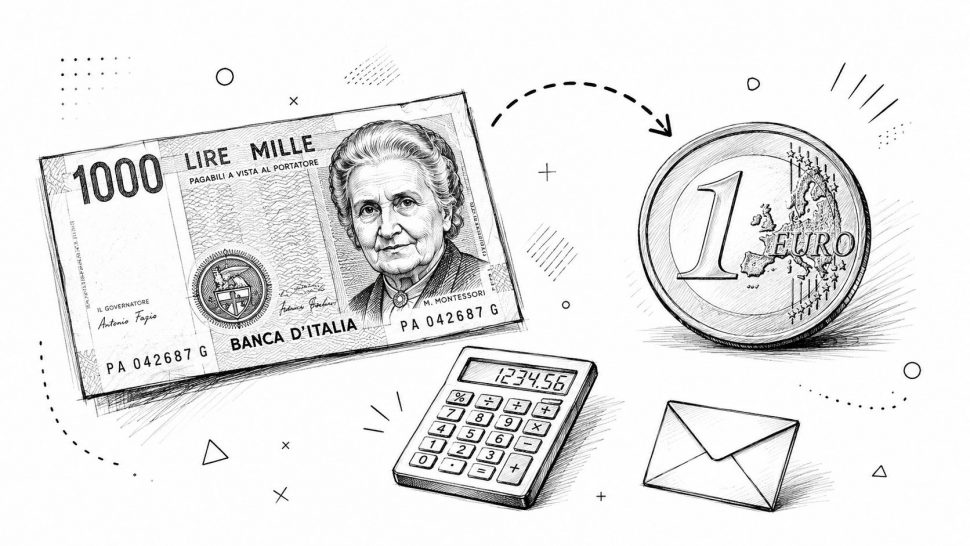
1000 Italian lire is worth approximately €0.516457, so in everyday terms it's about €0.52. That value comes from the fixed euro conversion rate, but Italian lire can't be exchanged through official banks anymore, so if you've found an old note in a drawer, album, or holiday keepsake box, you'll need a specialist route rather than a normal bank counter.
That's the part that often causes confusion. The maths is simple. The practical next step isn't.
For UK residents in 2026, old lire sit in an awkward category. They're no longer legal tender, they're usually too old for standard exchange bureaux, and the amount on a single 1000 lire note is so small that many people assume it's worthless. It isn't worthless, but it does need the right kind of service to turn it into cash or a charity donation.
What Is 1000 Lire Worth and Can You Still Exchange It
Finding an old 1000 lire note often raises two questions at once. First, what is it worth in euros? Second, can anyone still change it?
The fixed answer on value is straightforward. At the official euro conversion, 1 euro was set at 1,936.27 Italian lire, which means 1,000 lire equalled approximately €0.516457 according to the official legacy conversion rate shown by Xe.
The quick practical answer
If you're searching for 1000 lire in euro, the monetary conversion is about €0.52.
What trips people up is that the note's fixed euro value doesn't mean a high street bank will accept it. The Italian lira is an obsolete currency, so the question isn't just “what's the rate?” but “who still handles it?”
Practical rule: Treat old lire as a legacy currency item, not as a normal foreign note you can take to a travel money desk.
A single note often won't be worth the effort on its own. The sensible approach is to combine it with other leftover foreign currency, especially if you also have old coins, pre-euro notes, or mixed holiday money sitting at home.
If you want to check the broader handling of old Italian currency, a dedicated page for Italian lire currency exchange is a useful starting point. The key thing to know is that the conversion value is fixed, but the route to getting money back is specialist, not mainstream.
Why people get confused
People often mix up three different ideas:
- Official conversion value. The euro equivalent based on the fixed historic rate.
- Exchangeability. Whether any institution will still process the note.
- Collector value. Whether a rare or unusual version might be worth more to a buyer.
Most ordinary 1000 lire notes are judged first by exchange value, not rarity. That keeps expectations realistic and helps you choose the right next step.
Understanding the Lira to Euro Conversion
The key to understanding 1000 lire in euro is that this isn't a live market conversion in the usual sense. It's a legacy calculation from the moment Italy adopted the euro.

The fixed calculation
The official relationship was set at 1,936.27 Italian lire for 1 euro. To work out the euro value of a 1000 lire note, divide 1000 by 1936.27. That gives €0.516457.
For a UK reader, the next practical question is usually what that means in pounds. The old 1000 lire note converts to approximately 0.516 EUR, which is roughly 0.447 GBP at current mid-market rates, as shown by Xe's legacy conversion information.
That low figure explains why single notes often feel disappointing. The face value sounds substantial. The modern value isn't.
Why the number doesn't move much for old lire
A key distinction separates old currency from active travel money. With current currencies, exchange rates move daily. With obsolete lire, the core euro conversion is tied to the historic fixed rate. In practice, specialist buyers and legacy currency handlers use that benchmark when valuing ordinary notes.
That's why people holding small denominations often do better by sending in a mixed batch. If you also want to exchange foreign coins and notes, combining several currencies usually makes more sense than trying to process one low-value note by itself.
A single 1000 lire note is rarely the whole story. Most people who send old lire also have leftover foreign currency from other trips, inherited collections, or charity tins.
Exchange value versus collector value
There's also an important distinction between monetary conversion and collector interest.
A standard circulated 1000 lire note is usually approached as low-value obsolete currency. A rare issue, an unusual serial, or an especially well-preserved note may interest collectors instead. Those cases are separate from standard currency exchange.
If your note looks ordinary, don't assume it has hidden rarity. If it looks unusually pristine or unlike common designs you've seen elsewhere, it may be worth getting a collector opinion before sending it for standard conversion.
Your Options for Exchanging Old Italian Lire in the UK
Once you know the value, the question is what you can do with the note in the UK.
The short answer is that most familiar routes won't help. It is no longer possible to exchange Italian lire for euros through any official channel, including Banca d'Italia, because the statutory right expired in 2012, as confirmed by Banca d'Italia's guidance on lira to euro exchange.

Why banks and bureaux usually say no
High street banks and travel money counters are built for current, tradeable currencies. Old lire creates several problems for them:
- Withdrawn status means the currency is no longer in normal circulation.
- Low individual value makes handling uneconomical.
- Coins and mixed notes take time to count, verify, and process.
- Legacy demand is specialist, not mass market.
That's why people trying to exchange foreign coins or old pre-euro notes often hit a dead end with mainstream providers.
Comparison of currency exchange options for old lire
| Exchange Option | Accepts Current Banknotes | Accepts Foreign Coins | Accepts Withdrawn Currency (e.g., Lire) |
|---|---|---|---|
| High street bank | Usually yes | Usually no | Usually no |
| Travel money bureau | Usually yes | Usually no | Usually no |
| Official central bank route for lire | No longer available | No | No |
| Specialist legacy currency service | Yes | Yes | Yes |
The practical difference is simple. Banks are designed for active currency exchange. Specialist services are designed to convert foreign coins and banknotes, including the awkward categories that banks don't want to handle.
What works in practice
For UK residents, the practical routes tend to be:
- Send obsolete currency to a specialist service
- Bundle it with other leftover foreign currency
- Donate foreign coins to charity if the amount is too small to bother cashing out
If you're comparing providers, this guide on where to exchange foreign coins is useful because it focuses on the exact area where mainstream exchange options fall short.
If a service only handles current banknotes, it probably won't help with lire. If it accepts coins, old notes, and withdrawn currency, you're looking in the right place.
How to Convert Foreign Coins and Banknotes Online
A common 2026 scenario looks like this. A UK household finds an old 1000 lire note, a few euros, some Croatian kuna, and a pile of mixed coins from past trips. A bank will rarely want any of it. An online specialist service is usually the practical route because it is set up for exactly that kind of leftover currency.

A straightforward step by step process
The online process is usually simple, but the details matter if you want to avoid delays or disappointment.
Create an account
Start with the provider's online form, enter the currencies you want to send, and check which items are accepted. With old lire, that acceptance check matters more than the headline rate.List what you have
Add your banknotes and coins, including obsolete notes if the service accepts them. Many specialist providers allow mixed batches, which saves time if your currency has been sitting unsorted in a jar or drawer.Pack the currency properly
Follow the provider's instructions, use secure packaging, and choose the postal method they recommend. Good packing is boring but important. Torn envelopes and loose coins create avoidable problems.Wait for verification
After receipt, the provider checks the contents against your submission and confirms the value. This is the stage where specialist services differ from banks. They are set up to handle old notes, coins, and withdrawn currencies as part of the normal process.Receive payment or choose donation
Payment is often made by bank transfer or PayPal. Some providers also offer a charity option if the amount is too small to cash out usefully.
Why online exchange works for awkward currency
Online specialist exchange suits the currencies people have at home, not just the tidy current notes shown on a rate board.
That includes mixed holiday change, small denomination notes, coins, and withdrawn money such as Italian lire. For a UK resident in 2026, that is the practical distinction. The official route for lire has gone. The useful question now is not whether 1000 lire once converted to about €0.52 on paper, but whether a service will still handle the note in practice.
If you want to start the online exchange process, check the provider's acceptance rules first, then send everything in one batch where possible. Combining low value items is often what makes the exercise worthwhile.
When donation makes more sense
For a single low value note or a very small pile of coins, donation can be the better choice. Wise's guide to old foreign currency options notes that UK charities such as RNIB accept foreign banknotes and coins, including obsolete currencies.
That gives old money a clear use even when the payout would be modest.
Old currency still has options. The best one depends on what you have, whether it is still accepted, and whether cashing out or donating makes more sense for the amount.
Common Mistakes to Avoid With Leftover Currency
Common problems with old currency start with incorrect assumptions.
A UK resident finds a 1000 lire note in a drawer, checks the old conversion, sees that it was worth about half a euro, and decides it is too small to bother with. That is usually the wrong conclusion. In 2026, the pertinent question is not the historic conversion. It is whether the note can be included in a practical payout alongside other leftover money.
The mistakes that come up most often
- Treating the printed conversion as the only answer. A 1000 lire note may look insignificant on its own, but old currency is often worth assessing as part of a wider batch of notes and coins.
- Waiting for rates to improve. Italian lire is obsolete, so the issue is acceptance, not timing.
- Trying one high street bank and stopping there. If a mainstream branch will not handle old lire, that result usually reflects policy, not bad luck with one cashier.
- Leaving mixed change in jars, drawers, and travel wallets. Small amounts become unusable mainly because they stay scattered.
- Sorting everything before checking the provider's rules. Some specialist services accept mixed submissions, so over-sorting can waste time.
Why small amounts get written off too quickly
A single 1000 lire note has very little face value in euro terms. That part is true.
The mistake is assuming low face value means no practical use at all. In real cases, people rarely send one old Italian note by itself. They send a bundle. That may include other obsolete notes, current foreign banknotes, and coins from several trips. Once everything is grouped together, the transaction can make more sense than the headline value of one note suggests.
Xe's lira conversion page is useful for historic context. It does not answer the practical question of what a UK resident can still do with the currency now.
A better way to handle leftover foreign currency
Start with a clear sort by type. Current notes, old notes, and coins should be kept separate only if the service asks for that. Then check acceptance rules before doing anything else.
A sensible approach looks like this:
- Pull everything together first. Include old holiday cash, coins, withdrawn notes, and small leftovers from multiple countries.
- Check what the service accepts. Old lire, mixed coins, and low denominations all have different handling rules.
- Look for clear payout and return terms. If rejected items are returned under stated conditions, the risk is easier to judge.
- Use donation for very small leftovers if the payout would be negligible. That is often better than storing them for another decade.
If you want to start clearing out your old currency, the best results usually come from handling the whole pile in one go, rather than trying to solve each note or coin separately.
Your Foreign Currency Questions Answered
Can I exchange foreign coins in the UK
Yes, but usually not through normal banks or airport travel money counters. Specialist services are the practical option when you want to exchange foreign coins, especially mixed change or old denominations.
Do UK banks accept foreign coins
Usually, no. Banks tend to focus on standard banking services and current notes, not loose foreign coins or obsolete currency.
Can I still exchange Italian lire at a bank
Not through official channels. As covered earlier, the central bank exchange route for lire ended, so normal bank exchange isn't the solution for old Italian notes.
Does old or withdrawn currency still have value
Often, yes. It may still have exchange value through a specialist buyer, and in some cases collector value may apply if a note is rare or in exceptional condition.
Do I need to sort coins and notes before sending them
Often, no. Some specialist services are set up for unsorted currency, which is useful if you have a mixed collection from several trips or donations.
Is it safe to send cash in the post
It can be, provided you follow the provider's packaging and postage instructions carefully. The key is to use the recommended method and package the contents properly.
How long does payment take
Payment times depend on the provider's process and the delivery method you choose. Good specialist services explain this clearly before you send anything and confirm payment after verification.
Can I donate foreign coins to charity instead of cashing them in
Yes. That's a strong option for low-value leftovers, mixed jars of coins, or obsolete notes that you'd rather turn into something useful than keep in storage.
If you've got old lire, pre-euro notes, foreign coins, or a mixed bundle of leftover holiday money, We Buy All Currency gives you a simple way to exchange it online. You can send coins, banknotes, and withdrawn currency without the usual hassle, get a clear quote before you post, and choose cash or a charity donation depending on what suits you best.