
Bailiwick of Jersey 2p Coin Value & Exchange Guide 2026
Posted by: Ian Stainton • 19 Apr 2026
TL;DR: The bailiwick of jersey 2p is a common but interesting coin from Jersey, a British Crown Dependency. It was first issued in 1971 as part of decimalisation, and while most examples aren't rare treasures, good condition 1971 coins can fetch £1 to £2 among collectors, and ordinary pieces can still be turned into cash through a specialist currency exchange service.
A lot of people find one the same way. It turns up in a kitchen drawer, a holiday coin jar, a charity tin, or the bottom of a travel bag. At first glance it looks like a British 2p, but something is off. The words say Bailiwick of Jersey instead of United Kingdom.
That small difference is exactly why people get stuck. It feels familiar, but shops don't want it, banks usually won't handle it, and its holders aren't sure whether to keep it, spend it, or throw it in with the rest of their leftover foreign currency.
Your Guide to the Bailiwick of Jersey 2p Coin
If you've got a Jersey 2p in your hand, the quick answer is simple. It's an official coin from Jersey, not a fake, not a token, and not something you've imagined into being because the design looks unusual.
Quick answer
The bailiwick of jersey 2p is part of Jersey's own coinage system. Jersey's currency is pegged to pound sterling, but that doesn't mean every UK bank, bureau, or shop will accept Jersey coins in practice. The practical question often becomes, not "is it real?" but "what can I do with it now?"
Practical rule: If a coin comes from a place with its own issue of currency, even when it looks close to sterling, treat it as something that may need a specialist exchange route rather than a high street one.
The Jersey 2p sits in an awkward middle ground. It isn't usually a high-value collector's item, yet it can still have real worth, making it exactly the sort of coin people leave untouched for years.
A good guide should do two things at once. First, help you identify the coin properly. Second, help you decide whether it belongs in a collector's tray, a mixed foreign coin bag, or a cash conversion parcel with old notes and other small change.
Why people often hesitate
Most uncertainty comes from three common thoughts:
- "It looks British" so people assume it must spend like any other 2p.
- "It's only a small coin" so they assume it can't be worth the effort.
- "No one takes foreign coins" so they leave it sitting in a jar with euros, dollars, and old holiday money.
That last point is where specialist exchange services help most. Banks often focus on notes, not coins. Standard travel exchange desks usually focus on current, easy-to-resell currency. Older, mixed, withdrawn, or low-denomination pieces need a different process.
If you've also got other leftover coins and notes, it often makes sense to handle everything together rather than trying to solve one coin at a time.
What Exactly Is a Bailiwick of Jersey 2p Coin?
You tip out a jar of old change, spot a 2p-sized coin with the Queen on it, and assume it must be ordinary British copper. Then you notice the word "Jersey" and the question changes. You are no longer asking what it is. You are asking whether it belongs in a collector's pile, a mixed foreign coin bag, or an exchange parcel that can turn forgotten money into cash.
The Bailiwick of Jersey 2p is a two pence coin issued by Jersey, a British Crown Dependency. Jersey is closely linked to the UK, but it issues its own coins and notes. That is why this coin often feels familiar at first glance while still behaving differently when you try to spend or exchange it.

The coin's origin
Jersey introduced its decimal 2p coin in the early decimal era, in step with the wider change to decimal currency. Early pieces used the wording "Two New Pence", a detail that can help date older examples quickly when you are sorting through mixed coins.
That early familiarity is part of the confusion. A Jersey 2p belongs to the same broad family as UK decimal coins, but it is a Jersey issue, not a standard UK circulating 2p. For anyone trying to turn old coins into money, that small distinction matters more than the size of the coin itself.
Jersey later gave its decimal coins a stronger local identity through more distinctive designs. That means the coin is not just a regional version of a UK piece. It is a separate issue with its own place in Jersey's currency system and its own appeal to people who collect Channel Islands coinage.
What to look for on the coin
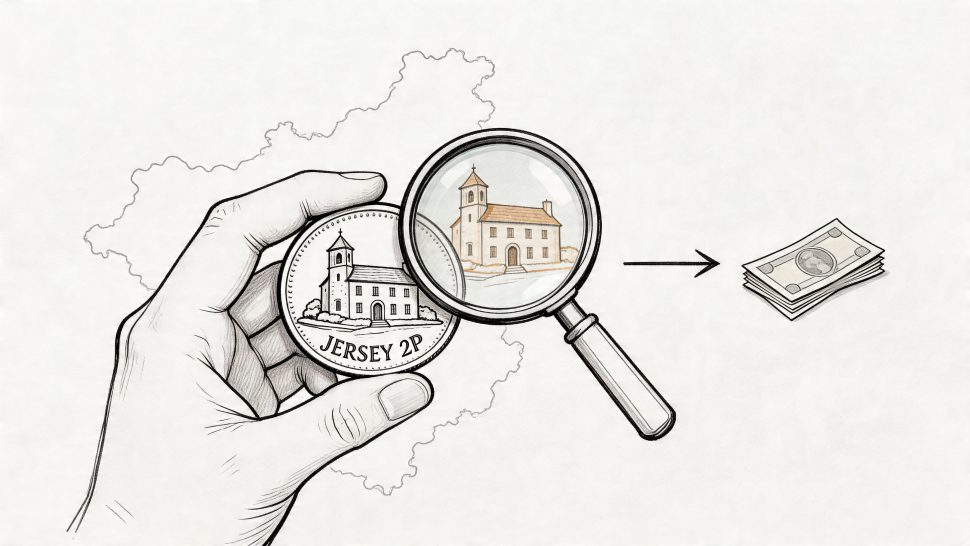
The quickest check is the reverse. A Jersey 2p features L'Hermitage, the cell of St. Helier at Elizabeth Castle, a design used in Jersey's decimal series. The obverse carries the portrait of Queen Elizabeth II, which is one reason people mistake it for an ordinary British coin when they first find one.
A simple way to identify it is to read the coin in layers. Start with the denomination. Then check the country name. Then look at the reverse design. That process works well when you have a pile of similar-looking copper coins and want to separate coins with exchange potential from coins that can go back into everyday change.
If you are comparing denominations from the same series, the local design style also appears on other pieces, including the Bailiwick of Jersey 5p coin guide.
Bailiwick of Jersey 2p coin specifications
| Feature | Bronze (earlier issues) | Copper-Plated Steel (later issues) |
|---|---|---|
| Main composition | Bronze | Copper-plated steel |
| Weight | Heavier early type | Slightly lighter later type |
| Diameter | Same standard size | Same standard size |
| Thickness | Standard 2p format | Similar external format |
| Magnetic | No | Yes |
| Typical collector interest | Earlier issues often draw more interest | Usually more common in mixed change |
For practical sorting at home, the metal change is useful. A magnet can help. If the coin sticks, you are usually looking at a later copper-plated steel version. If it does not, it is more likely to be an earlier bronze piece. That does not tell you the final value on its own, but it gives you a fast first filter before you decide whether the coin is mainly an exchange item or something worth a closer collector check.
A Jersey 2p often sits in the "too interesting to spend, too small to bother with" category. Once you identify it properly, it becomes much easier to decide the right cash-out route.
Determining Your Coin's Value and Rarity
You have identified the coin. Now comes the practical question. Is it just 2p, is it a small collector piece, or is it something worth grouping with the rest of your old currency for exchange?

A lot of confusion starts because one coin can have three different kinds of value at once. The face value is 2 pence in Jersey. The collector value depends on date, condition, and how desirable that particular version is. The cash-out value depends on what a specialist currency buyer will accept and how much you are sending in overall.
That is why this stage matters. You are no longer just identifying a coin. You are deciding which route makes sense for it.
Start with the quick at-home checks
For a Jersey 2p, the first two checks are simple. Look at the metal. Then look at the condition.
As noted earlier, Jersey 2p coins were made in an earlier bronze type and a later copper-plated steel type. That gives you an easy first sort at the kitchen table:
- Test it with a magnet. If it sticks, it is a later copper-plated steel coin.
- Check the colour. Earlier bronze pieces often have a deeper brown tone.
- Look closely at the design. Sharp detail usually gives a coin more collector appeal than a worn, flattened example.
This works like sorting books into two piles before pricing them. One pile is ordinary reading copies. The other might contain editions worth a second look.
Rarity is usually modest, not dramatic
Many Jersey 2p coins are not rare in the way people hope old coins might be. They are better described as coins that are less familiar in everyday UK change. That difference gives them some collector interest, but it does not automatically make every example valuable.
Condition does a lot of the heavy lifting here. A clean, well-preserved coin with clear lettering and detail is more appealing than one that has spent years loose in a jar, pocket, or toolbox.
One warning matters more than people expect.
Collector hint: Do not clean the coin. Rubbing or polishing can scratch the surface and reduce collector interest.
When a Jersey 2p is worth more than its face value
The best-known example is the 1971 issue, which can attract modest collector interest in better condition, as mentioned earlier. That does not mean every 1971 coin is special, and it does not mean later coins are worthless. It means date and condition can nudge a small coin out of the "ordinary change" category and into the "worth checking" category.
For many people, that is the useful middle ground. You may not have a rare treasure. You may still have something worth separating from standard UK coinage and handling properly.
If you have one Jersey 2p, the amount may be small. If you have a bag of Jersey coins mixed with old notes, foreign coins, and leftover travel money, the picture changes. At that point, the goal is not only collector curiosity. It is turning a mixed, awkward pile into cash without wasting time guessing what each piece might be worth.
Why Banks and Bureaus Wont Exchange Jersey Coins
You tip a jar of old change onto the table, spot a Jersey 2p, and head to the bank because that feels like the obvious place to start. Then the cashier says they cannot take it.
That answer usually comes down to systems, not suspicion.
Why the high street says no
Banks and bureaux are built to handle standard transactions quickly. Current banknotes fit that model. Small regional coins usually do not. A Jersey 2p may be familiar to collectors or to anyone who has visited the Channel Islands, but it sits outside the routine process used for everyday exchange.
The problem is practical. Coins are slow to sort, costly to ship, and awkward to count in low values. Jersey pieces add one more layer because they are not part of the ordinary foreign exchange stream that travel money desks focus on. A bureau would rather deal with a stack of current notes than a handful of mixed coins that need separate checking.
A useful comparison is a supermarket till versus an antiques counter. Both handle money, but they are set up for different jobs.
Why this catches so many people out
People often assume "bankable" and "spendable somewhere" mean the same thing. With Jersey coins, they do not. A coin can be genuine, recognisable, and still fall outside what a local branch or bureau is willing to process.
Staff at a branch may never have a route for sending that coin back into circulation. If they accept something they cannot easily clear, it becomes a handling problem for the branch. That is why even perfectly real coins are often refused.
The same issue shows up with mixed holiday change, old notes, and coins from places that are close to the UK but not part of normal UK cash handling.
What a specialist is set up to handle
A specialist service works more like a sorting desk for awkward currency. It is prepared for the things banks tend to reject, including:
- Mixed coin jars with Jersey pieces, euros, and other leftover change together
- Older notes that a travel money counter may not want
- Withdrawn currency that still has remaining exchange value
- Unsorted batches from travel, house clearances, fundraising, or tills
That difference matters because it turns a dead end into a practical next step. Instead of trying branch after branch, you use a service designed for exactly this kind of leftover money.
How to Exchange Jersey 2p and Other Leftover Currency for Cash
You tip out a jar of old change onto the table, spot a Bailiwick of Jersey 2p, and pause. It is a familiar moment. The coin looks real, it looks spendable, and yet it often ends up back in the drawer because the next step is not obvious.
The good news is that turning it into cash is usually much easier once you stop treating it as a one-coin puzzle. A Jersey 2p is often part of a wider batch of leftover money, and handling the whole batch together is usually the quickest route to value.

Step 1 Gather the full batch first
Start with the whole jar, drawer, wallet, or travel pouch. Spread everything out so you can see what you have.
Include the obvious pieces, such as foreign coins and notes, but also the awkward ones people often overlook, like Channel Islands coins, Isle of Man currency, older notes, and mixed holiday change. A single Jersey 2p on its own may not feel worth much effort. A combined batch often is.
This part works like sorting a pocketful of receipts before claiming expenses. You do not need to study every line in detail before deciding whether the pile has value.
Step 2 Set aside anything that looks better than ordinary
Now give the Jersey 2p a quick visual check. If it looks unusually clean, sharply detailed, or older than the other coins, put it to one side for a moment.
As noted earlier, some earlier Jersey 2p coins in good condition can attract collector interest. That does not mean every coin needs specialist research. It just means you should avoid sending off a potentially better example without a quick second look.
For ordinary circulated pieces, practical exchange is usually the better path. Spending half an hour researching a low denomination coin rarely makes sense if your real goal is to clear out leftover money and get paid.
Step 3 Choose a service that accepts mixed leftover currency
At this point, the aim is simple. Convert what you can into cash without having to persuade a bank clerk or sort every coin by hand.
A specialist service is built for exactly this job. If you want to exchange foreign coins for cash, look for a provider that accepts mixed coin batches, old notes, and the kinds of pieces high street outlets often refuse. That saves time and removes the guesswork.
This is the bridge many articles miss. A Jersey 2p can be mildly interesting from a coin point of view, but it is also just one part of a practical cash conversion job. You do not have to choose between being curious about the coin and getting rid of it efficiently. You can do both.
Step 4 Pack it properly
Loose coins are heavy for their size, so package them with that in mind. Use a padded envelope or a small sturdy box, and put coins inside inner bags so they do not shift around or tear the outer packaging.
A simple note of what you are sending helps too. It does not need to be a detailed catalogue. Just enough for your own record, especially if the parcel contains mixed coins and notes.
If the batch is untidy, that is normal. Leftover currency almost never arrives neatly sorted by country and denomination.
Step 5 Receive the value and get paid
Once the currency has been checked, payment is usually made through a standard method such as bank transfer or PayPal, based on the provider's process. What matters here is clarity. You want to know how the service values mixed currency, what it accepts, and when payment is sent.
If you have only a few tiny-value coins, you may decide that clearing space is as useful as the payout itself. If you have a fuller jar with Jersey pieces, foreign coins, and old notes together, the result is often better than people expect.
That is the practical journey in a nutshell. Identify the Jersey 2p, check whether it looks worth separating, then treat the rest as exchangeable value rather than clutter.
Common Mistakes to Avoid With Your Foreign Coins
People don't usually lose money on a Jersey 2p because the coin is complicated. They lose value because they make simple decisions too quickly.

Throwing them away
This happens more often than people admit. Small denomination coins feel worthless when they're unfamiliar, especially if no local bank wants them.
That mindset misses the bigger picture. Channel Islands coins already form a noticeable part of the leftover currency stream. One source notes that around 15% of UK charity coin donations are from the Channel Islands, highlighting how often these coins end up in donation channels because people aren't sure what to do with them, as discussed in The Coin Expert's guide to Bailiwick of Jersey coins.
Cleaning the coin too aggressively
Collectors often prefer original surfaces, even when a coin shows age. Scrubbing, polishing, or using chemical cleaners can reduce collector interest.
If the coin is going into a mixed exchange parcel, cleaning still doesn't help much. If it might have extra numismatic appeal, cleaning can make things worse.
Trying to spend it in ordinary UK circulation
A Jersey 2p looks close enough to a UK 2p that people try vending machines, tills, or self-checkouts. That usually leads to confusion, rejection, or the coin being handed straight back.
Spending too long sorting everything
This is the hidden mistake. People think they need to identify every coin before doing anything. Then the jar sits untouched for another year.
A better approach is often:
- Check for obvious keeper items such as coins in unusually good condition
- Set aside anything sentimental
- Send the rest through a specialist process that accepts mixed coins and notes
That saves time and usually gets the money moving again instead of leaving it trapped in storage.
Your Bailiwick of Jersey 2p Coin Questions Answered
A Jersey 2p often turns up in the same place as old holiday notes, arcade tokens, and coins nobody feels confident sorting. That can make a small coin feel like a bigger hassle than it should be. The good news is that identifying it and turning it into cash is usually straightforward once you know what to check.
Is a Jersey 2p legal tender in the UK?
A Jersey 2p is issued for use in Jersey, not for general circulation across mainland UK shops and banks. In practice, many cashiers, machines, and bank counters will refuse it, even though it looks familiar. That is why specialist exchange services are often the practical route.
How much is a bailiwick of jersey 2p worth?
Its spending value is 2 pence within Jersey's currency system. Some coins can attract collector interest, especially if the date is scarcer or the condition is better than average.
For example, an older coin in sharp condition may be worth more to a collector than its face value. A worn coin from a common year is usually better treated as part of a mixed exchange batch. That is the bridge many people need. First check whether it has any collector appeal, then convert the rest into cash instead of letting it sit in a jar.
How do I tell if my coin is bronze or steel?
A magnet gives you a quick answer at home. Bronze coins do not stick. Copper-plated steel coins do.
It is a simple test, but a useful one. It helps you separate earlier issues from later ones without needing specialist tools.
Why does the design look different from a UK 2p?
Jersey has its own coin designs, even on coins linked to sterling. The Jersey 2p uses local imagery rather than the standard UK reverse, which is why it looks familiar in size and value but different in appearance.
That difference often causes confusion. People assume it should spend like an ordinary UK 2p, then find it is rejected.
Does the year matter?
Yes. Date matters because different years belong to different design periods, and some attract more interest than others. As noted earlier, the redesign in the 1980s created a clear split between earlier and later Jersey 2p styles.
If you are checking a jar of mixed coins, the year is one of the fastest clues to note alongside condition and metal type.
Can I exchange other Channel Islands or Isle of Man coins too?
Yes. Specialist currency buyers usually accept mixed regional and foreign currency, not just one Jersey denomination. That is useful if your Jersey 2p is only one piece of a much larger pile.
A coin jar rarely contains one tidy category. It is often a mixture of Channel Islands coins, Isle of Man pieces, withdrawn notes, and leftover travel money. Sending the group together is usually easier than trying to solve each coin one by one.
What if my coins are mixed with foreign notes and I haven't sorted them?
That is common. You do not need to turn a household coin jar into a collector's inventory before doing anything with it.
A basic first pass is enough. Pull out anything sentimental, anything obviously unusual, and anything in very high condition. The rest can usually go through a specialist exchange process.
How long does payment usually take?
For the publisher behind this article, payment is issued within five working days after verification. Payment is available by bank transfer or PayPal.
Are there hidden fees?
The publisher states that customers can see the exchange rates before sending and that the calculated value is paid in full, with no hidden charges.
Can charities and businesses use this kind of service?
Yes. Charities, shops, visitor attractions, transport hubs, and other organisations often receive coins they cannot bank through normal channels. A specialist service helps convert that awkward mix into usable funds.
If your Bailiwick of Jersey 2p is sitting in a jar with old notes, holiday change, or other hard-to-use coins, the practical next step is to turn the whole lot into cash. We Buy All Currency helps individuals, charities, and businesses exchange leftover currency, including coins, banknotes, and withdrawn money that banks and bureaux often refuse.