
Banknotes of Australia: Guide & Security Features
Posted by: Ian Stainton • 7 May 2026
A lot of people in the UK end up with Australian notes the same way. They come back from Sydney or Melbourne with a few dollars left in a wallet, inherit an old travel tin from a relative, or sort through a charity collection and find notes that look unfamiliar. Some are crisp plastic notes. Others are older paper notes that seem too old to spend.
The good news is simple. Australian banknotes often still hold exchange value, even when they’re old, withdrawn from circulation, or no longer accepted by a high street counter. The challenge usually isn’t whether they matter. It’s knowing what you’ve got, whether it’s genuine, and where to convert it in the UK without hassle.
Your Guide to Australian Banknotes and What to Do with Them
If you’ve searched for banknotes of australia, you’re probably trying to answer one practical question. Can these notes still be exchanged?
Quick answer: Australian banknotes include older paper issues, early polymer notes and newer polymer designs. Many old Australian notes can still be exchanged, and specialist services are often the simplest option for UK residents who want to convert leftover foreign currency, including withdrawn notes that banks and bureaux may refuse.
That matters because Australian currency has changed shape, material and design more than once. A note from one trip might look nothing like a note from another. That doesn’t automatically mean one is invalid or worthless.
Why people get confused
Australian notes cause more uncertainty than many other currencies for three main reasons:
- Different materials: Some notes are paper, while many later issues are polymer.
- Different generations: Older and newer notes can look completely different even when they’re the same denomination.
- Different exchange rules: A note may still be legal tender in Australia, yet awkward to exchange in the UK through ordinary channels.
Typically, the goal isn’t collecting. It’s practical, involving the desire to exchange foreign coins and notes, deal with leftover foreign currency, or work out whether an old note should be kept, sold, or converted.
If you’ve got mixed travel money, don’t assume the oldest-looking Australian note is useless. In many cases, the issue is access to the right exchange route, not the note itself.
The rest of this guide builds that understanding step by step. First, the history. Then how to identify your note, how to spot key security features, and finally how UK holders can convert old and new Australian banknotes with less fuss.
A Journey Through Time Australian Banknote History
A UK traveller empties a drawer and finds three Australian notes from different trips. One feels like paper, one feels like thin plastic, and one looks newer again. They can seem unrelated, but they are part of one clear story.
Australia’s banknotes changed in stages, and that history explains why notes from different decades can look so different. The first big turning point was decimalisation. Before that, Australia used pounds, shillings and pence. On 14 February 1966, the country switched to the Australian dollar and introduced the first dollar notes in $1, $2, $10 and $20 denominations, as outlined in the Banknotes of the Australian dollar overview.

Before the dollar
The story starts with currency that would have looked familiar to people in Britain. Early Australia used pounds, shillings and pence, and British coin circulated widely. The National Museum of Australia explains that, around Federation, British coin made up most of the money in circulation, alongside notes issued by private banks.
Control then shifted to the new Commonwealth. In 1910, the Australian Notes Act gave banknote authority to the Commonwealth Treasury, and the Bank Notes Tax Act 1910 placed a heavy tax on private banknotes. That effectively pushed private issuers out of the market. Australia’s own national note issue followed, and the Australian pound remained in use until decimal currency arrived in 1966.
For a UK reader, the easiest comparison is this. Australia moved from a pre-decimal system, familiar in structure to old British money, to a decimal system built for simpler pricing and calculation.
Decimalisation and the first dollar notes
Decimalisation made everyday arithmetic much easier. Instead of 20 shillings or 240 pence to the pound, the new system worked in tens and hundreds.
A few conversions make older notes easier to place:
- $1 equalled 10 shillings
- $2 equalled £1
- $10 equalled £5
- $20 equalled £10
Australia also handled the change carefully. Early dollar notes kept colour cues similar to earlier pound notes, which helped the public adjust without having to relearn everything at once. The $5 note followed in May 1967.
Why so many different Australian notes exist
More denominations arrived over time, which is why mixed bundles often contain several designs. The $50 note was introduced in 1973, and the $100 note in 1984. Lower denominations then began to disappear from note form. The $1 note was discontinued on 14 May 1984 after the coin was introduced, and the $2 note ceased issue on 20 June 1988 when it too was replaced by a coin.
That matters for UK holders because old Australian notes are often rejected by banks and high street bureaux because staff do not handle them often, not because the notes have no monetary standing. For UK holders, it is important to know that previously issued Australian dollar banknotes can still retain exchange value even when they are no longer printed or commonly accepted through ordinary retail channels.
This is the gap many people run into. The note may be genuine and still recognised in Australia, but converting it in the UK can be the difficult part. That is why understanding the timeline matters first. It helps you separate a long-withdrawn design from a worthless one, which are not the same thing.
Identifying Your Australian Banknotes A Detailed Guide
You open a drawer in the UK and find a small stack of Australian dollars from different trips, or perhaps from a relative who tucked them away years ago. Some feel like ordinary paper. Others are smooth and plastic-like. A few may no longer be seen in shops, yet they can still carry exchange value. The job here is to sort them into the right group so you know what you may be able to exchange and what may need a closer look.

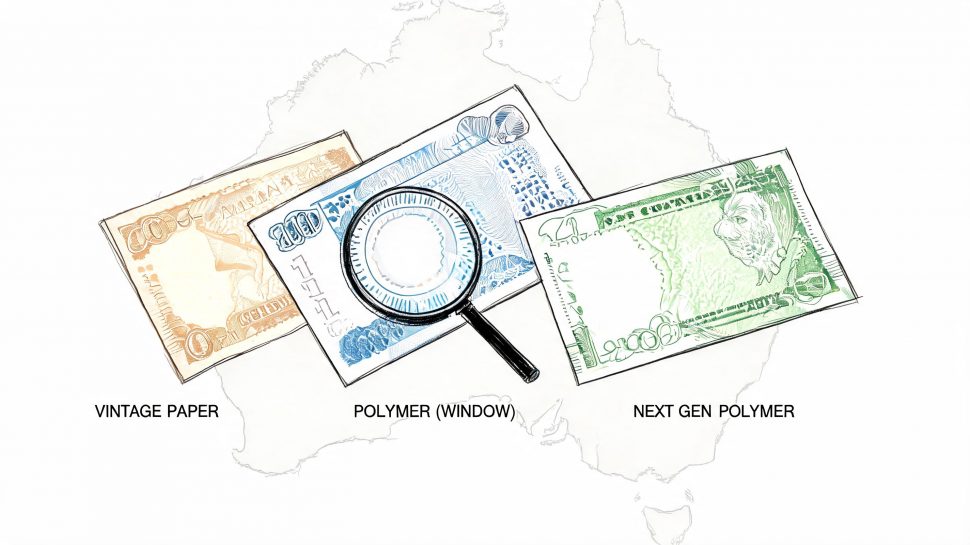
A simple way to approach this is to sort Australian notes as you would sort old family photos. Start with the obvious clues first, then narrow things down. In practice, most UK holders are dealing with three broad groups: original paper decimal notes, first polymer issues, and Next Generation polymer notes.
The quickest way to sort them
Begin with the note in your hand.
- If it feels like traditional paper, it is usually from the earlier decimal period.
- If it feels smooth, flexible and plastic-like, it is a polymer note.
- If it has clearer tactile marks and a more complex transparent window, it is usually from the newer Next Generation series.
That first pass is often enough to make the rest easier. You do not need to identify every portrait or memorise every issue date before deciding what type of note you have.
Comparison of Australian Banknote Series
| Series | Years in Circulation | Material | Key Identifying Feature |
|---|---|---|---|
| Original Paper Decimal Notes | 1966-1992 | Paper | Traditional paper texture and older decimal designs |
| First Polymer Series | 1992-2016 | Polymer | Clear window and plastic feel |
| Next Generation Polymer Series | 2016-Present | Polymer | More advanced window design and tactile accessibility features |
Original paper decimal notes
These are often the notes that turn up in travel wallets, inherited collections, dealer envelopes, or old holiday paperwork. They look like conventional banknotes and do not have the transparent window that people now associate with Australian money.
The fastest clue is denomination. If you have an Australian $1 or $2 banknote, you are looking at an older issue because those values were later replaced by coins. Even if you do not know the exact year, that immediately places the note in the earlier paper category.
For exchange purposes, this category matters because paper Australian notes are the ones most likely to confuse banks and high street bureaux in the UK. Staff may reject them because they are unfamiliar, not because the notes are automatically worthless.
First polymer series
These are the notes that made Australia well known for polymer currency. They feel very different from paper. They bend rather than crumple easily, and they include a clear window built into the note itself.
The security features of Australia’s $100 polymer note issued in 2020 show the kind of details to look for on later polymer issues, including transparent areas, fine print, and sharp printed detail. Earlier polymer notes can look simpler, but the material and general construction still set them apart from paper notes.
This clarifies a common point of confusion. An older-looking polymer note is not automatically invalid just because it lacks design elements found on later issues. Some earlier issues do not include features that were added to newer notes, but they can still be genuine and still matter when you are assessing exchange options.
Next Generation polymer notes
The newest Australian notes are usually the easiest to recognise once you have handled an older polymer issue beside one. The transparent window design is more elaborate, the print layout looks more modern, and the tactile features are easier to notice by touch.
For a UK holder, the practical point is simple. These notes are current-style currency, so identifying them is usually straightforward. The difficulty often comes when they are mixed with older polymer notes or long-withdrawn paper notes in the same bundle.
Practical rule: Sort Australian notes by material, denomination, and design generation. That gives you a clearer picture of which notes are current, which are older but still worth checking, and which may need a specialist exchange route rather than a bank counter.
Specialist routes are particularly useful in this situation. A mixed batch can include modern polymer notes, older polymer designs, and paper issues that ordinary retail channels in the UK may refuse to handle. Once the notes are identified properly, exchanging them becomes much more straightforward.
Spotting Fakes Key Security Features to Check
You get home from a trip, empty a drawer, and find a mixed stack of Australian notes. Some are bright polymer notes, one looks older, and the local bank is unlikely to examine each one for you. Before you try to exchange them, a basic authenticity check helps you sort ordinary spendable currency from notes that need closer attention.

Start with what your fingers notice
Australian banknotes are designed to give you clues before you reach for any tool. On genuine notes, key areas such as the portrait and large numerals should feel slightly raised rather than completely smooth. That raised effect comes from intaglio printing, which presses ink into the note with enough depth to create texture you can feel.
Counterfeit notes often get the picture roughly right but miss the physical feel. A fake can look passable in a quick glance yet still feel flat or oddly slippery in the printed areas.
If you want a visual reference for a current design, our guide to the 2020 Australian 100 dollar banknote security details shows the kind of features you should expect on a modern note.
Then check the note like a layered document
A genuine Australian polymer note works a bit like a passport page. Several features should support each other, not appear as isolated tricks added on top.
Look for these points:
- A clear window that is part of the note itself, not something that looks pasted on
- Clean, sharp printing around text, portraits, and fine lines
- Very small text that stays neat under magnification, rather than turning fuzzy
- Design elements that align properly when held to the light
- Consistent colour and detail across the whole note, without muddy patches or blurred borders
One feature on some notes can confuse first-time checkers. The transparent window should not look like a hole with decoration nearby. It should feel integrated into the note’s structure, because polymer notes are built with that feature as part of the base material.
A practical check at home
You do not need specialist equipment for a first screening. A lamp, your hands, and a careful side-by-side comparison are usually enough.
- Feel the portrait and large denomination numerals for raised print.
- Hold the note up to the light and inspect the clear window and any alignment details.
- Look closely at fine print and line work for fuzziness or uneven edges.
- Compare notes of the same denomination and series if you have more than one. Differences stand out faster next to each other.
A genuine note usually feels and looks intentional. The texture, transparency, and print quality should match. Counterfeits often fail because one of those parts seems out of place.
If a note still leaves you unsure, keep it flat and separate from the rest of your bundle. That is the sensible route for UK holders dealing with mixed Australian currency, especially where banks and high street bureaus may refuse older or unusual notes rather than assess them properly. A specialist exchange service can then review what you have without you risking further damage through folding, taping, or repeated handling.
Collector Item or Face Value Assessing Your Old Notes
Expectations matter. People often find an old Australian note and immediately wonder if it’s rare. Sometimes it is. Most of the time, it isn’t.
For the majority of holders, an old Australian banknote is best thought of as currency first and a collectable second. That’s especially true if the note is circulated, folded, marked, or kept as leftover holiday money.
When collector value might apply
Some notes can interest collectors more than ordinary exchange users. That usually depends on factors such as:
- Exceptional condition
- Unusual serial numbers
- Printing errors
- Historically early or scarce issues
But this route is slower and less predictable. You have to identify the exact note, assess condition properly, find a buyer who wants that specific piece, and accept that collector demand can be uneven.
Why face value is the practical benchmark
The sensible question usually isn’t, “Could this be rare?” It’s, “What can I reliably get for it?”
Australian notes are particularly reassuring in that respect because older Australian dollar banknotes remain legal tender, as covered earlier from the Australian banknotes reference. That means many old notes still have a clear base value even if they aren’t collectable stars.
If your note is worn, ordinary, or from general travel use, treat collector value as a bonus possibility, not the main plan.
That approach saves time and disappointment. It also helps charities and businesses. If you receive mixed donations or customer hand-ins, it usually makes more sense to convert foreign coins and banknotes efficiently than to speculate on niche collector premiums note by note.
A realistic view works best. Keep obviously unusual notes separate if you want a second opinion, but assume most old Australian notes are worth their exchange value rather than a dramatic premium.
How to Exchange Old and New Australian Banknotes from the UK
You empty a travel wallet, an old drawer, or a relative’s keepsake box and find a mix of Australian notes. Some are clear polymer notes that look modern. Others are older paper notes that no longer resemble the cash you see in holiday photos. The confusion usually starts when a UK bank or high street bureau accepts one type, refuses another, or declines the lot.

That gap catches out plenty of UK residents. Banks and travel money counters are set up for current, easy-to-recognise notes in regular demand. Older Australian paper issues, mixed denominations, and withdrawn series need more checking, so they often fall outside the routine systems those providers use.
For practical exchange, a specialist service is often the better fit because it is built for the notes that standard channels leave behind. That matters if you want to turn a small bundle of holiday cash into pounds, or if you are sorting a larger mixed batch for a family member, charity, shop, or visitor attraction.
Why specialist exchange works better
A specialist service is designed for the awkward cases. That includes notes from different Australian series, notes that are no longer commonly seen in circulation, and mixed holdings that include coins as well as banknotes.
The difference is simple. A bank branch tends to ask, “Can we process this quickly?” A specialist asks, “What exactly have you got, and can it still be exchanged?”
That approach helps with:
- Mixed series in one batch: Older paper notes and newer polymer notes can usually be submitted together.
- Withdrawn or less familiar issues: Notes do not have to be common at a UK exchange counter to be worth checking.
- Quoted value before you send: You can review the offered rate first.
- Useful handling for organisations: Charities, attractions, and businesses often need one method for assorted foreign cash.
If your drawer contains travel leftovers from several trips, or inherited notes that nobody in the family wants to spend time sorting one by one, a service that can exchange leftover Australian dollars fills the gap neatly.
How the process usually works
The process has four main steps.
Request a quote online
List the Australian notes you have. This can work for a few banknotes or a larger mixed holding.Prepare the notes carefully
Keep them flat if possible. If you have several currencies, separate the Australian notes so they are easier to verify.Send them for checking
The receiving team checks authenticity, denomination, and note type. During this process, older paper notes and less familiar series get the attention a general counter often will not give them.Receive payment after verification
Once the notes have been checked and accepted, payment is made by the method offered by the service.
A simple way to think about it is this: a high street counter is built for fast travel money. A specialist process is built for identification first, exchange second.
Common mistakes to avoid
A few avoidable errors can slow things down or create uncertainty:
- Assuming every Australian note will be treated the same: Current polymer notes and older paper notes may be handled differently by general providers.
- Using tape on torn notes: Tape can make verification harder.
- Packing notes loosely with unrelated papers: Keep the currency tidy and easy to inspect.
- Leaving out older notes because they look outdated: Older Australian banknotes may still be worth submitting for assessment.
- Holding everything back for a collector sale: If your priority is a reliable exchange into pounds, specialist conversion is usually the quicker route.
Real-world situations
This service model is especially useful in everyday UK situations.
A traveller may have a few modern Australian notes left from a recent trip, plus older paper dollars found in a drawer from years ago. A charity may receive foreign notes in donations and need one practical route for mixed currencies. A family dealing with inherited travel money may want a clear answer on what still has exchange value without visiting multiple banks.
In each case, the aim is the same. Identify the notes properly, send them through a provider equipped to handle mixed and older Australian issues, and convert them into pounds with a process that feels clear and secure.
FAQs on Exchanging Australian Currency
A common UK scenario is simple enough. You come home with a few Australian polymer notes, then find older paper dollars in a drawer years later and realise your bank is happy with neither. That is where clear answers matter.
Can I exchange Australian banknotes in the UK if they’re old?
Often, yes. Older Australian notes may still be exchangeable even if a local bank or travel money counter will not handle them. The practical difference is the route you use. General providers usually focus on current travel money, while specialist currency buyers are set up to assess older and mixed issues.
Are old Australian banknotes still legal tender?
Yes. The Reserve Bank of Australia states that all Australian banknotes issued since 1966 retain their legal tender status, even if they are no longer seen in daily use. For UK holders, that matters because a withdrawn design is not automatically worthless.
Will UK banks accept Australian paper notes?
Often they will not. Older paper notes can fall outside the standard foreign cash process used by UK banks, especially if the notes are no longer in active circulation. A specialist service fills that gap by checking what the note is first, then deciding how it can be exchanged.
Can I exchange foreign coins and notes together?
In many cases, yes. Some specialist services accept mixed submissions, which helps if your Australian notes are sitting alongside coins and other leftover travel money. It is a bit like taking one mixed bag to a sorting desk instead of trying three different counters.
What if I have leftover foreign currency from several trips?
That is very common in UK households. Australian dollars often end up mixed with euros, US dollars, and coins from older holidays. A specialist route can make more sense than sorting everything to bank standard, especially if some of the currency is outdated or unusual.
Can charities donate foreign coins to charity or convert them first?
Yes. Some services support both approaches. That can help charities, schools, community groups, and retailers that collect mixed foreign money and want a practical way to turn it into pounds or pass on the value as a donation.
How long does payment usually take?
Payment timing depends on the provider’s checking process and the condition of the notes. The main point is to choose a service that explains the steps clearly, because verification comes before payout. That is especially important with older Australian notes, where identification can affect the result.
What if my Australian notes are from different series?
That is a normal case, not a problem case. You may have current polymer notes, earlier polymer designs, and long-withdrawn paper issues together. A specialist service should be able to assess mixed series in one process, which is helpful for UK customers who cannot rely on banks to sort each type separately.
Do I need to sort everything perfectly before sending it?
Usually not. Basic organisation helps. Keep Australian notes together, remove rubber bands or tape, and avoid folding damaged notes into tight bundles. But you do not usually need expert-level sorting before submitting them for assessment.
If you have Australian banknotes sitting unused, whether they are modern polymer notes or much older paper issues, the practical route is often the one built for mixed, hard-to-place currency rather than standard holiday cash.