
Churchill Crown Coin 1965 Value And Complete History
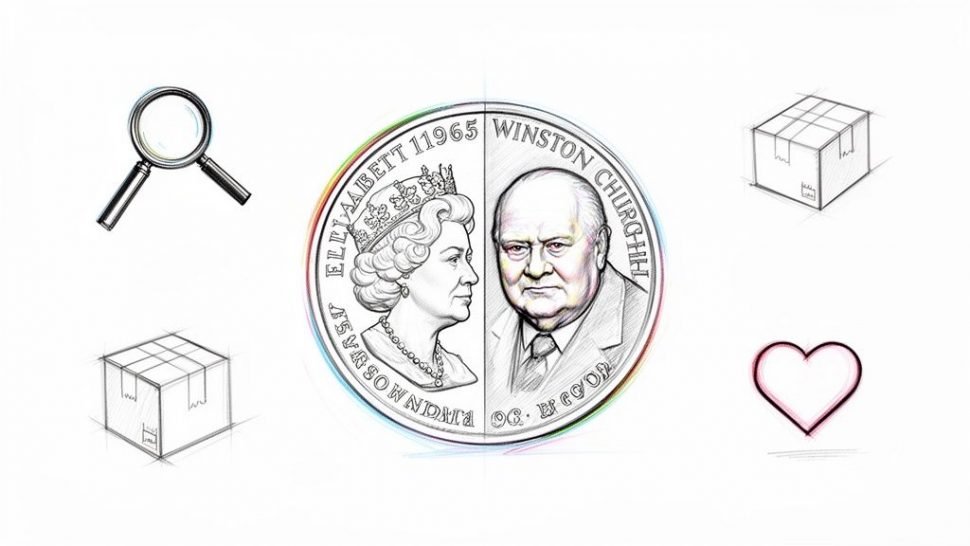
Posted by: Ian Stainton • 9 Mar 2026
Chances are, you've got a Churchill crown coin 1965 lying around somewhere. Maybe it’s in an old coin jar, a desk drawer, or a box of keepsakes. This isn't just a random bit of change; it's a piece of British history, struck to commemorate the life of Sir Winston Churchill in the year he passed away. So many were minted that almost every family seemed to have one.
From Forgotten Keepsake To Real Value

This guide is here to help you understand the coin you’re holding. We'll walk through its design, history, and what it’s realistically worth. But more importantly, we’ll show you a simple, secure way to exchange it for cash, along with any other leftover currency you might have.
You might be surprised at just how easy it is to turn foreign coins and old notes into money you can actually spend. Our service is designed to be completely hassle-free, with a 100% guarantee. You don’t even need to sort through your bag of mixed coins.
Our process is fast, easy, and trusted by major UK brands—including charities, supermarkets, airports, and even police forces. You just send us your currency, and we handle the rest.
Whether it's a single Churchill Crown or a whole jar of foreign coins from past holidays, you can unlock its value. You can even choose to donate foreign coins to charity effortlessly.
Now, let’s start by taking a closer look at the story behind that coin in your drawer.
What Makes The Churchill Crown Special
The 1965 Churchill crown is so much more than just another commemorative coin. It represents a major break from hundreds of years of British coin-making tradition. In fact, it was the first time in over 300 years—since the era of Oliver Cromwell—that a commoner appeared on a British coin.
This was the Royal Mint's ultimate tribute to Sir Winston Churchill, a way to honour a statesman who wasn't a monarch and cement his legacy right there in the nation's currency. The coin was created in direct response to the massive outpouring of public grief after Churchill's death in January 1965, giving people a tangible piece of history to remember the leader who guided them through the war.

A Landmark In Coin Production
Producing this coin was a huge challenge back in 1965. The Royal Mint even described it as one of its most difficult productions, needing immense force from 250-ton and 360-ton presses to strike the detailed design perfectly.
In a touching gesture, Lady Churchill herself struck the very first coin during a visit to the Mint, an event that sparked a frenzy among the public to get their hands on one. You can dive deeper into the full story of the 1965 Winston Churchill Commemorative Crown on NumismaticNews.net.
The coin's two sides are iconic and instantly recognisable:
- The Obverse: This side features the much-loved first portrait of a young Queen Elizabeth II, designed by the sculptor Mary Gillick.
- The Reverse: Here you'll find the famously stern and thoughtful portrait of Churchill in his signature 'siren suit', the work of sculptor Oscar Nemon. The bold lettering 'CHURCHILL' sits proudly above his head.
Understanding Its Physical Makeup
The coin’s physical properties are a key part of its identity. It was struck from cupronickel, a tough alloy of 75% copper and 25% nickel—the very same material used for the 50p pieces in your pocket today.
Coin Specifications:
- Weight: 28.28 grams
- Diameter: 38.61 mm
- Composition: Cupronickel (75% Copper, 25% Nickel)
While this coin is a fascinating piece of British history, it's just one of many crowns issued over the centuries. If you're curious to see how it fits into the bigger picture, you might be interested in our guide on British Crown coin values.
Knowing what makes the Churchill crown unique gives you a real connection to that piece of history you might have tucked away in a drawer.
Why The Churchill Crown Is So Common
If you’ve stumbled across a 1965 Churchill crown coin, you're certainly not alone. It's one of the most common commemorative coins found tucked away in British households, often turning up in biscuit tins, old wallets, or drawers full of keepsakes. This isn't by chance; its sheer abundance was a deliberate response to an entire nation's desire to remember a great leader.
When Sir Winston Churchill passed away in January 1965, the country was plunged into mourning. A powerful public demand arose for a tangible way to honour the iconic wartime Prime Minister. The Royal Mint stepped up, planning a commemorative crown that sparked an immediate and overwhelming reaction, leading to one of the biggest production runs in the history of UK commemorative coinage.
A Mintage In The Millions
The sheer scale of this coin's production is almost difficult to grasp. Between October 1965 and the summer of 1966, the Royal Mint at Tower Hill struck a colossal 19,640,000 of these crowns. Demand was so immense that banks in the UK and even across the Atlantic in the US placed massive orders. British banks alone bought up coins worth £19.5 million, while American banks ordered another $14 million worth. If you want a deeper look into these incredible numbers, you can explore more insights about the Churchill Crown on YouTube.
This huge mintage is the single biggest reason the coin is so common today. Unlike genuinely rare coins that were only produced in small batches, the Churchill Crown was made to be owned by everyone, ensuring almost anyone who wanted a memento could have one.
The Elusive 'VIP Specimen'
While millions of standard coins were struck for the public, a much smaller and far rarer version exists that serious collectors dream of finding: the 'VIP Specimen'. These special coins have a unique satin or matte finish, giving them a soft, non-reflective appearance that stands out dramatically from the brilliant shine of the regular coins.
These special satin-finish coins were never meant for general circulation. They were produced in tiny quantities for presentation packs gifted to dignitaries and other important figures, which is what makes them exceptionally rare and valuable today.
The difference is stark: nearly 20 million standard coins versus just a handful of VIP specimens. It perfectly illustrates a core principle of coin collecting: the higher the mintage, the lower the rarity. Because your coin is almost certainly one of the millions, its value comes from its historical meaning and physical condition, not from being scarce. Understanding this helps set realistic expectations and explains why, while it's a wonderful piece of history, it's not a winning lottery ticket.
How To Work Out Your Coin’s Value in 2026
So, you've found a Churchill crown coin 1965 and you're wondering what it's actually worth. While it has a face value of 25 pence, you can't pop down to the shops and spend it. Its real value is all about its condition and how much a collector might want it.
Because so many of these coins were minted, it’s not exactly a lottery win. But it does have a real-world value that's easy to unlock. Most coins that have been passed around and show a bit of wear and tear are worth between £1 and £5. If you have a perfect, untouched one, it could fetch a bit more.
A Simple Guide To Coin Grading
Grading a coin just means figuring out what shape it's in. You don’t need to be a professional to get a good idea of its condition. Just keep an eye out for a few key things.
- Wear and Tear: Look closely at the highest points of the design, like the details on Churchill's face or the Queen's hair. A coin that's been in circulation will look a bit soft or flat in these areas.
- Shine (or "Lustre"): A brand-new, uncirculated coin has a unique shine that catches the light. If your coin looks dull, or like someone has tried to polish it, it’s likely been handled a lot, which lowers its value.
- Scratches and Dings: Check for any obvious marks on the coin's surface or dents along the rim. The fewer blemishes, the better the condition.
Think of it this way: a coin that’s been rattling around in a tin for decades will naturally be at the lower end of the value scale. On the other hand, one that was put away safely from day one will look sharp and shiny, making it much more appealing to a collector.
Before we look at the numbers, here’s a quick table to help you estimate what your 1965 Churchill Crown might be worth based on its condition.
1965 Churchill Crown Value By Condition
| Coin Condition | Typical Features | Estimated Value Range |
|---|---|---|
| Heavily Circulated | Design is flat, many scratches, dull appearance. | £1 – £2 |
| Lightly Circulated | Some wear on high points, most details are clear, minor marks. | £2 – £5 |
| Uncirculated (UNC) | No signs of wear, original mint lustre is present, sharp details. | £5 – £15 |
| "Satin Finish" VIP Specimen | A very rare, high-quality strike with a unique finish, often professionally graded. | £100+ |
As you can see, condition is everything. While most coins will fall into the circulated categories, finding an uncirculated one is a nice little bonus!
Realistic Market Values For 2026
The good news is that the market for the Churchill crown coin 1965 is very stable. Because it's so common, it’s a favourite for people just starting their coin collection. If you want to dive deeper into its history and design, you can learn more about the Churchill crown in our detailed overview.
It's really important to keep expectations realistic. While a few "satin finish" VIP coins were specially produced and can be worth over £100 if professionally graded, they are incredibly rare. The coin you have is almost certainly the standard version, and its value is tied directly to its physical condition.
Finding the value of one coin is one thing, but what if you have a whole jar of mixed currency? That’s where we come in. Instead of spending hours trying to identify and value every single piece, you can use our fast and hassle-free service.
We offer a 100% guaranteed service where you don't even need to sort your coins beforehand. We’re trusted by major UK partners, including supermarkets, airports, and police forces, to exchange foreign coins and notes quickly and fairly. Just send them to us, and we’ll handle the rest
Exchange Your Old Coins For Cash The Easy Way
So you've found a Churchill Crown, maybe in an old tin or tucked away in a drawer. But what about all the other odds and ends with it? Turning that pile of forgotten currency into actual cash should be simple, not a chore.
Our entire service is built to be fast, easy, and completely hassle-free, giving you a 100% guaranteed payment for your old money. You don’t need to spend hours identifying and sorting every single coin.
Just gather up your mixed bag of leftover foreign currency, obsolete notes, and old British coins like the Churchill crown coin 1965. Our simple online wizard gives you an instant estimate based on weight. Then, just pack them all together, send them to us, and we handle the rest.
A Service You Can Trust
We’ve built our reputation on being transparent and reliable. It’s why we’re trusted by major UK partners, including leading supermarkets, airports, and even police forces, to exchange foreign coins and notes securely and efficiently. We provide clear rates with no hidden fees, so the value you’re quoted is exactly what you get.
This flowchart shows how we determine a coin's value based on its physical state.

As you can see, the better the condition and grade of your coin, the higher its potential cash value when you decide to exchange it.
Turn Leftover Currency Into Meaningful Donations
Your old coins can do more than just top up your bank account; they can make a real difference. We partner with many UK charities, offering a simple way for you to donate foreign coins to charity. That jar of unwanted change can become a powerful donation for a cause you truly care about.
The huge number of surviving Churchill Crowns means there's a steady supply for fundraising. Even a single coin from a grandparent's collection holds more cash value than you might think. You can explore more about how leftover change transforms into impactful donations and find details on the historical context of the 1965 Churchill Coin on coin-identifier.com.
Our service streamlines this process for organisations collecting stray coins. There are no hidden charges, our intuitive wizard handles mixed lots including pre-decimal treasures, and payments are made within five working days.
This approach lets airports and retailers offload donation jars securely, with our happiness guarantee ensuring complete trust. Whether you want to convert foreign coins and banknotes for yourself or for a good cause, the process is the same—fast, secure, and rewarding. You can also check out our guide on the easy way to exchange old British coins and notes.
Turn All Your Leftover Currency Into Cash or Donations
Finding that 1965 Churchill crown was probably just the start. If you’re like most people, you have a jar or a drawer somewhere filled with leftover holiday money—a few Euros, some old British shillings, and random banknotes from trips gone by.
Instead of letting that forgotten money go to waste, why not turn it into something useful? At We Buy All Currency, we’ve created a fast, trusted, and hassle-free service to do just that. The best part? You don't even need to sort through it all. Just send it to us, and we'll handle the rest.
A Trusted and Reliable Service
We’re proud to be trusted by major UK organisations, from well-known charities and supermarkets to airports and even police forces. They rely on us to exchange foreign coins and notes because we’re fast, transparent, and reliable.
Whether you want to top up your bank account or support a good cause, we make it simple. You can choose to convert foreign coins and banknotes for cash or donate foreign coins to charity.
The whole process is incredibly straightforward. Just gather up all your currency, send it to us, and you'll get paid quickly. We do all the sorting and counting, taking a chore off your hands.
That collection of currency, from the Churchill Crown to a handful of old pesetas, holds real value. Don't let it sit there collecting dust any longer.
Ready to get started? Visit our homepage to begin turning your forgotten currency into cash or a valuable donation to charity.
Your Churchill Crown Questions Answered
Even after diving into the history of the 1965 Churchill crown, you might still have a few things you're wondering about. Let's tackle some of the most common questions people ask, so you know exactly what you've got and what your options are.
Is The 1965 Churchill Crown Made Of Silver?
It's a common belief, but no, the standard 1965 Churchill crown you'll find is not silver. These coins are made from a cupronickel alloy—75% copper and 25% nickel.
Many older British crowns were indeed silver, which is where the confusion often comes from. But with a huge mintage of over 19 million, the value of a standard Churchill crown lies in its condition and appeal to collectors, not in any precious metal.
Can I Still Use A Churchill Crown In A Shop?
Technically, the coin is legal tender with a face value of 25 pence, but you'll have a tough time trying to spend it. Its large size and unfamiliar design mean most shopkeepers won't recognise or accept it.
The reality is that its life as everyday money is long over. The best way to get any value from it is by selling it to a collector or using a currency exchange that handles old coins.
How Do I Know If I Have A Rare VIP Version?
The rare "VIP Specimen" is a different beast altogether. You can spot it by its unique satin or matte finish, which stands out against the normal coin's brilliant, shiny surface. These were made in tiny numbers and usually came in special presentation packaging.
Unless your coin has that distinct, non-reflective finish and you have its original case, you almost certainly have one of the 19.6 million standard coins. If you think you might have a VIP version, the best thing to do is get it checked by a professional numismatic expert.
What Is The Easiest Way To Exchange Mixed Old Coins?
By far the most straightforward way to exchange foreign coins and notes is to use a dedicated service like ours. It saves you the headache of trying to sort, identify, and value every single piece yourself.
Our process is quick, simple, and 100% guaranteed:
- Just gather up all your currency—no need to sort anything.
- Pop the weight into our online calculator for a quick estimate.
- Send us all your mixed coins and banknotes in a single package.
- Get paid directly via bank transfer or PayPal.
It's a secure and efficient way to convert foreign coins and banknotes all at once, trusted by everyone from individuals to major UK brands like supermarkets, airports, and even police forces.
Ready to turn your old coins and notes into cash? At We Buy All Currency, we make the process simple and secure. Whether you want to exchange leftover holiday money or donate foreign coins to charity, we can help. Visit our homepage to get started today!