
Coins in Circulation UK: Legal Tender & Exchange Info
Posted by: Ian Stainton • 18 Apr 2026
TL;DR: In the UK, “coins in circulation” means legal UK coins issued by the Royal Mint. As of June 2025, the UK had around 27 billion coins circulating and the total value of notes and coins in circulation neared £100 billion, but many people also hold old UK coins and foreign change that cannot readily be spent. The most practical way to deal with mixed leftover coins is a specialist online exchange service that accepts coins, notes, and withdrawn currency together.
A lot of people end up searching for coins in circulation uk after opening a drawer, clearing a relative’s house, or tipping out a holiday money jar onto the table. That’s usually when the problem appears. The pile rarely contains only spendable UK change.
You often find a mix of modern British coins, old round £1 coins, foreign coins from past trips, banknotes from countries you no longer visit, and the odd pre-decimal piece that nobody in the family recognises. Some of it may still be legal tender. Some of it may be withdrawn. Some of it was never spendable in the UK in the first place.
That’s where people lose time. They assume a bank will sort it out, or they assume the whole lot is worthless. In practice, neither assumption helps. What matters is knowing which coins are in circulation, which ones aren’t, and how to turn the mixed leftovers into real value without wasting hours sorting them by hand.
That Jar of Old Coins What Are They and What Are They Worth
The usual starting point is simple. You find a jar in a kitchen cupboard, a biscuit tin in the loft, or an envelope of “old money” in a desk drawer. At first glance it all looks roughly the same. Metal is metal, and money is money. But once you spread it out, the differences matter.
Some coins will be current UK circulation coins. Those are the easiest to understand because they’re still part of normal cash use. Others may be withdrawn UK coins, which means they were once widely used but have since been replaced or removed from active circulation. Then there are foreign coins and banknotes, which are common after holidays, business travel, student exchanges, and airport leftovers.
Quick answer
If you’re looking at a mixed collection, the first job is to separate the idea of spendable from valuable. A coin doesn’t have to be currently spendable in a shop to still have exchange value through a specialist service.
That’s especially true when the collection includes:
- Current UK coins that can still be spent
- Old UK coins that shops won’t take
- Foreign coins that banks usually won’t handle
- Leftover banknotes from trips abroad
- Withdrawn or obsolete currency sitting unnoticed for years
Mixed jars are rarely worthless. They’re usually just inconvenient for mainstream banks and exchange counters.
The practical issue isn’t whether the pile contains money. It usually does. The issue is whether the institution you try first is set up to handle it. High street systems work best with neat, standardised, currently circulating currency. They struggle when a customer turns up with mixed denominations, foreign coins, older British issues, or a bag that hasn’t been sorted.
What people often get wrong
It is common to make one of two mistakes.
They either spend time trying to identify every single coin before doing anything, or they ignore the lot because the collection looks too messy to be worth the effort. Neither approach is efficient. For mixed currency, what works better is using a specialist route that can assess coins and notes together, including leftover foreign currency that ordinary exchange points won’t touch.
What Exactly Are UK Coins in Circulation in 2026
Emptying a kitchen jar often reveals three different things mixed together. Current UK change, older British coins that no longer fit day to day cash use, and foreign coins that high street services usually reject. To sort any of that properly, it helps to know what still counts as a circulating UK coin.
In practical terms, UK coins in circulation are the decimal coins issued for everyday use in the current monetary system. They are the coins businesses, banks, cash centres, vending machines, and self-checkouts are built to recognise and process.

What counts as in circulation
A coin generally sits in current UK circulation if it meets three tests:
- It was authorised for the modern UK decimal system
- It is still accepted in ordinary cash handling
- It matches the denominations used in everyday transactions now
That point about the decimal system is where many people get caught out. Pre-decimal British coins can be genuine and collectible, but they are not part of current circulation. The same goes for withdrawn designs that look familiar but no longer move through normal retail and banking channels.
The denominations in everyday UK use
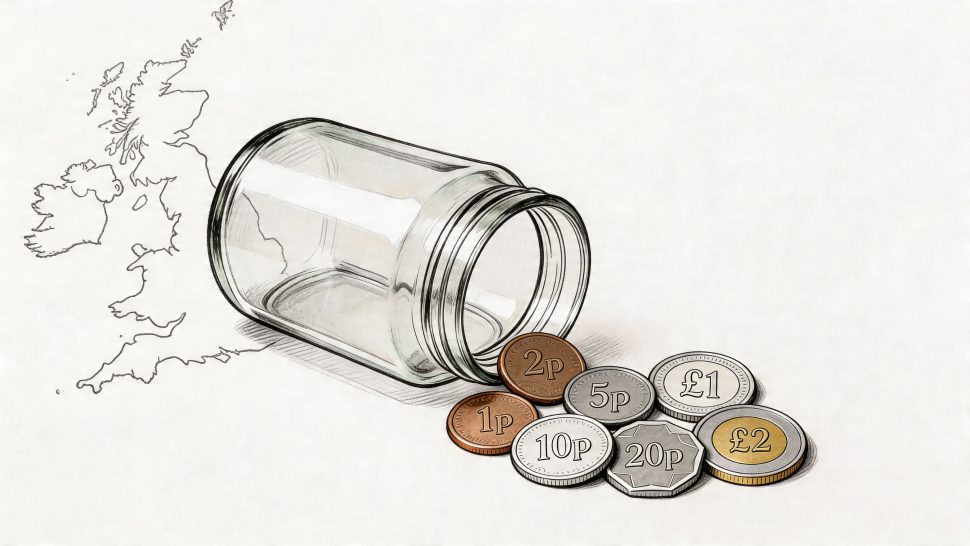
In 2026, the circulating UK coin denominations people usually mean are:
- 1p and 2p
- 5p, 10p, 20p and 50p
- £1 and £2
These are the coins designed for active use, not just for collecting. They are the standard set used in tills, public machines, and cash deposits.
That distinction matters in real life. A coin can be British without being practically spendable. A coin can also be legal tender in a technical sense and still be awkward to use if a shop, machine, or bank counter will not handle it in the usual way.
Why people search this in the first place
Very few people search coins in circulation uk because they want a tidy list alone. They usually have a real sorting problem in front of them. A bag of mixed change. A drawer with old pound coins. Holiday leftovers sitting next to British coppers. A collection inherited from a relative.
Once you know which UK coins are still in active circulation, the next question gets much more practical. What should you do with everything that falls outside that group?
That is where general banking stops being useful. Banks are set up for current, standardised money. Mixed collections are different. If your pile includes current UK coins, older British issues, and foreign coins or notes, a specialist service can assess the lot together instead of forcing you to split it into what a counter will and will not accept. If you need to check older and current UK cash, this guide to British notes and coins is a useful starting point.
For anyone holding a mixed collection, that is the practical line to draw. Current circulating UK coins are the spendable part. The rest may still hold exchange value, but usually through a specialist route rather than an ordinary bank.
From Mint to Withdrawal The Lifecycle of British Coins
Coins don’t stay in active use forever. They enter circulation, pass through the public for years, and eventually some are redesigned, replaced, or withdrawn. That happens for practical reasons, not just for collectors.
A coin has to work across a huge physical network. It needs to be recognisable, durable, machine-readable, and hard to fake. Once one of those conditions starts to fail, replacement becomes more likely.

Why coins get replaced
Some changes are routine. Designs evolve, portraits change, and minting standards improve. But the strongest reason for withdrawing a coin is usually operational. If a coin creates handling problems or becomes vulnerable to fraud, it stops doing its job properly.
The clearest example is the old round £1 coin. By 2014, counterfeiting had become so serious that one in every 30 round £1 coins in circulation was estimated to be fake. That problem led to the introduction of the new 12-sided £1 coin in 2017, with added security features such as a latent image and micro-lettering, as set out in the technical consultation on the new one pound coin.
What withdrawal means in practice
When a coin is withdrawn, it often remains physically common long after it stops being useful in shops. People keep it by accident. They miss the exchange deadline. It gets mixed into savings jars, charity bags, old wallets, and holiday leftovers.
That’s why house clear-outs so often uncover coins that look familiar but can’t be spent normally. The round £1 is the classic example. Many people still have them tucked away because they were so widely used for so long.
A withdrawn coin can still have exchange potential even after ordinary retail use has ended. The difficulty is access, not necessarily value.
The real trade-off
Mainstream cash systems are built for current money. They aren’t designed to inspect mixed bags for older issues, rare edge cases, or withdrawn pieces. That gap creates a practical problem for the public.
If you have one old coin, it’s a minor annoyance. If you have a mixed batch of old British coins, foreign coins, and leftover notes, it becomes a sorting and handling problem. That’s usually the point where specialist exchange becomes more useful than trying to push everything through ordinary channels.
Why Banks and Bureaus Wont Exchange Foreign or Old Coins
People still assume the bank is the obvious place to take leftover money. That works sometimes for standard current notes. It works far less often for coins, and especially badly for foreign or old coins.
The reason is mostly mechanical. Coins are heavy, low in value relative to their weight, and expensive to process unless they arrive in a standard format.
The economics are the problem
Bulk coin handling depends on standardised weights. A 1kg bag of 1p coins yields £2.81, while a 1kg bag of £1 coins yields £11.43, according to UK coin specification data. That makes the problem easy to understand.
If a bank or bureau has to receive, verify, transport, count, and reconcile a heavy bag of low-value coins, the handling burden can outweigh the return. Add foreign coins or mixed old currency, and the process becomes even less attractive because the items are outside the normal machine-led workflow.
What usually gets accepted and what doesn’t
| Comparing Your Currency Exchange Options | Current Banknotes | Current UK Coins | Withdrawn Currency | Foreign Coins |
|---|---|---|---|---|
| High street bank | Usually yes | Sometimes, with conditions | Rarely | Usually no |
| Exchange bureau | Often yes for selected currencies | Uncommon | No | Usually no |
| Post office style counter service | Limited by policy and currency type | Limited | Rarely | Usually no |
| Specialist currency exchange service | Yes, including mixed lots | Yes | Yes | Yes |
That table reflects the practical reality most customers run into. Banks and bureaus prefer clean, current, straightforward currency streams. They don’t want the labour involved in sorting mixed coins and notes from multiple origins.
What works better
If you need to exchange foreign coins, exchange foreign coins and notes, or deal with leftover foreign currency from several trips at once, specialist processing is the route that matches the problem. It handles the formats that ordinary retail and banking channels tend to reject.
The question isn’t “is this money real?” The question is “who is equipped to process it efficiently?”
Why people get turned away
Common reasons include:
- Mixed contents that can’t go straight through standard counting systems
- Foreign coinage that local branches don’t have a route for
- Withdrawn British coins that no longer fit normal cash acceptance rules
- Low-value bulk coins that are costly to handle in branch
That’s why a wasted bank trip is so common. The money may still hold value. It just doesn’t fit the bank’s operating model.
How to Exchange Leftover Currency The Simple Way
The easiest process is the one that removes sorting, guesswork, and branch visits. For mixed old UK and foreign currency, the most reliable approach is usually a specialist online exchange that accepts coins, banknotes, and withdrawn money together.

A simple four-step process
Gather everything together
Pull out the full lot. That means current coins, old UK coins, foreign change, leftover notes, and anything withdrawn that’s been sitting in drawers or jars. The practical advantage is obvious. You deal with the whole problem once rather than trying several different places.Check the quote online
A specialist service should show you what it accepts and how the value is calculated. If the platform supports mixed and unsorted currency, that saves a lot of manual work and reduces mistakes.Pack and post the currency
This is the point where specialist services outperform branch-based options. You don’t need to queue, argue over what’s accepted, or carry a heavy mixed bag from place to place.Receive payment or choose donation
Depending on the service, you can usually get paid directly or turn the proceeds into a charity donation. That makes it useful not only for travellers, but also for charities, retailers, airports, and businesses that collect odd foreign change.
What makes the process easier
The best setups remove friction:
- No need to sort every coin by hand
- Coins and notes can be handled together
- Old and withdrawn currency can be included
- Foreign leftovers from multiple countries can go in one process
For people holding a mixed batch, this page about exchange foreign coins and notes shows the kind of all-in-one route that banks generally don’t offer.
Real-world uses beyond holidays
This isn’t only for personal travel leftovers. The same method works well for:
- Charities collecting donated change
- Retailers receiving foreign coins in tills
- Attractions and airports handling mixed visitor currency
- Families dealing with inherited jars of coins and old notes
The common thread is convenience. What doesn’t work is treating mixed leftover currency as if it were the same as paying in a neat roll of current local coins. It isn’t.
Common Mistakes to Avoid When Handling Old Currency
A common real-world scenario is a kitchen jar that starts with a few old pennies and ends up holding foreign coins, withdrawn UK pieces, and loose change nobody wants to count. Value gets lost when people guess what matters and what does not.
Dismissing small coins too quickly
Low denominations are easy to underestimate. A few coppers do not feel important, so they get left in drawers, tipped into charity tubs without checking, or thrown in with scrap. The same thing happens with leftover foreign coins from holidays.
The practical problem is accumulation. One coin is trivial. A mixed batch built up over years often is not. I regularly see collections where the owner assumed there was nothing there, yet the combined total was worth recovering once everything was assessed together.
Sorting before you know the acceptance rules
People often spend an evening splitting coins by country, date, and denomination, then find out the chosen outlet only accepts part of the pile. That work does not increase the value of the coins. It only increases the time spent handling them.
A specialist service that deals with mixed old UK and foreign currency is built for exactly this kind of collection. If unsorted material is accepted, early sorting is busywork.
Practical rule: Check what the service accepts before you start organising anything.
Cleaning coins and damaging them
This one catches people out. Old coins often look dirty, so the instinct is to polish them, soak them, or scrub off tarnish. That can damage surfaces, remove detail, and reduce any collector interest the coin might have had.
For ordinary exchange, cleaning usually adds no benefit. For older pieces, it can do harm. Keep coins dry, leave them as found, and let the receiving service assess them properly.
Taking a mixed batch to the wrong outlet
A bank branch, Post Office counter, or travel money desk may handle current notes, but that does not mean it can process old British coins, foreign coins, and obsolete currency in one go. That is where many people waste time.
The issue is not that the money has no value. The issue is that standard cash channels are built for current, uniform currency, not mixed leftovers from different countries and different periods. If your jar includes old UK coins alongside foreign change, a specialist service is usually the only route that deals with the full mix in one process.
Separating old UK coins from the rest
Another mistake is pulling out the British coins and treating them as a separate problem to solve later. In practice, that often means they sit untouched for another few years.
If the collection is mixed, handle it as one job. That is the practical advantage of using a specialist service rather than trying one option for current coins, another for foreign notes, and a third for withdrawn UK money. Banks rarely solve that whole problem. A specialist service can.
Frequently Asked Questions About Exchanging Coins
Can I exchange foreign coins in the UK
Yes, but usually not through the standard places people try first. High street banks and many travel money counters focus on current notes because coins are slower to handle, harder to count, and often uneconomic in small mixed amounts. If you want one route for foreign coins, foreign notes, and odd leftovers from different trips, a specialist service is normally the practical answer.
Do banks accept foreign coins
Usually no.
The problem is operational. Foreign coins do not fit normal retail banking processes, especially when they come from several countries, include low denominations, or arrive mixed with old UK money. A branch may accept current account cash deposits in sterling, but that is very different from assessing and exchanging leftover travel coins.
Can I still cash in old round £1 coins
They are no longer spendable in shops, but they can still have exchange value through the right channel. What matters is where you take them. Standard banking routes are built for current currency in circulation, while mixed batches of withdrawn UK coins and foreign change usually need specialist handling.
Are pre-decimal British coins worthless
No. They are outside normal circulation, so their value depends on the coin and who is assessing it.
Some pieces have exchange value. Some may have collector interest. Some are only useful as part of a wider mixed submission of old and foreign currency. The mistake is assuming a bank counter can tell you that on the spot.
Do I have to sort my coins first
Not always. Sorting can help if you already know exactly what you have, but many people are dealing with one jar that contains euros, old pence, holiday change, and withdrawn UK coins all together.
In that situation, sorting everything by hand often creates work without solving the underlying problem, which is finding a service willing to take the full mix. A specialist service can usually assess mixed collections more efficiently than a bank or bureau that only wants current, standard currency.
Can I exchange old notes as well as coins
Yes, with the right service. That matters because leftover currency is rarely tidy. People often have a few current notes, some withdrawn notes, foreign coins, and old UK coins in the same drawer. Sending the whole lot through one specialist process is usually far more practical than trying to split it across different outlets.
Can I donate foreign coins to charity instead of cashing them in
Yes. That can be a good option for travellers, schools, offices, fundraising groups, and anyone clearing out accumulated change. If the service supports charitable conversion, unused coins and notes can be turned into a donation instead of being left in storage.
How long does payment take
It depends on the provider and on what you send. Mixed coin collections, older currency, and foreign cash usually need to be received and checked before payment is issued.
That extra step is the trade-off for using a service that can handle the awkward items banks tend to refuse. In practice, one proper specialist assessment is usually faster than making several unsuccessful trips to branches, counters, and bureaux that only deal with the easiest part of the collection.
Turn Your Unused Coins Into Cash Today
A jar of mixed coins usually looks like a job for later. Later often turns into years, especially when the collection includes current UK change, older British coins, foreign coins, banknotes, and pieces no bank counter wants to touch.
The practical answer is to stop treating it as something that needs perfect sorting at home. Value comes from using a specialist that can assess the full mix and turn awkward leftover currency into cash or a charitable donation.
That matters because the problem is rarely one coin. It is the whole collection. Banks can sometimes help with standard currency they still handle. They usually do not solve the broader issue of old UK coins, withdrawn notes, and foreign change sitting together in one container.
We Buy All Currency offers that specialist route. It handles coins, banknotes, withdrawn currency, and mixed collections through a postal process, with clear rates and a realistic path to turning unused money into something useful instead of letting it sit forgotten.