
Best Currency Exchange Rate Hungary: Find HUF
Posted by: Ian Stainton • 31 May 2026
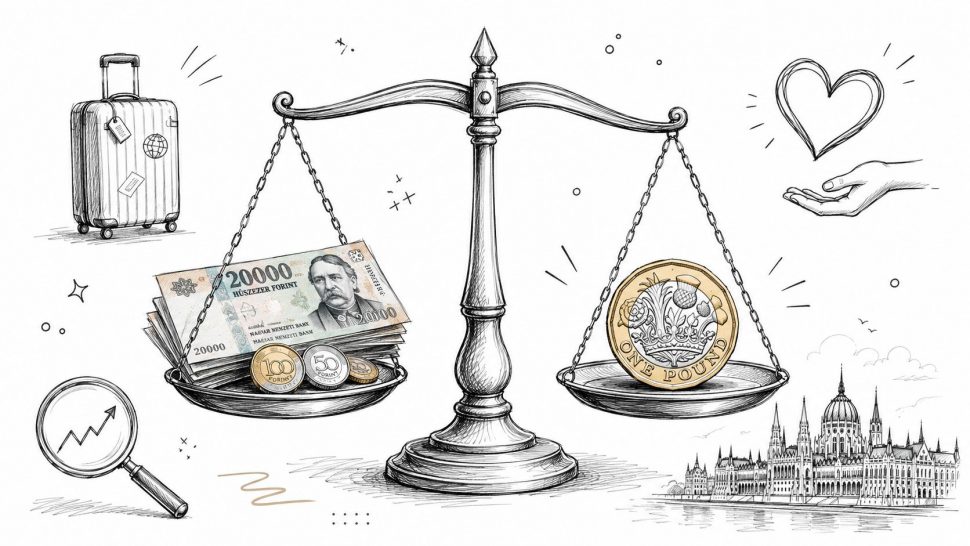
If you've come home from Hungary with leftover forint, the practical answer is simple: exchange it through a specialist postal service, especially if you have coins and mixed notes. Hungary still uses the Hungarian forint, not the euro, and a recent market snapshot placed sterling at about 457.25 HUF per £1 on 14 March 2026, so even a small pile of leftover cash can still be worth turning back into pounds.
That's the common pitfall: looking up the currency exchange rate for Hungary, seeing a number on a converter, then realising a bank won't take foreign coins, a high street bureau only wants clean current notes, and the airport kiosk is long behind them.
For UK travellers, this is a very common problem after a break in Budapest or a wider trip across Hungary. You've got a few notes, some coins, maybe an older note tucked into a wallet, and no obvious way to convert it without hassle.
This guide explains what the Hungarian forint is, why the exchange rate moves, what options you have in the UK, and how to deal with leftover foreign currency in a way that's simple and realistic.
Your Guide to Hungarian Forint After a Trip to Hungary
You get back to the UK, unpack your bag, and find the same problem many travellers leave until later. A few Hungarian notes in one pocket, coins at the bottom of a wash bag, and no clear idea whether any of it can still be turned back into pounds.
That is the key question behind many searches for the currency exchange rate Hungary travellers need. The number on a converter is only part of the story. The harder part is working out who will accept your leftover Hungarian forint, especially if you have coins, small notes, or a mix of both.

Why leftover HUF causes more frustration than expected
Hungary uses the forint, not the euro, so UK visitors return with HUF in their wallet rather than a currency that is widely handled across Europe. That sounds like a small detail while you are away. Once you are home, it becomes the whole problem.
Leftover HUF is awkward for a simple reason. Exchange services often prefer straightforward transactions: current notes, reasonable amounts, and currencies they see every day. Travel leftovers are rarely that tidy. You may have a handful of low-value notes, some coins, or older pieces of cash saved from more than one trip.
For a UK traveller, this means returning with HUF, not euros. And HUF is exactly the kind of currency that often ends up forgotten in drawers, travel wallets, or kitchen bowls with other loose change.
The practical answer for most UK travellers
A good exchange rate only helps if the service will take your money in the first place. That is where many people get stuck.
If you have a larger stack of clean, current banknotes, some standard exchange routes may work. If your money is a typical holiday mix, with coins, small denominations, and odd leftover notes, a specialist service is usually the simpler answer because it is built around the actual state of travel cash rather than the ideal version of it.
A useful way to look at it is this: checking the rate is like checking the price of a train ticket. It tells you something important, but it does not tell you whether the train stops where you need it to. With leftover forint, the practical issue is acceptance.
Practical rule: If your leftover money includes coins, mixed denominations, or older notes, focus on finding a service that will accept the full bundle and return pounds without extra hassle.
That is why many UK travellers choose postal exchange for leftover currency. It deals with the part most rate-focused articles skip. How to get sterling back from the Hungarian cash you have, not the neat, note-only amount shown on a currency converter.
Understanding the Hungarian Forint Exchange Rate
If exchange rates feel confusing, that's because people often compare two different things without realising it. One is the market rate you see on a chart. The other is the rate a retail customer receives.

What HUF means in practice
HUF is the international currency code for the Hungarian forint. In Hungary, prices are shown in forint, and cash in your pocket after a trip will normally be HUF notes and coins.
If you're in the UK and looking up the currency exchange rate Hungary travellers need, the rate that matters to you is usually the GBP/HUF relationship. In plain English, that means how many forint your pounds buy, or how many pounds you'll receive when you sell your leftover HUF.
Why the number on Google isn't the payout in your hand
A live converter usually shows a market reference point. It does not automatically show what a walk-in bureau, bank, or postal buyer will pay for your actual notes and coins.
Retail exchange always involves handling, processing, and pricing decisions. That's especially important with lower-value currencies and very small balances, because the practical costs can matter more than the headline rate.
People often get frustrated here because they think:
- The chart rate is guaranteed. It isn't.
- Coins should be easy to exchange. They usually aren't through mainstream outlets.
- A small amount isn't worth bothering with. Sometimes it is, especially when mixed with other leftover travel money.
Why the forint moves around
The forint has been volatile. Trading Economics' Hungary currency data shows USD/HUF hit an all-time high of 449.85 in October 2022, but had strengthened to 302.1790 by 29 May 2026, and was up 15.08% over the last 12 months.
That matters for anyone holding leftover cash. If you keep HUF for months or years, the eventual sterling value can change materially before you exchange it.
A live rate answers “what's happening in the market?” It doesn't answer “what will I actually get for these coins and notes?”
One more source of confusion
Different providers can show very different numbers at the same time because they use different pricing methods, timings, or customer assumptions. So the smart question isn't just “What's the Hungarian rate today?”
It's this:
- Will this provider accept my HUF at all?
- Do they take coins as well as notes?
- Is the price shown clearly before I send anything?
- Can they handle old or withdrawn currency?
That's the gap between market information and real-world exchange.
Comparing Your UK Exchange Options for HUF
You get home from Budapest, empty your coat pocket, and find a few forint coins, a couple of small notes, and maybe one older note you forgot to spend. That is the point where exchange rate articles usually stop being helpful.
The practical question is not just what HUF is worth on paper. It is who in the UK will take your Hungarian money, in the form you still have it.
Where to Exchange Hungarian Forint HUF in the UK
| Exchange Option | Accepts HUF Notes? | Accepts HUF Coins? | Accepts Old Forint? | Best For |
|---|---|---|---|---|
| Banks | Sometimes | Rarely | Rarely | Existing customers with current notes only |
| Post Office or high street bureau | Often for current notes | Usually not | Usually not | Straightforward holiday cash in spendable notes |
| Airport kiosk | Sometimes | Usually not | Usually not | Last-minute convenience, not ideal for leftovers |
| Specialist online service | Yes, typically including mixed cash | Yes | Often yes | People who need to exchange foreign coins and notes, leftover holiday money, or older currency |
If you want a broader view before choosing, compare the main provider types in these UK currency exchange rate comparison examples.
Why your options shrink once HUF is leftover cash
Hungarian forint creates a common problem for UK travellers. The leftover amount often sits in an awkward middle ground. It is too much to throw in a drawer without thinking about it, but too little, too mixed, or too coin-heavy for many mainstream exchange counters.
Banks and bureaus usually work best when the transaction is simple. Current notes. Standard denominations. A currency they handle often. Hungarian cash left after a trip is often the opposite.
Coins create the biggest friction. They are slower to sort, count, store, and move. Older notes can cause similar issues because staff may need extra checks or may not buy them at all.
That is why people are often told:
- Notes only
- Current issue only
- Customer account required
- We do not buy this currency
- We do not take coins
Why the headline rate is only part of the answer
A posted rate can look attractive and still be useless if the provider will not accept the money in your hand.
A simple way to view it is this: the exchange rate is the price tag, but acceptance rules decide whether you can get through the door. If you have HUF coins, small notes, or older currency, the essential comparison is between services that can process them and services that cannot.
That is where many travellers get stuck. They search for "currency exchange rate Hungary" and find market data, but what they need is a practical route from leftover forint to pounds.
Best option by situation
Different outlets suit different kinds of leftover money.
- Current HUF notes in a larger amount. A mainstream outlet may work.
- Coins and notes together. A specialist service is usually the better fit.
- Older or withdrawn forint. Specialist handling matters more than the headline rate.
- Mixed holiday money from several trips. A postal exchange service is often easier than visiting multiple counters.
One useful rule helps here. Judge your HUF as a bundle, not coin by coin. A few forint coins may look insignificant on their own, but the total can become worth exchanging once you add small notes and any other leftover foreign currency you already have at home.
That shift in thinking saves frustration. Instead of asking, "What is today's HUF rate?" ask, "Who will turn this actual pile of currency into sterling with the least hassle?"
How to Exchange Hungarian Forint with We Buy All Currency
For many people, the biggest hurdle isn't understanding exchange rates. It's dealing with the physical money. Small HUF balances, especially coins, are easy to ignore because the forint has a low unit value. Xe's converter page showed Ft1 = $0.00329514 and around Ft303.46 per USD, which helps explain why individual coins seem insignificant until you gather them together on one live HUF converter page.

A straightforward postal process
If you want to use a specialist postal exchange, the process is usually simple and built for exactly this kind of leftover money. You can see the general process on this guide to how to exchange foreign currency.
Check the quote online
Start by selecting the currency and reviewing the offered rate before sending anything.Enter your details
You provide the information needed for identification, contact, and payment.Pack your currency
Specialist services offer a key distinction from most banks: you can usually send mixed notes and coins, and there's often no need to sort every item by hand.Post the package securely
Follow the packaging instructions and use the recommended postal method.Receive payment after verification
Once the currency is checked, payment is issued by the chosen method.
Why this suits leftover holiday money
This format works well because it removes the common friction points:
- No queue at a counter
- No need to carry coins around town
- No dependence on a branch accepting your currency
- No guesswork about whether old notes will be refused on sight
It's also useful for people who don't just want to exchange HUF. Many travellers have a drawer of mixed cash from several trips, and one postal exchange can deal with that more neatly than multiple in-person visits.
Who uses this kind of service
This isn't only for holidaymakers. Specialist exchange services are also used by charities, businesses, airports, and organisations that collect mixed foreign cash in donation boxes or through day-to-day operations.
That matters because these users face the same problem you do, just on a bigger scale. Standard exchange channels are often poor at handling coins, odd denominations, and withdrawn currency. Specialist services exist because that gap is real.
Common Mistakes to Avoid When Exchanging Currency
The biggest mistakes usually happen before anyone sends their money. They happen when people assume all exchange options work the same way.
Don't rely on the headline rate alone
A visible rate can be useful, but it isn't the whole story. In late May 2026, one provider showed 1 USD = 303 HUF while another showed 1 USD = 333 HUF, which illustrates how quoted rates can differ significantly depending on provider and methodology on the Wise USD to HUF converter page.
If you're holding physical HUF, what matters is the actual payout after pricing and handling, not the most attractive number on a chart.
Don't throw away coins
This is one of the most expensive “small” mistakes. Travellers often assume Hungarian coins are pointless because each coin looks low in value. But leftover money tends to build up in layers, not in one dramatic sum.
A few coins from one trip, a few small notes from another, and suddenly you've got enough to make exchanging worthwhile.
Don't wait for an impossible perfect moment
Because currencies move, some people keep waiting for a better rate. That can backfire. If you're sitting on physical cash you don't plan to use again soon, the practical question is often whether the convenience and certainty of converting now outweigh the uncertainty of waiting.
The best time to exchange leftover travel cash is often when you're organised enough to act, not when you think you can outguess the market.
Don't assume old notes are worthless
People regularly leave older notes in drawers because they assume nobody will take them. Mainstream counters may refuse them, but specialist channels can be more useful for this exact problem.
Don't leave it until the next airport trip
Airports are built around convenience, not around helping you exchange foreign coins, sort mixed money, or deal with withdrawn notes. If your goal is to recover value from leftover HUF in the UK, a dedicated exchange route is usually more practical than hoping the next terminal desk can help.
Real-World Scenarios for Exchanging Leftover Currency
You get home from Budapest, empty your coat pockets, and find the usual mix. A few Hungarian forint notes. A handful of coins. Maybe some euros from a connection or an older trip. None of it looks worth dealing with on its own, so it ends up in a drawer.
That is how leftover travel money builds up. Not in one large amount, but in bits that feel too awkward to sort.
The couple back from Budapest
A couple comes back from a long weekend with a small stack of HUF notes, loose coins, and a few euro coins from the airport. They check the exchange rate online, then get stuck on the practical question that rate tables rarely answer. Who in the UK will take this mix of money, especially the coins?
Instead of treating each currency separately, they gather everything into one exchange job and use a postal service that accepts mixed foreign cash. The process is simpler because they do not need to visit multiple counters, argue over which notes are current, or leave the coins behind.
The result is straightforward. Clutter becomes pounds.
The charity collection tin
A charity fundraising team empties a donation tin after a travel talk or community event and finds foreign cash inside, including Hungarian forint. This is a common real-world problem. The money has value, but only if someone can convert it.
High street options often work badly for this kind of collection because the contents are mixed, small, and coin-heavy. A specialist service is better suited to the job because volunteers can send the currency together rather than trying to separate every denomination by hand.
That is also why some groups choose to donate foreign coins to charity in the first place. If the money can be processed properly, even small travel leftovers can support something useful.
The family holiday fund
A family keeps an envelope of spare currency from several trips. Inside are Hungarian forint, old notes from another country, and more coins than expected. For months, the envelope gets ignored because nobody wants to spend an afternoon working out what each piece is worth or whether anyone will accept it.
Eventually, they decide to exchange the lot through a service that handles physical foreign cash, including the awkward parts people tend to leave behind. The amount they receive may not fund the next holiday, but it still puts real money back into their budget.
That matters. Leftover currency is a bit like store credit you forgot you had. It is not useful while it sits in a drawer, but it becomes useful again once you turn it into pounds.
Why these examples matter
The common thread is not market timing. It is practicality.
People returning from Hungary often do not need another explanation of the HUF rate. They need a realistic way to get sterling for money that banks, airport desks, and ordinary exchange counters may not want, especially if coins or small notes are involved.
That is why specialist exchange services make sense for leftover Hungarian forint in the UK. They solve the problem travellers have. Not "What is the rate today?" but "How do I turn this leftover cash into pounds without wasting time?"
Frequently Asked Questions About Hungarian Currency
Can I exchange Hungarian forint coins in the UK
Yes, but usually not through ordinary banks or high street exchange counters. Coins are where specialist services stand out, especially if you want to exchange foreign coins and notes together rather than separate everything.
Do UK banks accept foreign coins
Usually, they don't. Banks may sometimes handle current foreign notes, but coins are commonly refused because they're awkward and expensive to process through standard retail channels.
Does Hungary use the euro
No. Hungary still uses the Hungarian forint, which is why UK travellers return with HUF rather than euro cash after a trip.
Is old or withdrawn Hungarian currency still worth anything
Sometimes, yes. Whether it can still be exchanged depends on the specific issue and who is handling it. Mainstream outlets may refuse it quickly, while specialist services are better placed to assess older or withdrawn currency.
What rate should I look at as a UK customer
The key thing is the GBP/HUF outcome, because you want to know how much sterling you'll receive for your Hungarian currency. Recent market data also showed the forint strengthening against major currencies over the past year, which matters because a stronger forint changes the sterling result when you sell HUF, as reflected in recent EUR/HUF market graphics.
Can I exchange very small amounts of HUF
Yes, especially through specialist postal services that are designed for leftover travel money. This is often the best answer when the value is spread across coins and low-denomination notes.
Can I donate Hungarian forint instead of exchanging it for myself
Yes. Some services allow the value of leftover foreign currency to be directed to charity, which is a practical option if you'd rather turn small balances into a donation.
How long does payment take
With specialist online exchange, payment is typically made after the currency has been received and verified. For We Buy All Currency, the publisher states that payment is issued within five working days by bank transfer or PayPal.
If you've still got Hungarian forint sitting in a drawer, wallet, charity tin, or office cash collection, there's no reason to leave it unused. A specialist service gives you a practical way to exchange foreign coins, notes, old currency, and mixed leftover travel money without the usual high street hassle.
If you want a simple way to convert Hungarian forint and other unused travel cash, We Buy All Currency lets you exchange foreign coins, banknotes, withdrawn currency, and mixed leftover money by post. You can check your rate online, send everything together without sorting coins, and receive payment after verification, making it a straightforward option for travellers, charities, and businesses alike.