
Currency in Italy Before Euro: The Lira’s Legacy
Posted by: Ian Stainton • 1 Jul 2026
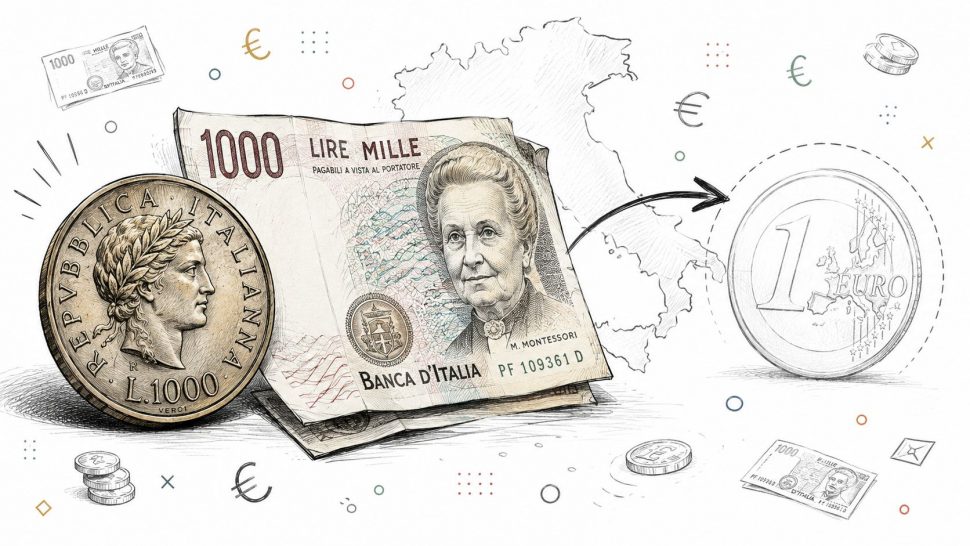
The currency in Italy before the euro was the Italian lira, and it was replaced by the euro in 2002. Official lira exchange has ended, but old notes and coins can still be turned into cash through specialist services that handle withdrawn currency.
A lot of people land on this question the same way. They find a tin of holiday change, a wallet tucked in a drawer, or an envelope from a relative's estate, and suddenly they're staring at old Italian money with no idea whether it's a souvenir or something worth recovering.
That uncertainty is common. Banks usually won't help with old coins, most travel money counters only deal with current notes, and withdrawn currencies like the lira sit in an awkward middle ground. The good news is that old Italian money isn't just a history lesson. In many cases, it's a forgotten asset. If you know what you're holding and where standard exchange routes stop, there's still a practical path forward.
What Was the Currency in Italy Before the Euro
If you're searching for the currency in Italy before euro, the answer is straightforward. Italy used the Italian lira, often written as ITL, before the euro replaced it.
The lira served as Italy's official currency from 1861 until 2002, after which the euro became the physical money people used day to day. Old lira notes and coins are no longer legal tender, which is why a bank cashier or exchange kiosk will usually turn them away. That refusal doesn't automatically mean they're worthless.
What most people need to know first
If you've just found old Italian cash, focus on three practical points:
- It was real national currency: The lira was Italy's official money for well over a century.
- Banks aren't the right route now: High street institutions generally handle current circulating currency, not obsolete notes and coins.
- Specialist buyers are different: They work with leftover foreign currency, including withdrawn money, and can often process what mainstream channels won't.
That's the key distinction. There's a difference between official redemption and market value through a specialist exchange route.
Practical rule: If your old money is no longer accepted by a central bank or high street bank, don't assume it has no value. It often just needs a different type of buyer.
People who deal with inherited travel money, mixed holiday change, or obsolete European cash often run into the same problem with pre-euro currencies. If you want a wider overview of currencies before the euro, it helps to see where the lira fits among other withdrawn European currencies.
Why this still matters in the UK
In the UK, old travel money tends to sit untouched for years. It ends up in charity tubs, desk drawers, coin jars, and house clearances. Italian lira appears regularly because Italy was a popular destination long before the euro arrived.
That makes lira one of the classic examples of leftover foreign currency that people assume can't be used. In practice, the issue isn't whether the money once existed. It's whether you're using the right route to exchange foreign coins and notes today.
The Italian Lira A Brief History
The story of the lira helps explain why so many different notes and coins still turn up in UK homes. Italy used the lira as its national currency from 1861 until 2002, and over that long life the currency changed shape, design, and purchasing power many times. Due to significant inflation, especially from the 1970s, the highest denomination reached 500,000 lire, as noted in this historical reference on the Italian lira.

From national unification to everyday cash
The lira became the national currency after the unification of Italy. Before that, different regions had their own monetary history, and the move to a single currency was part of building a modern state.
In its earlier form, the lira followed a more traditional European money structure. It was subdivided into smaller units and tied into broader monetary standards of the time. For ordinary people, though, what mattered was simpler: the lira was what they earned, spent, saved, and carried for generations.
Why the banknotes became so large
A 500,000 lire note sounds dramatic. It often makes people think they've uncovered a fortune. Usually, it tells a different story. High denominations often reflect inflation rather than exceptional buying power.
That's why old Italian notes can look strange to modern eyes. You might find bundles with long strings of zeroes, but the face value doesn't translate neatly into modern expectations. In practical exchange terms, what matters now isn't just the printed denomination. It's whether the note is current, withdrawn, collectible, damaged, or accepted by a specialist buyer.
Old currencies often confuse people because the printed number feels modern, but the monetary context isn't.
Why the lira still turns up now
The lira lasted long enough for several generations to use it. That means today's holders usually fall into one of these groups:
- Former travellers: People who came back from Italy with spare notes and coins.
- Families sorting estates: Relatives discover envelopes of older cash among papers and keepsakes.
- Collectors with mixed currency lots: Lira appears alongside francs, pesetas, deutschmarks, and other pre-euro money.
That long timeline is why there isn't just one “Italian lira”. There are many versions, issues, and denominations. Some are common circulation pieces. Some have collector interest. Many occupy the useful middle ground where they may still be suitable to convert as old foreign currency rather than keep as memorabilia.
From 500,000 Lira Notes to Centesimi Coins
When people open a drawer and find old Italian cash, they usually have a mix rather than a tidy set. A few folded banknotes. Some lightweight coins. Sometimes both. Knowing what you're looking at makes the next decision much easier.

How the lira was structured
Before the euro, the Italian lira was subdivided into 100 centesimi. Over time, inflation eroded the usefulness of the smallest units, and by the late 1990s transactions were almost entirely carried out in lire rather than centesimi, as outlined in this history of the Italian lira.
That detail matters because it explains why older low-value coins often feel insignificant today. They weren't especially useful in daily life at the end of the lira era either.
What you're likely to find
It's common to come across one of these:
- High-denomination notes: Larger printed values that reflect the lira's late-period inflationary history.
- Mixed coin lots: Loose change from holidays, often including very small denominations.
- Unsorted collections: Italian money stored with other European pre-euro currencies.
If your goal is to convert foreign coins and banknotes, don't start by trying to second-guess collector rarity from appearance alone. A note can look old and dramatic without being scarce. A small coin can be obsolete without being saleable in a standard travel money setting.
Face value and collector value aren't the same
People often misunderstand this point. They see an old note with a huge number on it and assume either that it must be valuable, or that it must be useless because it's withdrawn. Neither assumption is reliable.
A practical way to think about old lira is this:
| Type of item | What it usually means | Best next step |
|---|---|---|
| Standard circulation note | Common old spending money | Check if a specialist exchange service accepts withdrawn notes |
| Standard circulation coin | Leftover holiday change or low-value cash | Group with your other foreign coins rather than separating everything |
| Unusual design or pristine condition | Possible collector interest | Consider whether it may be better sold as a collectable than exchanged |
| Mixed bag of coins and notes | Typical household leftover foreign currency | Use a service that can exchange foreign coins and notes together |
If you're holding a mixed pile, don't waste time trying to sort every coin from every note unless the service requires it. Specialist routes often handle that for you.
That's especially useful for people with leftover foreign currency from several trips. If the lira is mixed with francs, pesetas, or old German marks, a broad foreign currency specialist is usually far more practical than a bank counter.
Why You Can No Longer Exchange Lira at the Bank
The official route for lira exchange did exist. It just doesn't exist anymore.
When Italy moved into the euro system, the conversion rate was fixed at €1 = 1,936.27 ITL, and the lira remained exchangeable at the Banca d'Italia only until the final deadline of 29 February 2012. After that, the legal right to convert expired, as confirmed on the European Commission page on Italy and the euro.
What that means in practice
This is the point that clears up most confusion. People often hear that the lira had a fixed euro conversion rate and assume they should still be able to walk into a bank and convert it.
They can't, because a historic conversion rate is not the same as an open redemption facility.
Banks and exchange bureaux work with live operational systems. They need current demand, current clearing routes, and current treasury handling. Withdrawn currencies fall outside that model. Coins are even more difficult because most retail exchange counters don't process foreign coins at all.
Why banks say no
The refusal usually has nothing to do with authenticity. It comes down to process.
Banks and bureaux typically reject lira for a few reasons:
- It's withdrawn currency: They don't maintain handling channels for obsolete money.
- Coins are operationally awkward: Foreign coins are costly to count, sort, ship, and redeem.
- There's no standard retail route: Their systems are built for current travel money, not legacy cash.
That's why someone can hold genuine old Italian money and still get nowhere at the counter.
The common misunderstanding
Many people hear “no longer exchangeable at the bank” and translate that into “worthless”. That isn't always true. It means the official banking channel is closed.
There's a separate market for obsolete and withdrawn currency. That market sits with specialists, not mainstream banks. It's the same reason people looking to exchange leftover currency often succeed through dedicated services after being refused by traditional high street options.
The practical takeaway is simple. Don't measure the value of old lira by whether your bank accepts it. Measure it by whether a specialist buyer handles old notes, coins, and discontinued currency.
Comparing Your Options for Leftover Italian Currency
Once people realise the bank route has closed, they usually face three choices. Keep the lira, try to sell it as a collectable, or use a specialist service that handles withdrawn money.
One of the biggest mistakes is giving up too early. Recent analysis shows 12% of UK households with pre-euro currency assume zero redemption potential, even though some holdings may still have value through specialist routes, according to the Banca d'Italia information referenced here.
Italian Lira exchange options compared
If you've got old notes, coins, or mixed leftover holiday money, this is the practical picture:
| Option | Accepts Lira Notes? | Accepts Lira Coins? | Process |
|---|---|---|---|
| High street bank | Usually no | Usually no | Designed for current currencies only |
| Travel money bureau | Usually no | Almost never | Focused on notes in circulation |
| Private collector sale | Sometimes | Sometimes | Can work for unusual pieces, but slow and uncertain |
| Specialist old currency service | Often yes | Often yes | Built for withdrawn notes, coins, and mixed foreign currency |
What works and what doesn't
A few rules help here.
- Best for convenience: A specialist route is usually the simplest if you want to exchange foreign coins, exchange foreign coins and notes, or clear out a mixed collection.
- Best for clearly rare items: A collector route may suit exceptional pieces, but it's less useful for standard household holdings.
- Worst route for old lira: Banks and bureaux. They're set up for travel exchange, not discontinued money.
If you're comparing options for old currency of Italy, the key question isn't “Who exchanges euros?” It's “Who handles obsolete Italian money specifically?”
The easiest mistake is treating old lira like current travel cash. It isn't. Once you shift to specialist exchange thinking, your options become clearer.
A realistic decision filter
Use this quick filter before doing anything else:
- If it's mixed, unsorted, and ordinary, a specialist exchange route is usually the practical choice.
- If it looks unusually rare or pristine, check whether collector value might exceed exchange value.
- If a bank has already refused it, don't keep trying different banks. The problem is the channel, not the branch.
That saves time. It also stops people from throwing away coins, leaving notes in storage for another decade, or assuming they can't convert foreign coins and banknotes at all.
How to Convert Your Foreign Coins and Banknotes Online
Often, the simplest route is an online specialist service that accepts current and withdrawn currency together. That matters if your Italian lira is mixed with holiday coins, odd notes from other countries, or older withdrawn money that a bank won't touch.

How the process usually works
A good specialist service keeps the process short and clear:
Gather everything together
Pull out all your Italian notes and coins, plus any other leftover foreign currency you want to include.Check the currencies accepted
Look for a service that handles coins, banknotes, and withdrawn currency, not just live travel money.Get a quote before sending
Transparent services show the rate or expected value upfront, so you know what you're working with.Pack and post securely
Follow the instructions carefully. This is usually far easier than trying to exchange old cash in person.Receive payment after verification
Once the currency is checked, payment is issued by the method offered by the provider.
What makes this route better for old lira
The advantage isn't just that it accepts obsolete money. It's that the process is built around the problems old currency creates.
That usually means:
- No need to sort coins by country first: Helpful if you want to exchange leftover currency from several trips.
- Coins and notes can be handled together: Useful for anyone trying to exchange foreign coins and notes in one go.
- Withdrawn currencies are part of the model: That's where banks usually fail.
For UK households, charities, and businesses, this is often the difference between letting old money gather dust and getting value back. It's also a practical option if you'd rather donate foreign coins to charity than leave them unused.
Common mistakes to avoid
- Sending currency without checking acceptance: Not every buyer handles every obsolete currency.
- Separating everything unnecessarily: Some services accept mixed lots and use weight-based or guided processing.
- Assuming coins are worthless: Coins are often the first thing banks reject, but specialist exchange channels may still accept them.
- Ignoring withdrawn notes: Just because the official central bank window has ended doesn't mean the private specialist market has vanished.
The best route is the one that treats old lira as what it is. Not current travel money, but still a usable asset in the right exchange system.
FAQs About Exchanging Old Currency
Can you exchange foreign coins in the UK?
Yes, but usually not through ordinary banks or standard travel money counters. Specialist services are the practical option if you want to exchange foreign coins or deal with mixed holiday change.
Do banks accept Italian lira?
In most cases, no. Banks typically work with current circulating currency and rarely handle obsolete foreign money, especially coins.
Can I exchange foreign coins and notes together?
Yes, some specialist services let you exchange foreign coins and notes in one process. That's useful if you've got a mixed bag from old trips rather than neatly sorted cash.
Does old or withdrawn currency still have value?
Sometimes, yes. “Withdrawn” doesn't automatically mean “worthless”. It often means the official redemption route has ended, but a specialist market still exists for conversion or purchase.
Is old Italian lira still legal tender?
No. The lira ceased to be legal tender when the euro fully replaced it in 2002, and the official central bank exchange window later expired.
What if I've got leftover foreign currency from several countries?
That's common. A specialist service is usually the easiest route because it can often process mixed lots, including old notes, current notes, coins, and withdrawn currency together. This is often better than trying to deal with each currency separately.
Can I donate foreign coins to charity instead of exchanging them for myself?
Yes. Some currency services let you donate foreign coins to charity, which is a practical way to use small or mixed holdings that would otherwise stay in a jar or drawer.
How long does payment take with a specialist service?
For currency buy back services, timing depends on the provider's verification and payment process. Some services are designed to be quick and straightforward once the parcel arrives and the contents are checked.
Real-world scenarios where specialist exchange makes sense
A few examples come up again and again:
- Holiday leftovers: You've found lira mixed with euros, francs, and coins from several trips.
- House clearances: A relative kept old wallets, envelopes, and travel cash.
- Charity collections: Donations include foreign coins and discontinued banknotes.
- Retail or business takings: Staff receive foreign cash in error and need a realistic way to convert it.
Each of those situations calls for the same approach. Don't treat old lira like current high street exchange money. Treat it as specialist old currency, and use the route built for that job.
If you've found Italian lira, foreign coins, old banknotes, or mixed leftover holiday money, We Buy All Currency offers a fast, simple, hassle-free way to turn it into cash. It accepts coins, banknotes, and withdrawn currency, with no need to sort coins first, and it's trusted by individuals, charities, businesses, and major organisations including charities, supermarkets, airports, and police forces. If banks and exchange bureaux have said no, you can still exchange leftover currency, convert foreign coins and banknotes, or use a specialist route for your old money.