
East Timor Currency Your 2026 Guide to Exchange & Value
Posted by: Ian Stainton • 24 Jun 2026
You get home from Timor-Leste, empty your bag, and find a small pile of unfamiliar coins plus a few US dollar notes. That's where the confusion starts. Are these just ordinary dollars? Are the coins spendable in the UK? And if the notes look old, are they still usable at all?
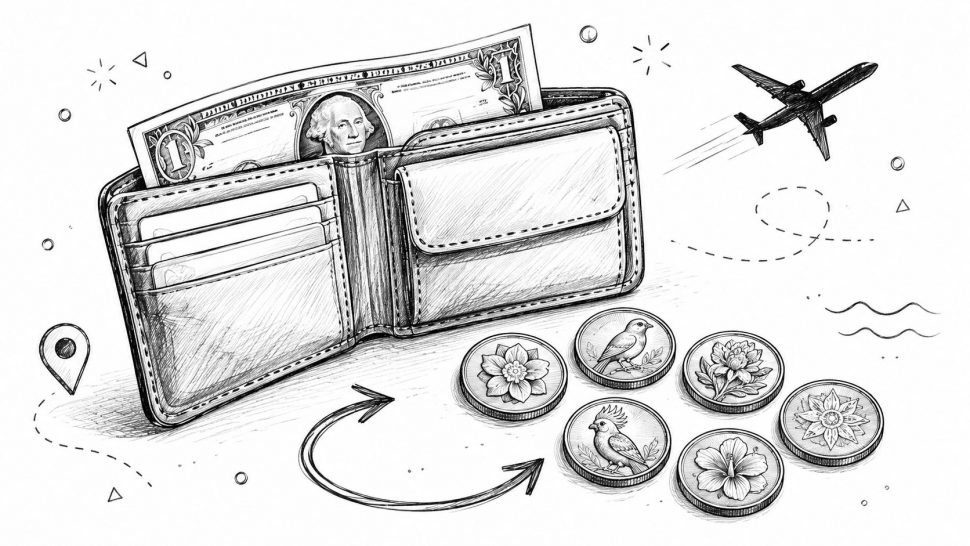
East Timor currency catches people out because it isn't a standard single-currency setup. Travellers often come back with US dollar banknotes and Timor-Leste centavo coins, which look local but are tied to the US dollar system. That mix makes it harder to exchange leftover foreign currency through normal banks or airport desks, especially if you want to exchange foreign coins and notes together.
Your Guide to East Timor Currency
You're back in the UK, sorting through your wallet, and the money from Timor-Leste does not behave like the leftover cash from a typical trip. Some of it is in US dollar notes. Some of it is in local centavo coins. A few notes may even look like ordinary dollars but still be hard to use or exchange.
Quick answer: East Timor, or Timor-Leste, uses US dollar banknotes for paper money and Timor-Leste centavo coins for small change. In practice, travellers often return with a mix of both, which is where exchange problems start.
The immediate question is simple. What can you do with it?
For UK travellers, the two sticking points are usually clear:
- Centavo coins are hard to exchange, because many banks and airport exchange counters do not take foreign coins.
- Older US dollar notes may be rejected, especially if they are worn, older-style, or not accepted by local businesses and some exchange services.
It helps to treat your leftover money as two separate jobs. The coins need one solution. The notes need another. That is much easier than assuming it all counts as standard US currency and finding out too late that part of it is not.
If you want the least hassle, start by sorting what you have into three groups: Timor-Leste centavo coins, modern US dollar notes, and older or damaged US dollar notes. From there, a specialist foreign currency service is usually the most practical route, especially if you want to exchange coins and notes together instead of being turned away by a high street bank.
The Two Currencies of East Timor Explained
East Timor has one of the more unusual currency systems a traveller is likely to encounter. It uses US dollar banknotes for paper money, but it issues its own local centavo coins for change.
As noted in a summary of Timor-Leste facts, the country adopted the United States Dollar as its official currency for banknotes in January 2000, while using local centavo coins where one centavo equals one US cent, creating a dual-currency system in daily life, as described in this overview of Timor-Leste's currency setup.

How the system works in practice
The easiest way to think about it is like this:
- US dollars are the notes
- Centavos are the coins
- The values match directly
So if you have 100 centavos, that equals 1 US dollar. It's similar to pounds and pence in the UK, except the notes and coins come from different issuing systems.
That's why travellers often return with a mixed batch. You may have:
- a few US dollar bills from meals, taxis, or hotel payments
- centavo coins from market stalls or everyday change
- older notes that look like normal USD but may not be straightforward to use
Which centavo coins might you see
The most commonly cited centavo denominations are:
| Coin type | Relationship to USD |
|---|---|
| 1 centavo | Equal to 1 US cent |
| 5 centavos | Equal to 5 US cents |
| 10 centavos | Equal to 10 US cents |
| 25 centavos | Equal to 25 US cents |
| 50 centavos | Equal to 50 US cents |
This matters when you want to exchange leftover currency in the UK. A high street exchange desk may understand US dollars, but it often won't want a bag of East Timor coins. That leaves many travellers looking for a specialist way to exchange foreign coins and notes together rather than treating each type separately.
A Brief History of Currency in Timor-Leste
If you came back with a few odd coins and some US notes, the history explains why your wallet looks mismatched.
Timor-Leste did not move straight from one simple national currency to another. During the Indonesian occupation, the Indonesian rupiah was used. After that period ended, the country adopted the US dollar as the main currency to bring day to day stability. Local centavo coins were introduced later so people could handle small purchases more easily.
That sequence is the key. The notes and coins in use today come from different stages of the country's recent history, which is why travellers often end up with money that looks inconsistent even when it was all valid at the time.
Why the switch still affects travellers
Older currencies from earlier periods are not part of the current system. If you have leftover money from an old trip, inherited a small collection, or found mixed holiday cash in a drawer, it helps to check when each item was issued before you try to exchange it.
A good rule is simple. Match the currency to the period. Money linked to Indonesian rule belongs to an earlier chapter. Current travel money from Timor-Leste usually means US dollar notes plus local centavo coins.
Historical currency changes often create this kind of confusion. The same pattern shows up with old Portuguese currency, where political and monetary changes affect what can still be exchanged and what needs specialist handling.
Why the centavo coins came later
Using US banknotes for everyday spending solved one problem, but it created another. Notes work for larger payments. They are clumsy for low value purchases such as bus fares, snacks, or market change.
Local centavo coins filled that gap. They work like the coin version of the dollar system, giving Timor-Leste practical small change without replacing the US dollar notes already in use.
For UK travellers, that history leads to a very specific exchange problem. You may not be holding one currency in the usual sense. You may be holding a combination of local coins and US notes, and some of those notes may be older issues that are harder to spend or exchange. That is why a specialist service is often the simplest route once you are back home.
How to Identify East Timor Currency and Spot Invalid Notes
The first step is sorting your money into two groups. Timor-Leste centavo coins go in one pile. US dollar banknotes go in another.
That sounds obvious, but it matters. If you're trying to exchange leftover currency, the route for coins is often different from the route for notes. It also helps you spot the more awkward category, which is older dollar notes that may not be accepted in East Timor itself.

How to recognise centavo coins
Timor-Leste centavo coins are local coins issued for use alongside US banknotes. The denominations most commonly associated with the system are:
- 1 centavo
- 5 centavos
- 10 centavos
- 25 centavos
- 50 centavos
When checking coins, focus on three things:
- The word centavo or centavos. That tells you the coin is part of Timor-Leste's local coinage rather than US coinage.
- The denomination. Separate low-value coins from larger ones so you know what you're dealing with.
- Country identity. If the coin clearly relates to Timor-Leste, keep it aside from mixed foreign change.
If your aim is to exchange foreign coins, this basic sorting saves time.
The issue with pre-2000 US dollar notes
A less obvious problem involves old US dollar notes. A key point often missed online is that US dollar notes issued before 2000 are not accepted as legal tender in East Timor, a rule linked to the Banco Central de Timor-Leste and noted in this discussion of the pre-2000 note issue.
That doesn't mean every old-looking US note is worthless in every context. It does mean you shouldn't assume a note can still be spent there just because it says dollars on it.
What to check on your notes
Most online guides don't give travellers enough help here, so use a practical checklist:
- Check the series date on the note.
- Separate anything that appears older than modern-style circulating notes.
- Don't mix doubtful notes with current ones when preparing them for exchange.
- Avoid assuming local spendability equals UK exchangeability, or vice versa.
If a note looks noticeably older and you're unsure about the issue date, treat it as a special case rather than ordinary travel cash.
That approach is especially useful if you want to convert foreign coins and banknotes in one go and avoid having a questionable note slow down everything else.
Your Exchange Options Compared What To Do With Leftover Money
Once you know what you've got, the next question is where to take it. With East Timor currency, the situation becomes awkward. Standard travel money providers tend to like major, current banknotes. They're much less enthusiastic about local coins, mixed change, or unusual note issues.

East Timor currency exchange options in the UK
| Exchange Option | Accepts USD Banknotes? | Accepts Centavo Coins? | Accepts Pre-2000 USD? | Best For |
|---|---|---|---|---|
| High street bank | Sometimes | Rarely | Often limited | Standard current notes |
| Post Office or travel money desk | Sometimes | Rarely | Usually limited | Common holiday cash |
| Airport exchange bureau | Sometimes | Rarely | Usually limited | Last-minute convenience |
| Specialist online currency service | Often broader acceptance | Often yes | More suitable for specialist handling | Mixed coins, notes, and awkward leftovers |
Why banks and bureaux often say no
There are practical reasons, not just policy.
- Coins are costly to process. Foreign coins are bulky, low-value, and harder to sort.
- Unusual currencies have low demand. East Timor centavos aren't something most counters can resell easily.
- Older notes need extra checking. Once a note falls outside normal current travel-money handling, many providers won't touch it.
That's why people looking to exchange foreign coins and notes often end up disappointed after trying the obvious options first.
The most hassle-free route for mixed leftovers
If you have a handful of centavo coins, a few US notes, and maybe one older bill you're uncertain about, a specialist route usually makes more sense than trying multiple counters.
This is especially true if you want to:
- exchange leftover currency from a trip
- convert foreign coins and banknotes in one batch
- deal with money that a bank may class as too small, too mixed, or too awkward
Best use case: Specialist exchange services are most useful when the problem isn't the headline currency. It's the combination of coins, mixed denominations, and non-standard notes.
For travellers, that usually means less sorting, fewer wasted journeys, and a clearer answer on what can still be exchanged.
How to Exchange East Timor Currency Step by Step
If you've never used a specialist currency service before, the process is usually much simpler than people expect. It's designed for exactly the kind of money banks tend to reject, such as coins, leftover holiday cash, and older or withdrawn notes.

A simple way to do it
Get a quote online
Start with the type of money you have. That might be centavo coins, US dollar notes, or a mixed bundle of both.Prepare your currency
Pack the money securely. With specialist platforms, there's often no need to sort coins into exact groups first, which is a big help if your travel wallet also contains other foreign change.Send it by post
Use a secure postal method that suits the value and type of currency you're sending.Receive payment after verification
According to the publisher information for the service behind this article, payment is issued within five working days after verification, with options including bank transfer or PayPal. The same service also states that customers see the rate before sending and are paid that calculated value in full.
If you want a fuller walkthrough of the process for exchange leftover currency, a specialist guide can help you prepare your parcel correctly.
Why this route suits East Timor currency
East Timor money is exactly the kind of leftover cash that falls between the cracks. Banks may accept straightforward current notes. They often won't help with coins, mixed lots, or older notes that need a more careful review.
Specialist exchange services are used by individuals, charities, and businesses, and the publisher notes that they're also trusted by major organisations including charities, supermarkets, airports, and police forces. That wider use matters because it shows the process isn't built only for frequent travellers. It also suits donation drives, collection pots, and businesses handling odd foreign cash received in error.
Common Mistakes to Avoid When Exchanging Foreign Money
The biggest mistake is assuming awkward currency has no value just because it's awkward.
That happens a lot with East Timor leftovers. People find a few centavo coins, can't spend them in the UK, and throw them into a junk drawer. Others keep old US notes for years because a bank wouldn't take them on the spot. In both cases, the problem is often the exchange route, not the money itself.
Mistakes that cost people money
Throwing coins away
Timor-Leste centavo coins can be easy to dismiss because they aren't standard US coins. But specialist services can handle foreign coin exchange in ways normal travel counters often won't.Assuming obsolete means worthless
Some people are unaware that obsolete East Timor centavo coins from 2003 to 2005 can still be converted in the UK through specialist services, rather than being lost as dead change, as noted on this background page about Timor-Leste centavo coins.Trying the airport first
Airport desks are built for convenience, not difficult leftovers. If your money includes coins or unusual notes, that convenience usually disappears quickly.Mixing all foreign money together without checking it
A bag that combines East Timor centavos, ordinary US notes, and unrelated foreign coins is harder to assess. Basic sorting gives you a clearer route.
Better habits that make exchange easier
A few simple habits save effort later:
- Keep notes flat and dry so they can be checked properly.
- Bag coins separately from notes.
- Label uncertain items if you think a note might be older or non-standard.
- Consider charity instead of storage if the amount is small and you'd rather donate foreign coins to charity than keep them indefinitely.
Small amounts of unusual currency rarely sort themselves out over time. They usually become harder to identify, easier to lose, and less likely to be exchanged.
If you want to exchange foreign coins, exchange leftover currency, or donate foreign coins to charity, acting while you still know where the money came from is usually the smartest move.
East Timor Currency Frequently Asked Questions
Can I exchange Timor-Leste centavo coins at a UK bank?
Usually, that's difficult. Many UK banks focus on mainstream banknotes and don't handle foreign coins. That's especially true for small, niche coinage such as Timor-Leste centavos. If you want to convert foreign coins and banknotes together, a specialist route is usually more practical than a standard bank counter.
Do UK exchange bureaux accept East Timor currency?
They may accept some US dollar banknotes, but that doesn't mean they'll accept the full mix of East Timor currency. Centavo coins are the main sticking point, and older or unusual notes can create another barrier. This is why travellers often need a specialist option to exchange foreign coins and notes rather than a walk-in travel-money desk.
Are old US dollar bills from the 1990s worthless?
Not automatically. But they may not be accepted as legal tender in East Timor itself if they were issued before 2000, as noted earlier. In practical terms, that means you shouldn't treat them as ordinary, easy-to-spend travel cash. They may still need specialist assessment rather than a routine bank exchange.
What's the value of 50 centavos from East Timor?
Because the centavo is tied directly to the US dollar system, 50 centavos equals 50 US cents within that structure. Converting that into pounds depends on the exchange rate available when you exchange it, so it's better to request a live quote than rely on a rough guess.
Can I exchange leftover East Timor coins and notes together?
Yes, but not usually through ordinary banks. Mixed leftovers are exactly where specialist services tend to help most. If you have coins, notes, and possibly withdrawn or awkward currency in the same batch, look for a provider that handles unsorted foreign money rather than one focused only on current banknotes.
Do I need to sort my coins before sending them?
Not always. Some specialist services work with unsorted currency, which is useful if you've got a mixed travel collection. That makes a big difference when you want to exchange leftover currency without spending ages separating every denomination first.
Can I donate foreign coins to charity instead of exchanging them for myself?
Yes. This is often a good option for small amounts that aren't worth keeping. Some specialist services let you direct the proceeds to a partnered UK charity, which means even low-value leftover foreign currency can still do something useful.
How long does payment usually take?
For the service behind this article, the publisher states that payment is made within five working days after verification. That's helpful if you want a clear process rather than vague timelines. It also means you can plan around a defined turnaround instead of waiting indefinitely.
What if I also have other old holiday money to exchange?
That's common. People who come back with East Timor currency often also have mixed coins and notes from other destinations. In that case, a broader currency buy back option can be more efficient than trying to exchange each country's leftovers separately.
If you've got East Timor centavo coins, US dollar notes from a trip, or older foreign currency that a bank won't handle, We Buy All Currency offers a straightforward way to exchange foreign coins, exchange leftover currency, or convert foreign coins and banknotes without the usual hassle. You can send coins, notes, and withdrawn currency by post, with no need to sort coins first, and you can even choose to donate the value to charity if that suits you better.