
Farthings: farthings coins value and history—what collectors need to know
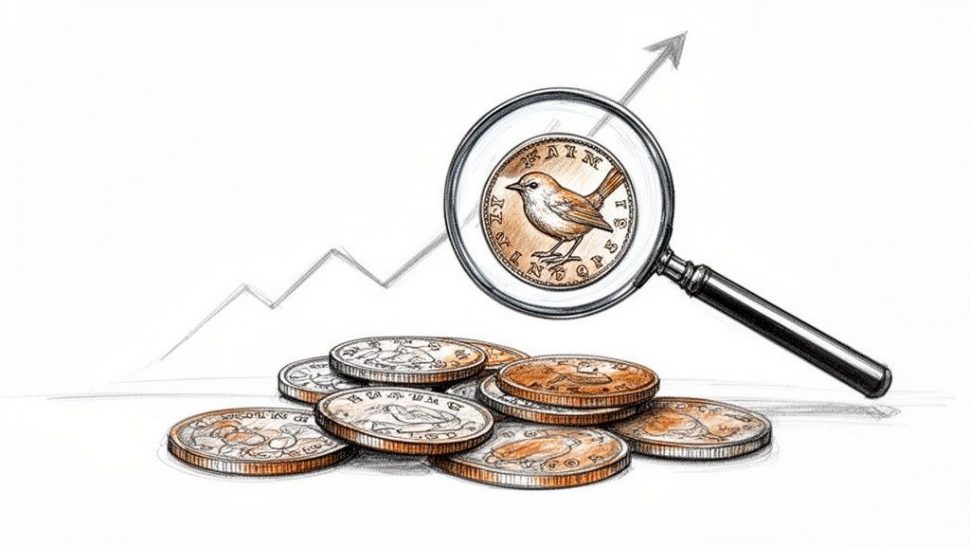
Posted by: Ian Stainton • 22 Feb 2026
Just how much is a farthing worth? The answer can be anything from less than £1 for a common, worn-out coin to hundreds or even thousands of pounds for a rare date in pristine condition. The real value is a mix of its rarity, the monarch on the coin, and its physical state. A common George VI farthing might only be worth its scrap metal value, but find a rare pattern from Edward VIII’s short reign, and you could be holding a real treasure.
From Pocket Change to Prized Collectible

It’s easy to dismiss a jar of old bronze coins as just a bit of history. But the humble farthing, once a tiny workhorse of the British economy, has a fascinating story that turns it from everyday shrapnel into a genuine collectible. Often found tucked away in biscuit tins or forgotten drawers, these little coins can hold surprising financial worth.
For almost 300 years, the farthing was a key part of daily life in Britain. As a quarter of an old penny, it was a tiny but vital piece of the pre-decimal puzzle. Today, these coins are a tangible link to our past, with each monarch's portrait and design telling a unique story about the era it came from.
Understanding Your Farthing's Potential
Figuring out the value of a farthing isn’t a one-size-fits-all job. It all comes down to a few key things:
- Rarity: Some years had very low mintage numbers, making those coins much harder to come by today.
- Condition: A coin that looks like it just left the mint will always fetch a higher price than one that’s been rattling around in pockets for decades.
- Monarch: Farthings from certain reigns are simply more sought-after by collectors.
While this guide will walk you through spotting the hidden gems, the thought of sorting through them all and finding a buyer can be a bit much.
That’s where we come in. At We Buy All Currency, we offer a fast, easy, and completely hassle-free way to turn your old currency—from farthings to foreign coins and notes—into cash. Our process is designed to be as simple as possible; there’s absolutely no need to sort or organise your coins.
We are trusted by major UK brands, including charities, supermarkets, airports, and even police forces, to handle their currency exchange needs with professionalism and integrity. Our 100% satisfaction guarantee ensures a secure and transparent experience.
Whether you're looking to exchange foreign coins, convert a collection of old British currency, or handle leftover foreign currency, our service takes all the effort out of it. While this article dives into the fascinating world of farthing values, just remember that our expert team is ready to do the hard work for you. You can learn more about the value of different UK currency in our detailed guide to old pounds coins value.
A 300-Year Journey Through British History

To really get a grip on the value of farthing coins, you have to look beyond the metal. Each tiny bronze disc is a miniature time capsule, holding a story that stretches across nearly 300 years of British history. This long and fascinating past is exactly why certain dates and designs are so sought-after by collectors today.
The farthing’s story starts in an era of change. First struck for general circulation back in 1672 under Charles II, it was created to solve a pressing shortage of small change. Representing one-quarter of a penny, it became a cornerstone of the iconic 'Britannia' coinage that would last for almost 300 years. For a deeper dive, you can explore the coin's long history and key dates on AllCoinValues.
This historical context is everything. A coin’s journey through different monarchies, wars, and social upheavals directly shapes how rare and appealing it is.
The Pre-Decimal System and Purchasing Power
In the old system of pounds, shillings, and pence (£sd), the farthing was the smallest kid on the block. It was worth a quarter of a single penny, meaning it took a whopping 960 farthings to make just one pound sterling. That might sound almost worthless now, but its purchasing power was a different story in centuries past.
During the Victorian era, a single farthing could buy a loaf of bread or a few sweets for a child. Its role in everyday life meant that millions were minted and passed from hand to hand, which explains why so many surviving examples are pretty worn. But as inflation took its toll over the decades, the humble coin became less and less practical.
By the mid-20th century, the farthing’s buying power had fallen so low that shopkeepers would often refuse to accept it. This slide into obsolescence sealed its fate.
The last farthing destined for circulation was minted in 1956. Just a few years later, at the end of 1960, it was officially demonetised and stripped of its legal tender status. Almost overnight, the farthing went from being common pocket change to a historical relic.
Monarchs and Design Evolution
A huge factor in a farthing's value is the monarch on its obverse (the "heads" side). Each new reign brought a fresh portrait, creating distinct periods for collectors to focus on. But it's often the reverse (the "tails" side) that tells the more interesting tale.
- Britannia (1672–1936): For most of its life, the farthing featured the iconic seated figure of Britannia. This classic design became a powerful symbol of Britain's naval strength and national pride.
- The Wren (1937–1956): In a major shake-up under George VI, Britannia was replaced by a tiny wren, one of Britain’s smallest birds. It’s this charming design that many people remember, marking the final chapter in the farthing’s story.
This evolution is why sifting through a mixed bag of old coins can feel so overwhelming. You have to identify the monarch, design, year, and condition just to get a rough idea of its worth.
Luckily, if you want to exchange foreign coins and notes at the same time as your farthings, there’s a much simpler way.
Our service is designed to be completely hassle-free. You don't need to be a historian or spend hours sorting. Just send us your collection of leftover foreign currency and old British coins, and our team handles the rest. We provide a fast, easy, and 100% guaranteed service, trusted by major UK organisations from supermarkets to police forces. We make it simple to convert foreign coins and banknotes into cash, or you can even donate foreign coins to charity.
Spotting the Rare and Valuable Farthings
This is where the real treasure hunt begins. While plenty of farthings are common enough, certain dates, unusual designs, and even tiny mistakes made at the mint can send their value soaring. Learning to spot these is the key to finding the hidden gems in any coin collection.
It’s not always about finding the oldest coin you can. Often, a farthing’s rarity comes down to its mintage figure—that is, how many were struck in a particular year. When the Royal Mint produced a small batch, those coins naturally become harder to find today, which in turn drives up the farthings coins value for collectors.
Sorting through a big, mixed collection of coins can feel a bit overwhelming, I know. It takes time to check all those dates and monarchs. That’s why our service is designed to be completely hassle-free. You don't need to sort a thing; our experts will handle all the identification for you, making sure you get a fair price for every single coin.
Key Dates and Low Mintage Years
Some years in the farthing’s long history really stand out as being particularly scarce. If you find one of these in good condition, you could be holding onto something quite special. Think of it like finding a first-edition book on a dusty shelf—the story inside is the same, but its rarity makes it far more exciting.
Here are a few key dates to keep an eye out for:
- Queen Anne Farthings (1714): These are often seen as the 'holy grail' for farthing collectors. They were actually pattern coins, not meant for general circulation, so only a handful exist. This makes them exceptionally valuable.
- George V Farthings (1917 & 1919): For whatever reason, these two years had surprisingly low mintage numbers compared to the rest of his reign, making them tougher to track down.
- George VI Farthing (1950 & 1951): As the farthing neared the end of its life, production slowed. The 1951 coin, in particular, had a lower mintage, which boosts its collectability today.
Just remember, the date is only half the story. A rare date on a coin that’s worn and barely readable will be worth a lot less than a more common coin in pristine, uncirculated condition. Rarity and condition go hand-in-hand.
If you're curious about the wider world of old British money, you can find more information in our comprehensive guide on pre-decimal coin values. It's a great resource for identifying other potentially valuable coins you might have stashed away.
Iconic Variants and Minting Errors
Beyond just the dates, unique designs and minting errors can turn an everyday coin into a collector’s prize. These little quirks are what make the hunt so much fun, as they’re easily missed by an untrained eye.
The most famous design variant has to be the 'wren' farthing, which first appeared in 1937 during the reign of George VI. This charming little bird replaced the traditional figure of Britannia and became an instant classic. While hundreds of millions were minted over the years, that very first year of issue is highly sought-after by people trying to complete a full set.
Even more valuable are minting errors. These are simple, accidental mistakes made during production that create a totally unique and rare coin. A few examples include:
- Off-centre strikes: Where the design isn't stamped perfectly in the middle of the coin.
- Die cracks: Tiny cracks in the mould that leave raised, squiggly lines on the coin's surface.
- Ghosting: A faint impression from one side of the coin showing through on the other.
Finding these errors takes a keen eye, but it can significantly boost a farthing’s worth. Sorting through a collection to spot these tiny details is exactly what our expert team does day in, day out.
At We Buy All Currency, our service is 100% guaranteed. We’re trusted by major UK brands—including charities, supermarkets, airports, and even police forces—to assess and exchange huge volumes of currency. So whether you have farthings, leftover foreign currency, or other old coins, our fast and easy process ensures you receive fair value without any of the hassle. We can help you exchange foreign coins and notes or even donate foreign coins to charity.
How Coin Condition Impacts Your Farthing's Value
Ever wondered why two farthings from the exact same year can have completely different price tags? The short answer is condition. It’s a lot like a classic car—a mint-condition model that’s been tucked away in a garage for years is going to be worth a whole lot more than the same car that’s been driven hard and left to the elements. The same idea applies directly to the farthings coins value sitting in your collection.
A coin's condition, or its "grade," is really just a way of measuring how much wear and tear it's picked up since it left the mint. Even a farthing from a very common year can be surprisingly valuable if it’s in perfect, uncirculated condition. Why? Because most farthings were used for everyday shopping, meaning pristine examples are few and far between.
Getting your head around this is key to setting realistic expectations. To get a real sense of what your farthing is worth, you need to understand how to determine fair market value, looking beyond just its age. Learning the basics of grading helps you see why a shiny, detailed coin is what every collector is after.
From Uncirculated to Poor: A Quick Guide
Coin grading might sound a bit technical, but the idea behind it is simple. The more original detail a coin has, the higher its grade and, usually, its value.
This flowchart neatly lays out the main things that drive a farthing's worth, showing how its date, design, and any errors all come together to determine what it sells for.

As you can see, a coin’s final value is a mix of these key factors, with condition often being the most powerful multiplier. To help you get started, we've created a simple table outlining the most common grades you're likely to come across.
Visual Guide to Farthing Coin Grades
This table breaks down what to look for when assessing the condition of your farthings. Use it to get a rough idea of where your coins might fall on the grading scale.
| Grade | Description of Wear and Detail |
|---|---|
| Uncirculated (UNC) | Looks brand new, just as it did when it was minted. No signs of wear at all, with sharp details and its original shine (lustre). |
| Extremely Fine (EF) | You can only see very light wear on the highest points, like the monarch’s hair or the tiny feathers on the wren. |
| Very Fine (VF) | Shows some minor wear across the surface, but most of the main design details are still sharp and clear. |
| Fine (F) | There's noticeable wear across the whole coin. Some of the finer details, like lettering and patterns, have started to go flat. |
| Very Good (VG) | The coin is heavily worn. The main design is still visible, but the intricate details are mostly gone. |
| Poor | Extremely worn. It might be difficult to even make out the date or identify the monarch on the coin. |
Getting a feel for these grades will help you spot the more valuable coins in a collection. The difference in value between grades can be staggering. An EF farthing could fetch 10 to 20 times more than the same coin in VG condition. This is why getting the grade right is so important for an accurate valuation.
Trying to grade an entire collection can feel overwhelming, especially if you're new to it. That's why we’ve made our service fast, easy, and completely hassle-free. You don’t need to become an expert grader overnight. Just send us your unsorted coins, and our experienced team will do the professional evaluation for you.
We are a trusted partner for major UK organisations, from police forces to national charities, helping them manage their currency exchange needs efficiently. Whether you want to exchange foreign coins, convert foreign coins and banknotes, or donate them, our 100% guaranteed service ensures you get a fair price without any of the legwork.
The Easiest Way to Exchange Your Old Coins for Cash
So, after digging into the history and value of your farthings, you might be wondering what to do with them. Maybe you've picked out a few valuable dates, or perhaps you just have a big jar of old, mixed coins. The next step is turning that collection into actual cash, and that’s where things can often feel a bit overwhelming. But it really doesn’t have to be.
You don't need to spend hours sorting, grading, and trying to price every single coin. There's a much simpler way. We created our service specifically for people with collections of old British currency, leftover holiday money, and out-of-circulation notes.
Our whole process is built to be fast, easy, and completely hassle-free. The best part? You don't need to sort a thing. Just send us everything in one go, and our expert team will do all the heavy lifting for you.
A Service Built on Trust and Simplicity
We get it. Sending your old currency away takes a lot of trust. That's why we’ve built our reputation on being transparent and reliable. We're the trusted currency exchange partner for some of the UK’s most recognised names, including major charities, national supermarkets, airports, and even police forces.
These organisations count on us to handle their currency collections professionally and efficiently, and you can expect that exact same level of care. We back our commitment with a 100% satisfaction guarantee, giving you complete peace of mind.
Our service is the perfect solution for all sorts of currency you might have tucked away:
- Old British Coins: From farthings and halfpennies to pre-decimal shillings and florins.
- Leftover Foreign Currency: All those mixed coins and notes from holidays past.
- Obsolete Money: Currencies that are no longer in circulation, like pre-euro notes.
The goal is to make your life easier. Instead of trying to find individual buyers or getting lost in complex price guides, you can simply turn your old coins and notes into cash with one straightforward service.
How Our Hassle-Free Process Works
We’ve stripped away all the usual barriers to exchanging old money. You can get started in just a few simple steps. First, pop over to our online calculator for a quick estimate of what your collection could be worth. Next, just package up your currency—remember, unsorted is perfectly fine—and send it to us.
Once your package arrives, our team gets to work, meticulously checking every last coin and note. We'll then confirm the final value and send your payment straight to you. It's a seamless way to exchange foreign coins and notes without any of the stress. You can even choose to donate foreign coins to charity through our platform, turning your old change into something truly meaningful.
If you’d like to learn more about turning your old money into cash, have a look at our guide on the easy way to exchange old British coins and notes. It breaks down exactly how our fast and guaranteed service can help you.
Got Questions About Farthings? We've Got Answers
To wrap things up, let's tackle a few common questions we hear all the time. These are the practical bits and bobs that come up when people are sorting through old coins, and we want to make sure you have all the information you need.
Are All Old Farthings Valuable?
That’s the million-dollar question, isn’t it? The short answer is no, not all of them are big-ticket items. A farthing’s worth really boils down to its year, the monarch on the obverse, its condition, and how many are still out there.
While certain key dates in top-notch condition can fetch a pretty penny, the vast majority of farthings from the 1940s and 50s are quite common and worth much less. If you're interested in the general principles of appraising historical items, our guide on how to value antiques is a great place to start. For a guaranteed valuation of your specific coins, though, nothing beats using a trusted service.
Should I Clean My Farthing Coins Before Sending Them?
Please don't! In a word: no. You should never clean old coins. It might seem like a good idea to polish them up, but cleaning can leave tiny scratches and strip away the natural patina that collectors actually look for. This can seriously reduce the farthings coins value. It’s always best to leave them just as you found them.
Here at We Buy All Currency, we accept coins in any state. There’s no need for you to sort or clean anything, making the whole process completely straightforward and hassle-free on your end.
How Do I Exchange a Mix of Old British and Foreign Coins?
Our service is tailor-made for this exact situation. If you’ve got a jumble of farthings, old pennies, and some leftover foreign currency from holidays past, you don't need to separate a thing. Just pop it all in one package and send it over—our fast and easy process handles the rest.
Our expert team takes care of all the identification and valuation for you. We’re trusted by major UK charities, supermarkets, airports, and even police forces to efficiently process large, mixed collections. We ensure everyone receives a fair and prompt payment, making it the easiest way to convert foreign coins and banknotes.
With our service, you can:
- Exchange foreign coins from just about any country.
- Get cash for pre-decimal British coins like farthings.
- Donate foreign coins to charity directly through our system.
We’ve designed our service to be simple, fast, and secure, helping you unlock the value from all your old money.
Ready to convert your collection into cash the easy, fast, and hassle-free way? At We Buy All Currency, our 100% guaranteed service means you don't even need to sort your coins. Visit us at https://www.webuyallcurrency.com to get started today.