
Five Shilling Coins Value: A Guide to What Your Old Crowns are Worth
Posted by: Ian Stainton • 31 Jan 2026
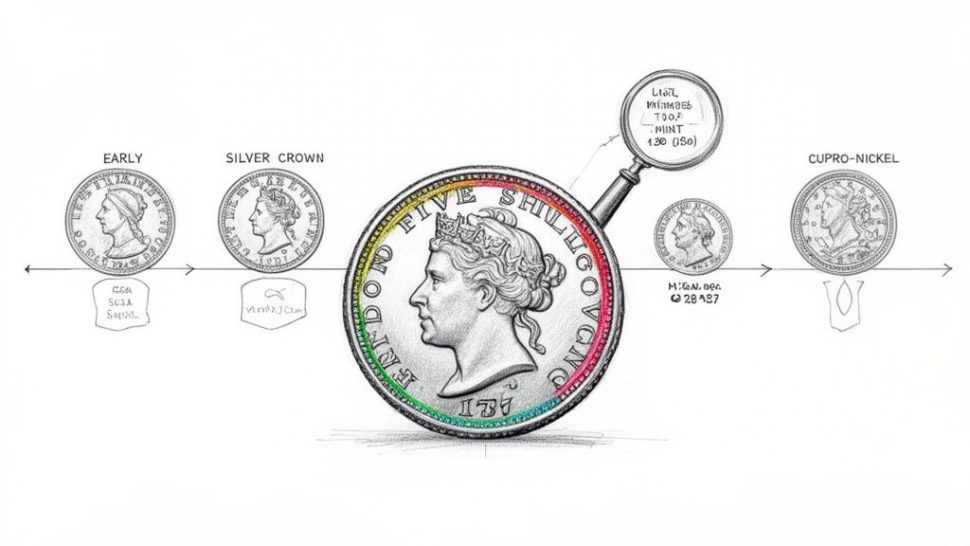
Let's get straight to the point: your five shilling coin, often called a crown, is almost certainly worth more than its old 25p face value. The real value is a story told by its age, condition, rarity, and the metal it's made from. Most are common enough, but some rare examples can fetch hundreds or even thousands of pounds.
What Is Your Five Shilling Coin Really Worth?
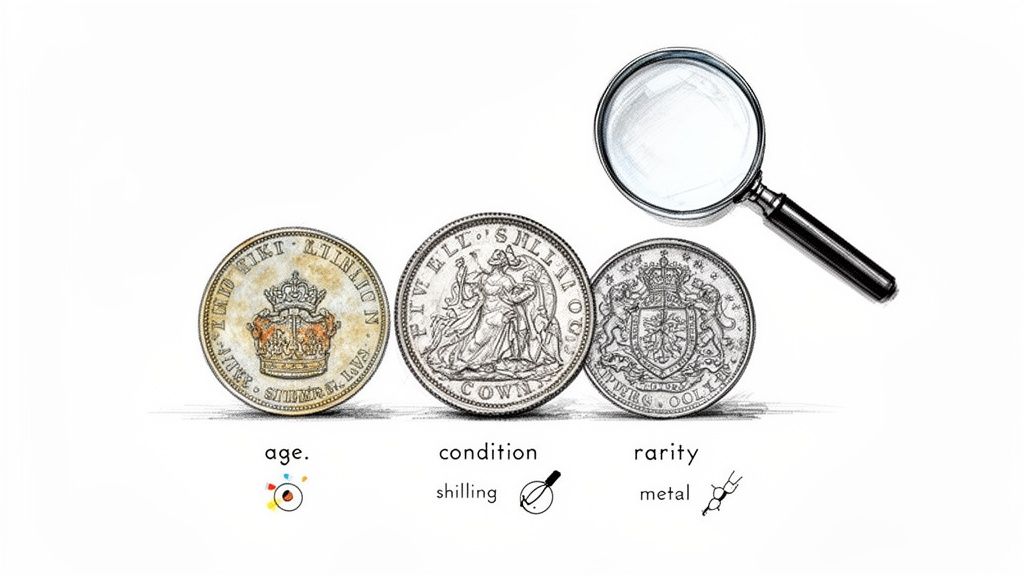
Ever found one of those old, heavy coins in a drawer and wondered if you've struck gold (or silver)? The five shilling piece is exactly that kind of coin—one that sparks real curiosity. Its journey from a hefty silver piece to a modern commemorative cupro-nickel coin is a fascinating one, and this history is precisely what drives its value today.
Lots of people have jars of leftover currency or old British money tucked away, not quite sure what to do with it. Digging into the story behind these coins is the first step to uncovering what they’re actually worth on the market.
Key Factors Influencing Value
There are a few core things that separate a common five shilling piece from a valuable silver heirloom. Getting your head around these is crucial if you want to get the best price for your coins.
- Age and Monarch: It's simple, really. Older coins, especially from the reigns of earlier monarchs, tend to be rarer and more sought-after by collectors.
- Metal Composition: This is a big one. The shift from 92.5% silver to 50% silver, and finally to cupro-nickel in 1947, has a massive impact on a coin's base value.
- Condition and Grade: A coin's state of preservation is paramount. An uncirculated coin with sharp, crisp details will always command a much higher price than a worn, battered one.
- Rarity and Mintage: Some years had very low production runs, making those coins exceptionally scarce and valuable today.
From 1544 all the way to 1965, the British five shilling coin was a staple of our pre-decimal currency. Even the common commemorative crowns, like the 1951 Festival of Britain issue, can be worth around £5 in circulated condition—a far cry from its post-decimalisation value of 25p.
Quick Guide to Five Shilling Coin Values by Era
To give you a clearer picture, here’s a rough guide to what you might expect for five shilling coins from different periods. Keep in mind these are just estimates, as the final value always comes down to the specific coin's condition and rarity.
| Era / Monarch | Common Circulated Value Range | Uncirculated / Rare Value Potential |
|---|---|---|
| Pre-1920 (Victoria, Edward VII, George V) – 92.5% Silver | £20 – £50+ | £100s – £1,000s+ |
| 1920-1946 (George V, George VI) – 50% Silver | £10 – £25+ | £50 – £200+ |
| Post-1947 (George VI, Elizabeth II) – Cupro-Nickel | £1 – £5 | £10 – £50+ |
As you can see, the metal content and age play a huge role. An early Victorian crown in good shape is in a completely different league to a 1965 Churchill crown, even though they share the same face value.
If you've stumbled upon a collection of old coins, the idea of sifting through them can feel overwhelming. Our service is designed to take that burden right off your shoulders. Just send us your coins—no need to sort them—and we'll handle the rest.
We provide a fast, easy, and 100% guaranteed service to help you turn those old treasures into cash. We’re trusted by major UK brands, including charities, supermarkets, airports, and even police forces, to handle unsorted currency collections efficiently and transparently.
Whether you want to exchange the coins or donate their value to a good cause, we make the process simple. For a broader look at old UK money, check out our guide on pre-decimal coin values.
The Story Behind the Crown Coin
Every old coin has a story to tell, and the British five shilling crown has one of the richest. These aren't just bits of old currency; they're tangible links to Britain's past, reflecting centuries of royal triumphs, national transitions, and deeply held traditions. Understanding this narrative is the first real step in appreciating a five shilling coin's value, taking you far beyond its face value.
The crown first appeared during the reign of Henry VIII way back in the 16th century. It was a big, impressive silver coin designed to convey wealth and authority. For hundreds of years, it remained a heavyweight in British currency, but it was rarely used for popping down to the shops. Instead, it was often struck to mark major royal events, its substantial size making it the perfect canvas for intricate designs celebrating coronations, jubilees, and military victories.
From Precious Silver to Everyday Metal
The most critical chapter in the crown's story is the change in the metal it was made from. For most of its life, the coin was struck from sterling silver (92.5% pure), which gave it a high intrinsic value. It's this high silver content that makes early crowns, especially those minted before 1920, so sought after by collectors and investors.
But the immense economic pressures of the First World War forced a dramatic change.
- 1920-1946: The silver content was slashed to just 50%. While still containing precious metal, their value is obviously lower than their sterling silver predecessors.
- 1947 Onwards: Silver was removed entirely. From this point on, crowns were made from a common cupro-nickel alloy.
This shift from silver to a base metal completely changed the coin's inherent worth. A cupro-nickel crown’s value is based almost entirely on its collectability and condition. In contrast, a silver crown will always have a floor value tied directly to its metal content. This is a crucial distinction to make when you're looking to exchange foreign coins and notes.
The story of your coin—its year, the monarch on the obverse, and the metal it's made from—is exactly what determines its modern-day value. A George V crown from 1935 isn’t just a coin; it’s a piece of history from a landmark Silver Jubilee, and collectors really value that story.
A Legacy in Commemoration
As its role in daily commerce faded, the five shilling crown found a new purpose as the UK's premier commemorative coin. It became a national keepsake, a way to mark moments of collective celebration and remembrance for ordinary people.
Some of the most famous examples include:
- The 1937 Coronation Crown: Celebrating the coronation of King George VI.
- The 1951 Festival of Britain Crown: A powerful symbol of post-war recovery and national optimism.
- The 1965 Churchill Crown: Minted to honour the life of Sir Winston Churchill following his death.
While many of these modern crowns were minted in huge numbers and are made of cupro-nickel, their historical context makes them incredibly popular. They are often the first "old coins" people stumble upon, sparking a lifelong interest in coin collecting. For a deeper dive into specific issues, you can learn more about British crown coin values and what makes each one unique.
Ultimately, whether your five shilling piece is a rare silver specimen or a common commemorative issue, it holds a piece of the national story. Uncovering that story is the key to understanding its place in history and its value today.
So, What's My Five Shilling Coin Actually Worth?
Ever wondered what separates a bog-standard crown from a real collector's treasure? It often boils down to a few small details that can make a massive difference to its value. Let's break down exactly what you need to look for, cutting through the jargon to give you a clear idea of what you've got.
Whether you've found an old coin jar or inherited a proper collection, figuring out if you have any valuable pieces is the essential first step. It puts you in the driver's seat, so you know what you're holding before you even think about exchanging it.
This simple flowchart gives you a quick visual guide on how to start valuing your five shilling coin.
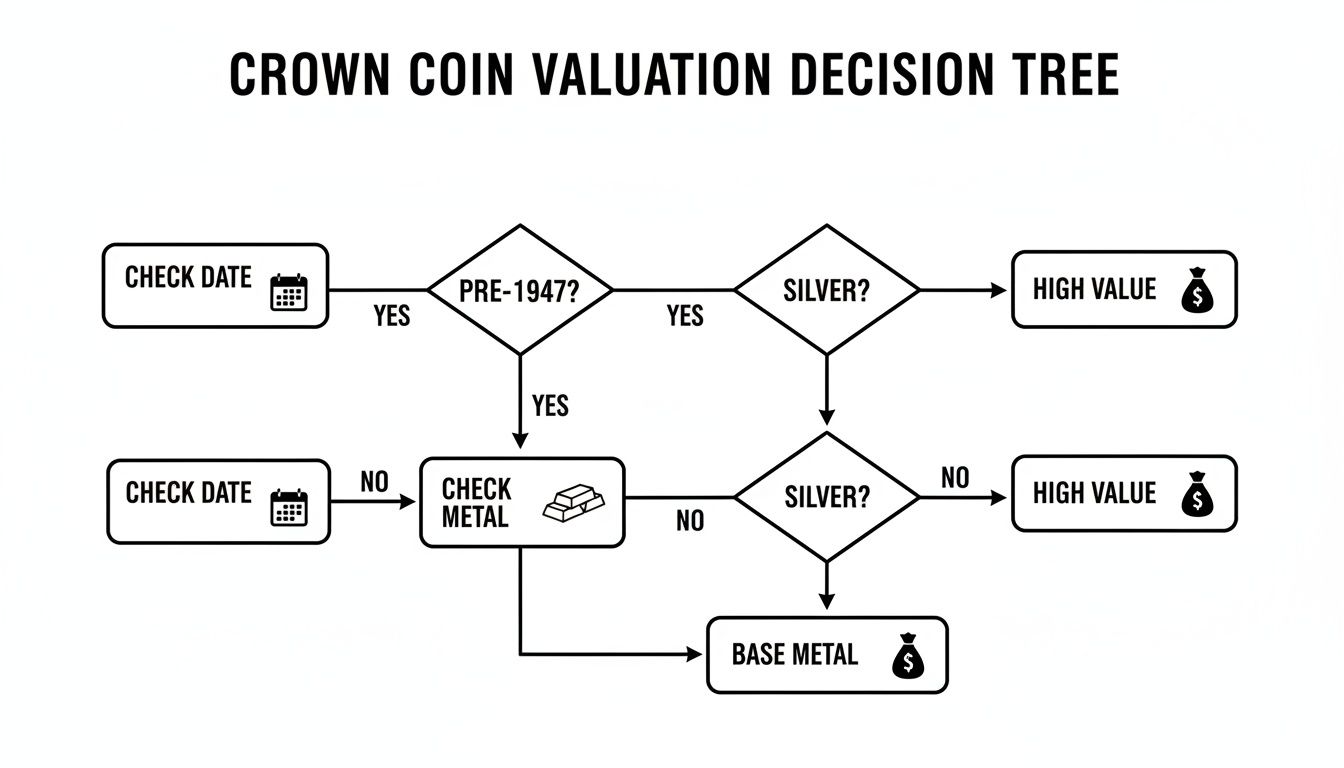
As you can see, it all starts with the date and the metal. Nail those two things down, and you're already halfway there.
Condition Is King
Once you've got the date and metal sorted, the single most important factor is the coin's physical condition, or its grade. A coin that looks like it just rolled off the press at the Royal Mint will always be worth more than one that’s been knocking about in someone’s pocket for decades.
Coin grading is a whole world in itself, but for a quick assessment, you can use these simple categories to get a feel for it:
- Poor/Fair: The details are so worn they’re barely there. The coin often has scratches or other damage.
- Good: You can make out the main design, but it’s heavily worn down.
- Fine: The design is clear, with noticeable wear on the highest points (like the King's hair or the horse's head).
- Very Fine (VF): Details are much sharper, with only light, even wear.
- Extremely Fine (EF): Looks almost new, with just the tiniest bit of wear on the very highest points.
- Uncirculated (UNC): A perfect coin. It has no signs of wear at all, looking as fresh as the day it was minted.
Even a small jump in grade can mean a huge leap in value. For instance, a common George V 'Wreath' crown might only fetch £40 in Fine condition, but an Uncirculated example could sell for over £200.
Think of it like a classic car. A model that's been kept in a garage and is in perfect, original condition is far more valuable than the same model that's been driven daily for decades and has dents and scratches. The same principle applies directly to your coins.
Rarity and Mintage Figures
This is just simple supply and demand. If a coin had a low mintage—meaning very few were ever made for that year—it's going to be rarer and far more sought-after by collectors.
Some five shilling coins were struck by the million and are incredibly common, like the 1965 Churchill Crown. Others had tiny production runs that make them incredibly scarce today. The 1934 'Wreath' Crown, for example, had a mintage of just 997. That makes it one of the holy grails for modern crown collectors.
If you're serious about finding out what your collection is worth, it pays to learn the secrets of smart valuation with an estate sale pricing guide.
The impact of rarity on value can be staggering. A standard 1818 crown in decent shape might be worth £50, but that jumps to £1,100 for an uncirculated one. Find a scarcer date, like an 1839 proof, and you could be looking at £27,500. At the extreme end, the unique 1663 'Reddite Crown' pattern sold for a mind-boggling £396,000 at auction, proving just how much minting quirks and historical stories can add to a coin's worth.
A Collector's Checklist of Valuable Crowns
Now that we've covered what drives the value of five shilling coins, let’s get to the exciting part. This is your field guide to some of the most sought-after crowns in British history, a checklist to help you spot potential treasures in that old jar of coins you inherited or the leftover foreign currency from trips abroad.
We'll run through a few famous dates and varieties, explaining what makes each one special. Sometimes it's a tiny mintage, other times it’s a celebrated design or a link to a big historical moment. Keep this list handy when you're sorting through your coins—you never know what might turn up.
The Iconic Gothic Crown 1847
Talk to any serious collector, and they'll tell you the 1847 'Gothic' Crown is one of the most beautiful coins ever to leave the Royal Mint. Struck during Queen Victoria's reign, its stunning medieval-inspired design was unlike anything seen before.
Its value comes from that breathtaking artistry combined with its relative scarcity. It isn't the absolute rarest crown out there, but finding one in top condition is a real challenge for collectors.
- Why it's valuable: Its unique and universally admired design makes it a cornerstone piece for any serious collection.
- What to look for: Check for crisp, sharp details on the Queen’s portrait and the intricate design on the reverse. These coins command a high price even in lower grades.
The 'Wreath' Crowns 1927-1936
Introduced under King George V, the 'Wreath' Crown broke from tradition with its modern, stylised design. These coins were struck in 50% silver but weren't really meant for everyday use, which means their mintages were often incredibly low.
With this series, the date is everything. Most years are scarce, but one particular date stands head and shoulders above the rest.
The 1934 'Wreath' Crown is the undisputed king of the series. With a minuscule mintage of just 997 coins, its extreme rarity makes it a holy grail for collectors. It often fetches thousands of pounds at auction, even if it's seen a bit of circulation.
Key Commemorative Crowns
While many commemorative crowns were minted in huge numbers, a few have a special story that lifts their value. For many people, these are the first old coins they ever find, acting as a gateway into the fascinating world of coin collecting.
- 1935 'Rocking Horse' Crown: Struck for King George V's Silver Jubilee, this coin has a very distinctive Art Deco look, with St. George on horseback. It's a popular and affordable classic.
- 1937 Coronation Crown: Marking the coronation of King George VI, this coin has a bold design and was the last crown struck in 50% silver for general circulation.
- 1951 'Festival of Britain' Crown: A cupro-nickel coin that symbolised post-war optimism. While very common, pristine, uncirculated examples are still snapped up by collectors.
High-Value Five Shilling Coins to Look For
To make things easier, here’s a quick-reference table highlighting some of the key dates you should be looking for. This isn't a complete list, but it covers some of the most famous and valuable crowns you might come across when you exchange foreign coins and notes.
| Year and Description | Reason for Rarity | Typical Value (Fine Condition) | Typical Value (Uncirculated) |
|---|---|---|---|
| 1847 Gothic Crown | Iconic design, moderate rarity | £400 – £800 | £3,000 – £10,000+ |
| 1932 Wreath Crown | Low mintage (2,395) | £300 – £500 | £1,000 – £2,000+ |
| 1934 Wreath Crown | Extremely rare (997 minted) | £2,000 – £3,500 | £5,000 – £8,000+ |
| 1951 Proof Crown | Special proof striking for collectors | N/A (Proof Only) | £150 – £250 |
If you happen to find a jar of unsorted coins, it’s always worth having a quick look for these dates. Finding just one could make your entire collection significantly more valuable.
Trying to identify valuable coins can feel like a huge task, but our service makes it completely hassle-free. There is absolutely no need to sort your coins or figure out what's what. Just send us your entire collection of old and leftover foreign currency, and our experts will do all the hard work.
Our process is fast, easy, and 100% guaranteed. We are trusted by major brands, including supermarkets, airports, and police forces, to provide a transparent and reliable currency exchange. To see how simple it is to turn your old money into cash, visit our homepage at We Buy All Currency.
How to Exchange Your Old Coins for Cash
So, you’ve sorted through your collection and realised there might be some real value sitting in those old five shilling coins. But what’s the next step? Turning old currency—whether it's crowns, leftover holiday money, or obsolete banknotes—into actual cash shouldn't feel like a chore.
That's exactly why we’ve designed our service to be fast, easy, and completely hassle-free. You’ve done the fun part by uncovering these bits of history. Now, let us handle the rest.
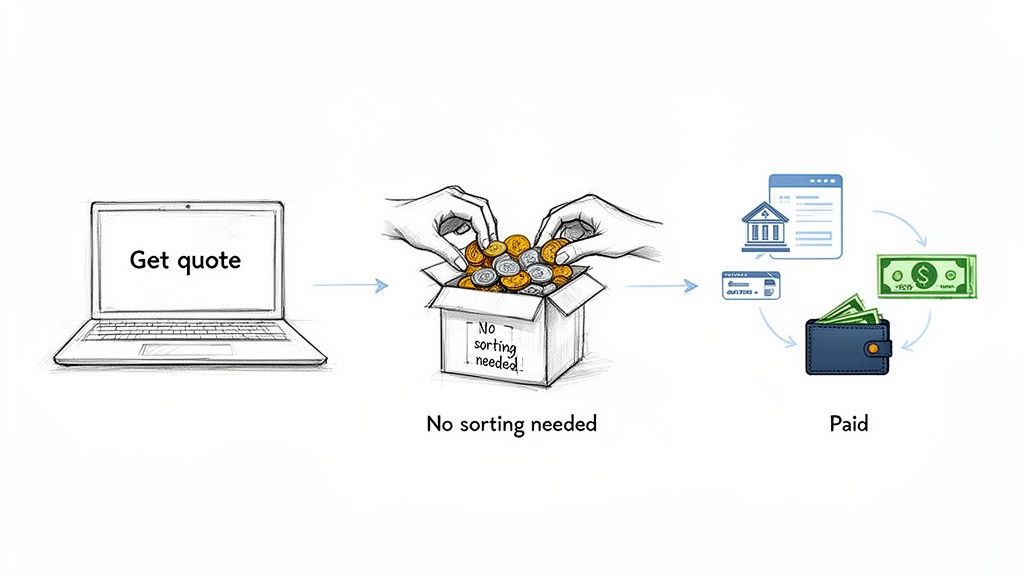
Our Simple Three-Step Process
We believe that getting paid for your old currency shouldn't involve endless sorting or complicated forms. We’ve boiled the entire process down to three simple steps, getting you from a box of coins to cash in your bank with minimal fuss.
- Get a Free Online Quote: Jump onto our online calculator to get started. You don’t need to be an expert or identify every single coin. Just give us a rough idea of what you have, and we’ll give you an instant valuation with no strings attached.
- Send Us Your Currency: Pack up your coins and notes. The best part? There is absolutely no need to sort them. Whether you have five shilling coins mixed in with old Spanish pesetas or Irish punts, just pop them all in a box together and post them to us.
- Receive Your Guaranteed Payment: As soon as your currency arrives, our experts get to work verifying everything and confirming the final value. We then send your payment straight to you via your chosen method, like a bank transfer or PayPal. It really is that simple.
Our entire service is built on trust and transparency, so you can have complete peace of mind from start to finish.
Why Choose Our Guaranteed Service
When you decide to convert foreign coins and banknotes, you want to know you’re dealing with a reliable and reputable company. It’s a responsibility we take very seriously, which is why we’ve become the trusted partner for some of the UK’s most respected organisations.
We are the chosen currency exchange partner for major brands, including national charities, supermarkets, airports, and even police forces. They trust us to handle large volumes of unsorted currency efficiently and securely, and you can expect the exact same level of professional service.
Our commitment to you is sealed by our 100% happiness guarantee. If for any reason you're not completely happy with our valuation after we've received your currency, we will return it to you free of charge. No hidden fees, no risks.
This straightforward guarantee makes our service the easiest and safest way to handle your leftover foreign currency. To get a better feel for how we handle different types of old money, you might find it useful to learn more about the easy way to exchange old British coins and notes.
Ultimately, whether you have a rare silver crown or a bag full of mixed world coins, our goal is to make the exchange process rewarding and effortless for you. Start your journey by getting a quick quote on our homepage and see for yourself how simple it can be.
Turning Leftover Currency Into a Charitable Gift
That old five shilling coin or jar of holiday money sitting in a drawer could do more than just collect dust. While turning it into cash is always a great option, there’s another, deeply rewarding path you can take: you can donate foreign coins to charity.
It’s a truly meaningful way to transform forgotten currency into vital support for causes that matter, ensuring your old coins and banknotes serve a much greater purpose.
A Simple and Transparent Way to Give Back
We believe that supporting your favourite charity should be as straightforward as possible. That’s why we’ve built a simple, transparent donation option right into our fast and easy currency exchange process. You can direct the full value of your currency to one of our trusted UK charity partners, with absolutely no hidden fees.
The whole process is designed to be completely hassle-free:
- No Sorting Needed: Just like when you exchange foreign coins and notes for cash, you don't need to sort a thing. Feel free to mix your five shilling coins with euros, old pesetas, and any other leftover foreign currency you have lying around.
- Complete Transparency: We handle all the counting and valuation, then send the entire amount directly to your chosen charity.
- Trusted by Leading Organisations: Our credibility is something we're proud of. We've built partnerships with major UK brands, including national charities, supermarkets, airports, and even police forces who trust us with their collections.
Making a Collective Impact
This charitable option isn’t just for individuals, either. We offer a streamlined service for businesses, airlines collecting in-flight donations, and retailers who want to convert collected foreign currency into valuable funds for a good cause. It’s a powerful way to pool lots of small, individual contributions into one significant donation.
Our 100% guaranteed service ensures that every single penny of your currency’s value can be put towards making a positive impact. It’s a secure and efficient way to support non-profits, reinforcing our commitment to helping the community.
Instead of letting that old currency gather dust, you can put it to work supporting vital services and initiatives across the UK. By choosing to convert foreign coins and banknotes into a charitable gift, you give your old money a new, meaningful life. To see how our simple and trusted process works, please visit our homepage.
Got Questions? We’ve Got Answers
To wrap things up, here are some quick and clear answers to the most common questions we hear about five shilling coins and our exchange process. Think of this as the final piece of the puzzle to help you feel confident about what to do next.
Are All Five Shilling Coins Made of Silver?
Not at all. While the classic five shilling coins (or crowns) started life as sterling silver, their recipe changed quite a bit over the years. This is a huge factor in their value.
Any crown minted before 1920 is made from 92.5% silver, but from 1920 to 1946, that silver content was dropped to 50%. After 1946, they were made from cupro-nickel, containing no silver at all. That’s why checking the date is so crucial!
My Coin Doesn’t Say ‘Five Shillings’ On It. How Do I Know What It Is?
You're right, many older British coins didn't have their value stamped on them. People just knew them by their size and design. A five shilling coin is pretty hard to miss—it's a big, heavy piece, typically around 38.6mm across.
The design is also a dead giveaway. You’ll usually see the reigning monarch on one side and an iconic image, like St. George slaying the dragon, on the other.
A quick tip: just compare your coin to a few images online for its specific year. Its unique size and look make it stand out, even without the value written on it.
Is It Worth Exchanging Just One or Two Old Coins?
Absolutely! While some individual coins might only be worth a small amount, you’d be surprised how valuable others can be. Our service is designed to be easy and hassle-free, even if you only have a handful of coins.
Better yet, you can bundle your five shilling coins with any other leftover foreign currency you have lying around. There’s no need to sort them yourself. Just pop them all in a package together, and our experts will take care of everything, making sure you get the best possible value with our 100% guaranteed service.
Ready to discover what your old currency is worth? Our fast, easy, and hassle-free process is trusted by major UK brands, including leading charities, supermarkets, airports, and police forces. We take the work out of exchanging foreign coins, so you don't have to sort a thing. Get your free, 100% guaranteed quote today by visiting our homepage.