
How Much Is Old Currency Worth? a UK Guide for 2026
Posted by: Ian Stainton • 15 Jun 2026
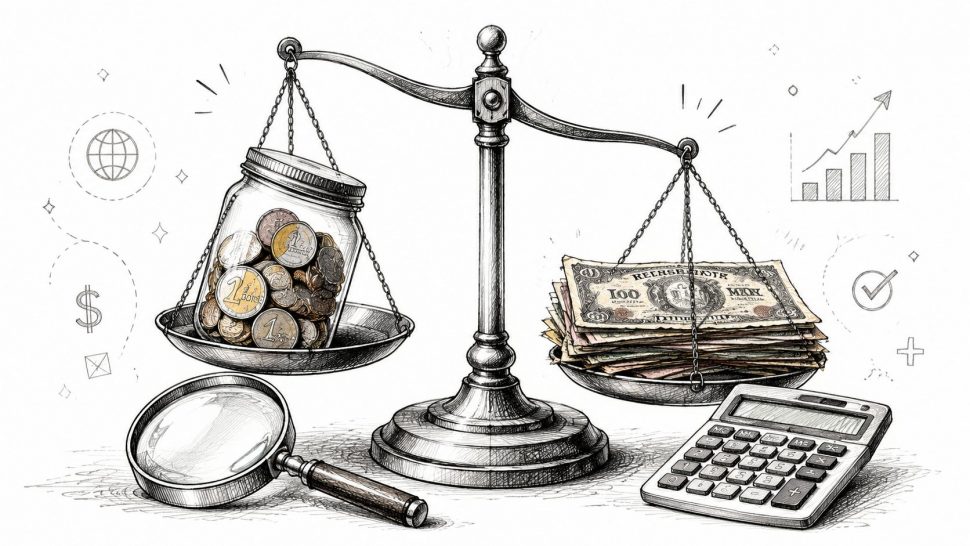
Old currency is usually worth one of three things: its face value if it can still be redeemed, a collector premium if rarity and condition matter, or a practical mixed-bag value if it's leftover coins and notes being sold in bulk. In the UK, old paper £5 and £10 notes were replaced by polymer versions in March 2017 and March 2018, and many old notes are worth either face value or a collector premium rather than some automatic “antique” price.
When people ask how much old currency is worth, they aren't holding museum pieces. They've got a holiday coin jar, a drawer full of old foreign notes, a charity collection tin, or an envelope of withdrawn money the bank won't take. That's where the confusion starts. Banks often reject coins, many bureaux only want current notes, and collector guides tend to focus on the unusual rarities rather than the mixed everyday cash people possess.
The practical answer is simpler than most guides make it sound. If you've got a few collectible items, value depends on scarcity and condition. If you've got mixed leftover foreign currency, old notes, or coins that standard exchange counters refuse, specialist services are usually the easiest route because they can handle the awkward stuff without forcing you to sort every coin by country and denomination.
Your Guide to Valuing Old and Foreign Currency
You open a drawer looking for batteries and find a handful of old peseta coins, a few faded euro notes from two holidays ago, and an envelope of withdrawn UK paper money that your bank already refused. That is the point where people start searching how much old currency is worth, and most of what they find sends them in the wrong direction.

The short practical answer
Start with the type of value you are dealing with. Old and foreign currency usually falls into one of three buckets:
- Redeemable money, which can still be paid out at face value through the issuing authority or an accepted exchange route
- Collectible money, which can sell above face value if collectors want that exact note or coin
- Mixed leftover currency, which is the everyday reality for many households: assorted coins, used notes, obsolete travel money, and small amounts from different countries
That last category gets ignored by collector articles and rejected by many banks, but it is often the actual question. People are not trying to price a rare proof set. They want to know whether the odd pile of foreign cash in the house can be turned into usable money without spending hours sorting it.
Old does not automatically mean rare. In practice, plenty of older notes and coins have only face value, some have no banking route at all, and some still hold practical exchange value because a specialist buyer can process items a bank counter will not.
Why specialist exchange matters
Banks handle current notes well. They are usually a poor fit for mixed coins, withdrawn issues, small foreign balances, and unsorted travel leftovers. That is why people so often get told no, even when the money still has value through another route.
A specialist buyer looks at the batch differently. The goal is not to treat every item as a collector piece. The goal is to assess what can be exchanged, what can be redeemed, what has resale demand, and whether the lot is worth processing as a mixed submission. If you need to exchange foreign coins or clear a bundle of old notes and change in one go, that is usually the more practical option.
Practical rule: Ask what kind of currency you have before asking if it is rare. That saves time, sets realistic expectations, and points you toward the right selling route.
What Actually Makes Old Currency Valuable
“Old” is a weak description. In currency, value comes from what the item is, not just how long ago it was issued.
Face value, collector value, and material value
There are three common kinds of value.
First, there's face value. That applies when a note or coin is still redeemable or exchangeable through the relevant authority or market route. In that case, the printed denomination is the baseline.
Second, there's collector value. Most online myths arise from this. A note isn't valuable because it looks vintage. It becomes valuable when collectors care about the issue, rarity, condition, serial pattern, replacement prefix, or survivorship.
Third, there's material value. This matters mostly for precious metal coins rather than everyday travel leftovers. For those clearing out old foreign cash, this is the least relevant category.
Condition changes the price fast
Condition is one of the biggest drivers of old currency pricing. A worn note that survived in circulation for years is common. A crisp note from the same issue that avoided folds, stains, tears, writing, and heavy handling is much harder to find.
The practical reason is straightforward. Paper money wears out. The Bank of England notes that paper money has a finite circulation life, which is why worn examples are common while high-grade survivors are scarcer. That's the underlying reason better-preserved notes can command stronger resale values than heavily circulated ones, as discussed in the Federal Reserve's explanation of the life span of paper money.
A collector may pay for scarcity in grade, not just scarcity in issue.
Scarcity is specific, not vague
A note can be old and still not scarce. Millions may have been printed, and many may still survive. On the other hand, a less familiar issue can attract strong demand if few high-quality examples remain.
That's why broad labels such as “pre-decimal”, “withdrawn”, “paper”, or “foreign” aren't enough on their own. Value usually depends on details such as:
Issue and series
The exact design and release matter more than the general denomination.Condition
Creases, edge splits, tape marks, pinholes, stains, and missing corners all reduce interest.Demand
Some notes have a stronger collector base than others.Serial-number interest
Unusual sequences can attract attention even when the note itself isn't especially rare.
Why mixed leftover money is different
Collector advice often becomes less useful here. Few individuals possess a sleeve of well-preserved specialist items. Instead, they have mixed leftovers. That money still has value, but the valuation method is different.
If the collection is unsorted, low-grade, and mixed across countries, the useful question isn't “Could this be rare?” It's “What can I realistically convert this into after time and effort?” That's a practical exchange problem, not a numismatic one.
How to Estimate Your Currency's Worth Three Practical Methods
If you want a realistic starting point, there are three workable ways to estimate value. Each suits a different type of currency.
Method one for possibly collectible notes
If a note looks unusual, older, or better preserved than the rest, start with a benchmark guide. The most useful broad reference is the PMG World Paper Money Price Guide, which catalogs values from 1368 onward and is used to compare rarity and grade-sensitive premiums rather than treating all notes as interchangeable cash. You can check it through the PMG World Paper Money Price Guide.
This method is best for:
- single notes rather than mixed bags
- cleaner items with limited wear
- identifiable issues, dates, and series
- notes you suspect may have collector interest
What it doesn't do well is price your average envelope of holiday leftovers. Catalogue-style values are a reference point. They're not a guarantee of what a mixed lot will fetch in everyday resale.
Method two for real market behaviour
The next step is to look at actual sold listings on resale marketplaces. Not asking prices. Sold prices.
That matters because people can list an ordinary old note at any number they like. The market only tells the truth when someone buys it. If you use this method, match as closely as possible on country, denomination, series, condition, and whether the note is current, withdrawn, or obsolete.
Reality check: A high asking price online usually tells you what the seller hopes for, not what buyers are paying.
This route works best when you have a small number of identifiable items and enough patience to compare like with like.
Method three for mixed bulk currency
For jars, tins, charity bags, and unsorted travel money, a specialist bulk valuation is usually the most practical method. That's especially true if the mix includes coins, damaged notes, odd denominations, or withdrawn issues that banks and bureaux won't accept.
In these cases, people often need a realistic estimate more than a collector-grade appraisal. A good way to approach that is by using a service built for mixed or unsorted submissions, especially if it can handle old coin money without requiring full separation first. A useful starting point is to check value of old coin money.
A quick comparison of the three methods
| Valuation method | Best for | Main strength | Main weakness |
|---|---|---|---|
| Price guide | Individual notes with possible collector appeal | Good benchmark for rarity and grade | Can overstate expectations for ordinary circulated items |
| Sold listings | Small, identifiable items | Shows what buyers actually paid | Time-consuming and inconsistent |
| Specialist bulk valuation | Mixed coins and notes, leftover foreign currency | Practical for unsorted and awkward currency | Focuses on realistic payout, not headline collector fantasy |
If your currency is mixed, common, and sitting unsorted in a bag, the best estimate is often the one that reflects what you can get paid without spending hours researching every piece.
Comparing Your Exchange Options Banks vs Bureaus vs Specialists
The route you choose matters almost as much as the currency itself. People often assume all exchange providers handle money the same way. They don't.
Foreign Currency Exchange Options Compared
| Exchange Option | Accepts Foreign Coins? | Accepts Old/Withdrawn Notes? | Best For |
|---|---|---|---|
| High street bank | Usually limited or no | Often limited | Current mainstream notes for existing customers |
| Airport bureau de change | Usually focused on current notes | Rarely | Last-minute holiday cash and common live currencies |
| Specialist online service | Often yes | Often yes | Mixed leftover currency, coins, old notes, awkward denominations |
Why banks often say no
Banks are designed around standardisable transactions. Current notes in major currencies fit neatly into that system. Bags of mixed coins don't.
Foreign coins are bulky, labour-heavy, and expensive to process relative to their value. Withdrawn notes create another issue. Staff must know whether the note is still redeemable, obsolete, collectible, or not supported by the bank's exchange channels. Most banks avoid that complexity altogether.
Why bureaux are also limited
A bureau de change is usually set up for travellers who want current currency before or after a trip. That means the business model favours clean, spendable notes in active demand. It doesn't favour pre-euro cash, old series notes, or jars of mixed coins from six holidays ago.
That's why people trying to exchange foreign coins and notes often find that the obvious local options only handle the easiest part of the market.
Why specialists fill the gap
Specialist services exist because the leftover-currency problem is real. Individuals have it. Charities have it. Retailers, airports, supermarkets, and police forces encounter it too when coins and notes come in from the public.
The practical advantage is that specialist buyers are set up for the hard cases. They can process mixed denominations, coins alongside notes, and withdrawn currency that standard exchange routes refuse. For anyone holding unsorted travel money rather than a tidy wallet of current banknotes, that difference matters more than anything else.
How to Convert Foreign Coins and Banknotes Into Cash
You get home from a trip, empty your pockets, and tell yourself you'll deal with the leftover money later. A few years on, it has turned into a jar of coins, a few old notes in a drawer, and a bundle of currency no bank wants to touch. Converting it is usually far easier than people expect once you use a service built for mixed, low-value foreign money rather than collector pieces.

Step one gather everything together
Pull it all into one place first. Check drawers, travel wallets, spare bags, charity tins, desk trays, and storage boxes. Include coins, notes, and older or withdrawn currency you kept because you were unsure whether it still had any use.
Keep the job simple at this stage.
For mixed leftover currency, heavy sorting often creates more work than value. Unless the buyer asks for notes and coins to be separated, the practical approach is to collect everything, remove obvious non-currency items, and leave the rest as a single batch.
Step two choose the right valuation route
Match the valuation method to the type of currency you have. A tidy stack of current banknotes can often be priced individually. A bag of mixed coins from several countries usually needs a bulk process instead.
Specialist currency buyers handle this kind of leftover travel money every day. That matters because non-collectible foreign currency is rarely about finding one rare item. It is about getting a fair return on the whole lot without spending hours identifying every denomination yourself.
Step three pack and send securely
Once you have a quote or submission route, pack the currency properly. Coins need strong packaging that will not split in transit. Notes should be kept flat, dry, and together.
If you are sending regular volumes for a charity, retailer, or other organisation, consistency matters as much as price. A clear process saves staff time, reduces handling mistakes, and turns forgotten foreign cash into usable funds without extra admin.
Send it as it really is. Mixed, leftover, and unsorted is normal.
Step four receive verification and payment
After the currency arrives, it is checked under the buyer's process and payment is issued once the contents are verified. According to the publisher information provided for this article, payment is issued within five working days by bank transfer or PayPal, and customers can choose their preferred payment method.
That speed is one of the main reasons specialist exchange works well for this type of money. The actual value is not only the amount paid. It is also the fact that the coins and notes stop sitting idle in a jar, box, or back office.
What usually works best
- Mixed holiday money is usually best handled through a bulk specialist service.
- Single unusual notes are worth checking for collector value before sending them with general leftovers.
- Ordinary foreign coins are usually better exchanged as one batch than assessed piece by piece.
- Charity or business collections are easier to process when everything is submitted together and paid out centrally.
Real-World Scenarios What Is My Leftover Currency Worth
A typical drawer clear-out looks like this. A few euro notes from Spain, US coins from a stopover, old paper pounds, and loose change nobody wants to queue at a bank to ask about.
That mix is exactly where people get stuck. Collector advice focuses on rare single items. Banks and high street bureaux usually focus on current notes. Leftover currency sits in the middle, and that is where practical value matters most.
A jam jar of mixed coins from different trips
This is one of the commonest bundles we see. Euros, US cents, a few baht coins, some dirhams, and often one or two non-currency tokens mixed in as well.
The value here usually comes from the batch, not from any one coin. Sorting every piece by country can take far longer than the extra return is worth. For ordinary travel leftovers, the practical question is simple. Can the whole lot be turned into cash without spending an hour on the kitchen table first?
In many cases, yes.
A folder of old paper notes from Europe
Condition and exchange status begin to matter here. Notes may look clean and organised, but that does not mean a bank will accept them, and it does not automatically mean they are collectible either.
Some withdrawn notes can still be redeemed through the issuing authority. Others have value only through a buyer that handles older or out-of-circulation currency. Older Bank of England paper £5 and £10 notes were replaced by polymer versions in March 2017 and March 2018, and the Bank of England says polymer notes made up around 94% by value of notes in circulation in 2024. In practice, that means paper notes now show up more often in "leftover money" bundles than in everyday spending.
A bag from a charity or community fundraiser
Charity collections create a different kind of value problem. The currency is often donated casually, mixed together, and not worth staff time to sort in detail.
What matters most is net return after effort. If a volunteer has to separate every coin, identify every withdrawn note, and make multiple trips to different exchange points, the headline value stops looking attractive very quickly. A single specialist process often works better because it reduces admin, keeps handling simple, and gets the funds into the charity account faster.
Mixed leftover currency has value when the exchange process matches the reality of the bundle.
A wallet of modern holiday cash plus loose change
This is the most overlooked scenario. The notes may still be current, so people assume they should take them to a bank or bureau. Then the coins get left behind because many providers will not take them, or will only take certain denominations.
Handled separately, the amount feels too small to bother with. Handled together, it often becomes worth converting. That is why specialist exchange services make sense for non-collectible leftovers. They deal with the awkward mix that standard exchange channels tend to reject.
Common Mistakes to Avoid When Selling Old Currency
People lose value in predictable ways. Usually not because the currency had no worth, but because they approached it the wrong way.
Cleaning coins before sending them
This is one of the most common mistakes. People see dirt or toning and try to “improve” the coin.
Don't. Cleaning can damage surfaces, remove original finish, and make a potentially better item less attractive to buyers. If you think a coin may have collector appeal, leave it exactly as found.
Trusting asking prices instead of real prices
A note listed online for a dramatic amount can create false hope. Asking prices are easy to publish. Completed sales are what matter.
If you use marketplace research, compare sold items that accurately match yours. Country, denomination, issue, and condition all need to line up.
Ignoring the effort cost
People often spend hours sorting tiny amounts of leftover foreign currency to squeeze out a slightly better theoretical rate. Then they factor in packaging, travel, time, and rejected items and realise the gain disappeared.
That's why practical sellers focus on net return, not fantasy return.
Assuming banks will take everything
They won't. That catches people out all the time.
Banks and bureaux usually prefer current, standard notes. Coins, obsolete issues, and odd leftovers often sit outside their systems. If you go in expecting a full-service answer, you may just lose time.
Throwing away old notes and coins too quickly
Some people make the opposite mistake and assume anything old is worthless. That can be just as costly.
Use a simple filter first:
- Check whether it's current or withdrawn
- Separate anything unusually crisp or unusual-looking
- Keep sets, folders, and inherited bundles together
- Use a specialist route for mixed leftovers
Sending currency without understanding the terms
Before posting anything, check how the service handles quotes, returns, payment methods, and rejected items. A clear process matters, especially if you're sending a mixed lot and don't want surprises later.
Worth protecting: The easiest sale isn't always the best one. The best one is the route that gives you a clear valuation, straightforward handling, and no confusion about what happens next.
Frequently Asked Questions About Old Currency
Can you exchange foreign coins in the UK?
Yes, but usually not through ordinary banks or standard travel exchange counters. Specialist services are the most practical route if you want to convert foreign coins and banknotes, especially when they're mixed or leftover from several trips.
Do UK banks accept foreign coins?
In most cases, banks are very limited with foreign coins. Many won't accept them at all. Their systems are geared towards mainstream banking services and current notes, not labour-heavy coin processing.
Is old or withdrawn currency still worth anything?
Often, yes. The value depends on whether it can still be redeemed, whether collectors want it, or whether it belongs in a bulk exchange submission. Old doesn't automatically mean rare, but it doesn't automatically mean worthless either.
Are old Bank of England paper notes still valid?
Some withdrawn notes can still be redeemed through the issuing authority rather than spent in shops. The key point is that validity for spending and value for redemption are not the same thing.
How does a currency buy back service work?
You submit your coins and notes, the currency is checked, and payment is made according to the quoted process. Specialist services are built for awkward cases such as mixed coins, old notes, pre-euro money, and exchange leftover currency that banks reject.
Do I need to sort coins by country first?
Usually, not always. Many people assume they must sort everything in advance, but some specialist services are designed to handle mixed submissions and weight-based valuations. That's much easier for jars, tins, and charity collections.
How long does payment take?
According to the publisher information for this article, payment is made within five working days after verification, with payment available by bank transfer or PayPal.
Can I donate leftover foreign currency to charity?
Yes. Many people choose to donate foreign coins to charity instead of cashing them personally. That can be especially useful for small mixed amounts that feel too awkward to handle on your own.
What if I'm not happy with the quote?
The publisher information states that currency is returned free of charge under a happiness guarantee if the customer isn't satisfied with the quote. That kind of policy matters when you're sending old or mixed currency by post and want a clear fallback.
If you've got coins, notes, withdrawn money, or a mixed bag of holiday leftovers sitting unused, We Buy All Currency gives you a straightforward way to turn it into cash. You can exchange foreign coins, convert old banknotes, or send in mixed currency without the usual hassle of sorting everything by hand. It's a practical option for travellers, charities, and businesses that need a simple, trusted currency buy back service.