
Japanese Yen 5000 Note: Your Guide to Exchanging It
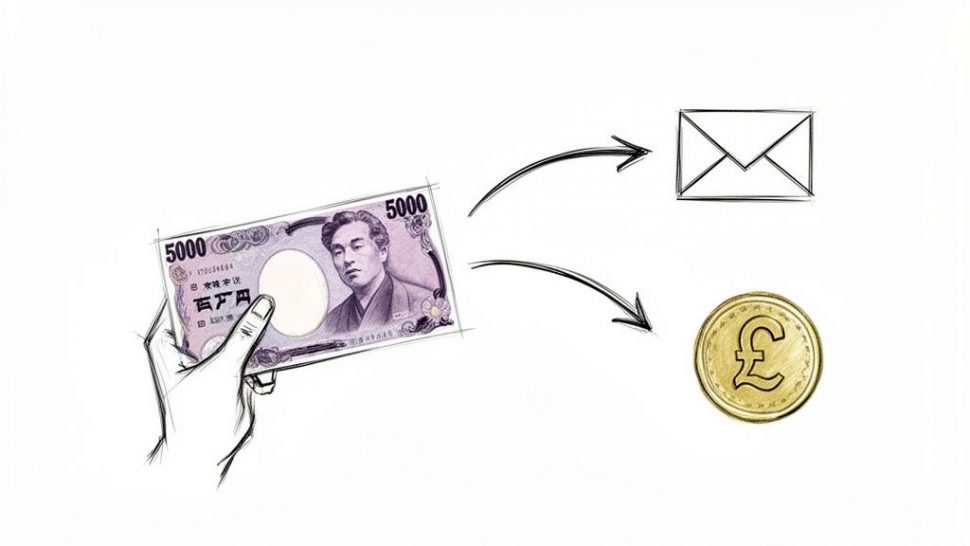
Posted by: Ian Stainton • 7 Apr 2026
A lot of people have one somewhere. A japanese yen 5000 note tucked into a passport wallet, slipped inside a guidebook, or left in a drawer after a trip to Tokyo, Kyoto, or Osaka.
It often stays there for years because it feels awkward to deal with. Too small to visit a bank for. Too foreign to spend in the UK. Too useful to throw away.
That is a mistake.
A ¥5000 note is real money. Depending on the note you have, it may also carry collector interest as well as exchange value. If you also have coins, older notes, or mixed travel cash from other countries, you can often send everything together and convert foreign coins and banknotes in one go. That is one of the simplest ways to unlock forgotten money from old holidays, business trips, family collections, airport finds, or charity tins.
That Japanese 5000 Yen Note in Your Drawer
The usual story is simple.
You came back from Japan with one last purple note. You meant to exchange it later. Life got busy. The note stayed in the drawer.
Months later, or sometimes years later, you find it again and ask the same question. Can I still do anything with this?
The answer is yes.

Why people leave foreign notes untouched
Individuals do not ignore leftover foreign currency because it has no value. They ignore it because the process feels annoying.
Common worries sound like this:
- It is only one note: It may not feel worth a special trip.
- It might be too old: Many travellers assume older notes are useless.
- I have coins too: People often think mixed currency must be sorted first.
- Banks probably will not want it: That concern is often well founded.
A japanese yen 5000 note is exactly the kind of leftover holiday money that gets forgotten. It is large enough to matter, but awkward enough that people postpone dealing with it.
Why this note is worth understanding
The ¥5000 note has a long history in Japan. It first appeared in 1957 as part of Series C, and the well-known Series E design released on 1 November 2004 features writer Ichiyo Higuchi on the front and Japanese irises on the back, according to the history of the 5000 yen note.
That matters for one practical reason. There is more than one version in circulation and in collections, so people often are not sure what they own.
Tip: If your Japanese note looks old, unfamiliar, or slightly different from the one you remember from travel websites, do not assume it has no value. Older versions can still be exchangeable, and some may deserve a closer look.
The good news is that exchanging foreign coins and notes does not need to involve queues, branch visits, or sorting every item into neat piles. If you have a single ¥5000 note, or a bundle of leftover foreign currency from several trips, the easiest route is usually a postal service that accepts mixed coins and notes, including old or obsolete issues.
A Closer Look at the 5000 Yen Banknote Design
A ¥5000 note can look simple at first. In practice, it is built like a passport page. The portrait, colours, print texture, and security details all help identify what version you have and whether it can be handled smoothly by an exchange specialist.

The main versions people come across
The version many UK travellers recognise is the Series E note from 2004. It shows Ichiyo Higuchi on the front and Japanese irises on the back. The newer Series F note, issued in 2024, features Tsuda Umeko on the front.
That portrait change matters because it often causes the first moment of confusion. Two people can hold different ¥5000 notes, compare them, and assume one must be outdated or unusable. In reality, different series mark different stages in the note’s life.
For anyone planning to exchange by post, correct identification is the useful first step. Once you know which series you have, the note becomes much easier to sort, value, and send with confidence.
Size, feel, and what those details mean
Japanese banknotes are designed to be recognised quickly by both people and machines. On the ¥5000 note, that shows up in its consistent size, clear denomination markings, and tactile features that help distinguish it from other notes in a mixed bundle.
These specifications matter for handling and verification, especially when foreign currency arrives unsorted. A specialist processing travel money is not just looking at the face value. They are also checking whether the note’s format matches the expected issue, whether the print quality looks right, and whether its physical features line up with known Japanese banknote standards.
That is one reason old travel money is often easier to exchange through a dedicated service than through a high street bank. A specialist is set up to recognise mixed notes, including older Japanese issues that do not match the newest design people see online.
Security features that make the note easier to verify
The ¥5000 note includes several layers of security, and each one has a practical job.
Fine printing and detailed line work
Very small text and intricate patterns make copying harder and help trained handlers spot poor reproductions quickly.
Watermarks
When the note is held to the light, the watermark gives another point of confirmation. It works as a built-in identity check rather than a decorative extra.
Holographic and colour-shifting elements
Newer Japanese notes include features that change appearance as the note moves. That makes them easier to recognise in normal handling and harder to imitate with flat printing.
Tactile marks
Japan also includes touch-based features to help people distinguish denominations more easily. These are useful for accessibility, but they also help with quick manual checks during sorting.
Who appears on the note
The portrait is usually the fastest clue.
You may have:
- Ichiyo Higuchi on a Series E note
- Tsuda Umeko on a Series F note
If your note shows Ichiyo Higuchi, that does not make it a problem note. It places your banknote at an earlier point in its journey, from circulation in Japan to storage in a drawer at home, and then on to exchange in the UK.
That is the helpful way to view the design. It is not just artwork. It is a set of clues that tells you what you are holding, helps a specialist verify it, and makes the path from forgotten yen to pounds in your bank account much more straightforward.
Determining the Value of Your 5000 Yen Note
A ¥5000 note can have more than one "value" at the same time. That is the part that often causes confusion.
If you found one in a drawer in the UK, the practical question is usually not what it could buy in Tokyo. It is how that note travels from Japanese currency sitting unused at home to real pounds you can receive without hassle. For that journey, three types of value matter.
| Value type | What it means | Why it matters |
|---|---|---|
| Face value | The denomination printed on the note | In Japan, it represents 5000 yen |
| Exchange value | The amount a buyer or exchange service will pay in pounds | This is the figure that affects what reaches your UK bank account |
| Collector value | Extra value based on age, rarity, issue type, and condition | Some notes deserve a closer look before they are treated as ordinary travel money |
That distinction matters because two notes with the same printed denomination can follow different paths. One is exchanged for its currency value. Another, usually older and in better condition, may need a specialist assessment first.
Start with the version of the note you have
The portrait and series help place your note in its timeline. A newer ¥5000 note is usually assessed for straightforward exchange. An older one may still be exchangeable, but its age can also affect whether collectors see added interest.
A simple way to picture it is this. Face value is the label on the box. Exchange value is what someone in the UK will pay for the box today. Collector value depends on whether the box itself has become interesting.
That is why identification comes before pricing.
Condition changes the answer
Condition works a bit like the mileage on a used car. The item still has the same basic function, but wear affects how it is judged.
Broadly, your note may fall into one of these groups:
- Circulated: normal folds and handling marks
- Heavily worn: stronger creases, stains, soft paper, or edge damage
- Uncirculated or near-uncirculated: crisp paper with very little handling
For ordinary exchange, a used note is often valued as currency rather than as a collectable item. For older issues, cleaner condition can make a specialist pause before treating it as just another note.
Age matters, but not in the way many people expect
Older does not automatically mean rare. It means the note may need a closer look.
That is especially true for people holding Japanese cash from an inherited collection, an old trip, or a travel wallet that has not been opened for years. Some notes are still current. Some are older series. Some may even be obsolete for normal banking channels while still holding exchange value through a specialist buyer.
Many people get stuck at this point. They assume an old note is either worthless or highly collectable. In reality, most notes sit somewhere in between. They are genuine money first, and a specialist can then decide whether age and condition add anything on top.
Exchange value is the practical figure to focus on
If your aim is to turn forgotten yen into pounds, exchange value is the figure that matters most. It reflects what a service will accept and pay for the note in the UK, including older Japanese issues that banks often do not want to handle.
That practical view becomes even more useful if you have mixed denominations. For example, if your spare Japanese cash includes larger notes as well, this guide to the Japanese yen 10000 note shows how another denomination can sit at a different point on the same journey from Japan to exchange in Britain.
A good rule of thumb
If your ¥5000 note is clearly used, treat it as exchangeable currency unless a specialist tells you otherwise.
If it is older and unusually crisp, ask for it to be checked before it is processed. That small pause can help you understand whether you have leftover travel money, or a note with a little more interest attached to it.
Either way, the note still has a path forward. The goal is to turn that forgotten piece of Japan into cash in your UK bank account as easily as possible.
Why Banks Wont Help You But We Will
Anyone who has tried to exchange foreign coins and notes through a bank has probably hit the same wall. The note is genuine, the money is yours, and yet the answer is still no.
Sometimes the bank only wants current notes. Sometimes it wants major currencies only. Sometimes it refuses coins completely. In other cases, the branch staff do not handle older foreign issues.

Why banks are often the wrong fit
Banks are built for mainstream transactions. Leftover travel cash is not their speciality.
That becomes a problem when your money falls into any of these categories:
- Older note series
- Mixed foreign coins
- Unsorted travel wallets
- Small personal amounts
- Withdrawn or obsolete currency
A single japanese yen 5000 note can already fall outside what some branches want to deal with, especially if it is not the newest issue. Add a few coins from Japan, euros from Spain, US cents, or old pre-euro notes, and most ordinary routes become even less helpful.
What specialist exchange services do differently
A specialist service is designed for the money people have at home, not the idealised neat bundle a bank prefers.
That means:
- No need to sort coins first
- Current and older banknotes can be checked properly
- Mixed currency can be sent together
- Postal exchange removes the need for branch visits
- Clear quoted rates reduce uncertainty
This matters for more than convenience. It changes whether people bother to convert foreign coins and banknotes at all. A lot of “useless” holiday money turns out to be perfectly exchangeable once the right service is involved.
Trust matters when posting money
Posting currency sounds unusual to first-time users, but it is normal in this part of the market. What matters is the quality of the operator handling it.
A trusted service should offer:
| What to look for | Why it matters |
|---|---|
| Transparent rates | You know what is being offered before sending |
| Verification process | Notes and coins are checked carefully on arrival |
| Fast payout | Your money does not sit in limbo |
| Return option | You are not trapped if unhappy with the quote |
| Established partnerships | It shows experience with real-world volume |
The strongest operators are trusted by major brands, including charities, supermarkets, airports, and police forces. That kind of trust is built through repeat handling of mixed foreign currency, not by dabbling in it.
Tip: If a provider only seems interested in clean, current banknotes from major currencies, it is probably not the best home for your real-life pile of leftover holiday money.
The key difference is simple. Banks mainly support routine exchange. Specialist services support the awkward, old, unsorted, and easily forgotten money individuals need help with.
How to Exchange Your Japanese Yen 5000 Note Step by Step
You find a ¥5000 note while clearing a drawer, tuck it on the table, and wonder if it is too old, too unusual, or too small in value to bother with. In practice, the process is straightforward. A specialist postal exchange service can take that note from a home in the UK to verification and then into pounds in your bank account, even if it is an older or obsolete version.
Many first-time users assume they need to identify every detail before doing anything. You do not. Start by gathering the currency, then let the exchange process do the sorting and checking.

Step 1 Check what you have
Begin with the note itself, then widen the search.
Look in the places travel money tends to hide: old wallets, travel organisers, desk drawers, camera bags, coat pockets, and tins of mixed coins. A single Japanese banknote often turns out to be part of a larger pile of forgotten money.
That pile may include:
- One ¥5000 note
- Other Japanese banknotes or coins
- Mixed foreign currency from past holidays
- Older withdrawn notes
- Loose coins stored with receipts or souvenirs
Do not worry if your ¥5000 note looks older than the version you remember from a recent trip. Different issues of the note still appear in UK homes because the denomination has existed for decades. A specialist exchange service is used to checking different designs and older series.
Step 2 Enter your currency details online
The next job is simple. Tell the provider what you are sending.
A clear online form should let you choose your currency, add banknotes and coins in the same submission, and see the expected exchange value before you post anything. That is helpful because it turns a vague idea, "I should do something with this travel money", into a clear transaction with a quoted result.
If the service offers a weight-based option for unsorted coins, that can save time. It works like using kitchen scales for baking. You do not count every grain of sugar, because the weight gets you to the right result faster.
Step 3 Pack the note securely and post it
Once you have your quote or submission form, package the currency neatly.
Use a small inner envelope to keep notes and coins together. Keep banknotes as flat as you reasonably can, and avoid stuffing too much into one loose packet where coins can move around. Simple and tidy is better than elaborate packaging.
If you have other exchangeable foreign currency at home, include it in the same parcel where the provider allows it. This is often the point where a ¥5000 note stops being a single forgotten item and becomes part of a useful payout.
Step 4 The provider verifies the currency
After your parcel arrives, the exchange team checks what you sent.
People often expect difficulty here, especially with older notes. In reality, verification is a normal part of the service. Specialists inspect the note, confirm the denomination and issue, and check that it is exchangeable under their terms. That applies to current notes and, in many cases, older or obsolete ones as well.
For the sender, the process is a bit like posting jewellery to a valuer. Your job is to send it safely and describe it accurately. The expert's job is to identify it properly and confirm what it is worth.
Step 5 Receive your payment in pounds
Once the currency has been checked, payment is sent using the method offered by the provider, commonly a bank transfer or PayPal.
This is the final stage in the note's journey. It began as legal tender in Japan, sat unused in a UK home, travelled by post to a specialist handler, and ends as pounds you can use. That is the primary appeal of postal exchange. It turns something awkward to spend and easy to ignore into money back in your own account.
Mistakes that slow people down
Sending only the ¥5000 note and leaving the rest behind
Before sealing the parcel, do one more sweep of the house. Many people find extra euros, dollars, or coins from older trips once they start looking.
Assuming older notes are automatically worthless
Age and usefulness are not the same thing. An older Japanese ¥5000 note may still be accepted by a specialist service even if a high street bank would not want it.
Waiting because the process sounds complicated
The process is usually much simpler than people expect. Gather the currency, complete the form, post it, and wait for verification and payment. That is often all it takes to unlock money that has been sitting idle for years.
Turn Your Leftover Currency into a Charitable Donation
A ¥5000 note often starts as holiday money, then becomes drawer money, then turns into something easier to ignore than use. Donation gives that note a clearer ending. Instead of leaving it tucked inside an old wallet or travel envelope, you can turn it into support for a cause you already care about.
This option suits several common situations. You may have one Japanese note and a handful of mixed coins that feel too small to bother with. You may be helping a relative clear out years of saved travel cash. You may prefer the idea of doing some good with money you had mentally written off.
That is a key benefit. The note completes its journey.
Why donation makes sense for leftover foreign currency
Foreign cash often gets stuck in an awkward spot. It still has value, but it is no longer useful in everyday life in the UK. A charitable donation solves that neatly, especially if your ¥5000 note is sitting alongside old euros, US coins, or other notes from past trips.
Donation also removes a decision many people put off for months. You do not need to ask whether the amount is big enough to matter to you personally. You only need to decide whether you would rather keep storing it or put it to work.
For older and obsolete currency, this can feel even more satisfying. A note that no local bank wants to handle may still have a route back into value through a specialist service, and that means forgotten money can still do something useful.
Why many people choose a specialist donation service
A specialist service handles the awkward part for you. That matters if your foreign currency is mixed, unsorted, old, or made up of small amounts that would be inconvenient to exchange one by one.
Using a service that lets you donate your foreign currency directly is often simpler than converting the money yourself first and then making a separate donation. It keeps the process in one place, which is helpful if you want a clean, low-effort way to deal with leftover travel cash.
It also fits the wider journey of a ¥5000 note surprisingly well. The note began in Japan, travelled home in a purse, drawer, or suitcase, and can still end up creating value in the UK even if you never spend it yourself.
When donation is the better choice
Donation is often a good fit when:
- your ¥5000 note is part of a mixed bundle of foreign money
- the total feels too small to justify keeping
- you have old or unfamiliar notes and coins from several trips
- you want the easiest possible way to clear out unused currency
A simple rule helps here. If the money has been forgotten long enough that you would not miss it, donating it can be a sensible and satisfying option.
For many households, that is the easiest answer. The note leaves the drawer, the value gets unlocked, and something that once felt awkward to deal with becomes useful again.
Frequently Asked Questions About Exchanging Foreign Currency
People usually hesitate for the same few reasons. They worry about safety, condition, payment speed, or whether mixed currency will be rejected.
Here are the answers that matter most.
Common questions about currency exchange
| Question | Answer |
|---|---|
| Can I exchange foreign coins as well as notes? | Yes. Specialist services are designed to exchange foreign coins and notes together, including mixed collections from several countries. |
| Do I need to sort everything first? | Usually not. A strong specialist service should accept unsorted currency, which is especially helpful if you have jars, tins, or old travel wallets. |
| Will an old japanese yen 5000 note still be accepted? | Often yes. Older series can still have exchange value, and some may also have collector interest depending on condition. |
| What if the note is worn? | Worn notes can still be exchangeable, although condition can affect value. If the note is badly damaged, the provider will need to assess it on arrival. |
| Is it safe to send currency by post? | Postal exchange is a normal method in this market. The important thing is to use a trusted provider, package the contents securely, and follow the provider’s instructions. |
| How do I get paid? | Good services usually offer bank transfer or PayPal after verification. |
| How long does it take? | Many specialist services aim to pay within five working days after the currency is received and checked. |
| Can I send just one note? | Yes, but it often makes sense to gather all your leftover foreign currency first so you can convert everything at once. |
| What if I am not happy with the quote? | Look for a provider with a happiness guarantee or free return policy so you are not locked in. |
| Can I donate instead of taking cash? | Yes. Many specialist services let you direct the proceeds to charity, which is ideal for mixed travel money and small leftover amounts. |
Two final checks before you send
Before posting any currency, make sure you can answer these questions:
- Do I understand how the provider calculates value?
- Do I know what happens if I decline the quote?
If the answer to either is no, pause and check the terms first. A clear process builds trust.
Final practical tip: Gather everything before sending. Many individuals start with one Japanese note and end up finding euros, dollars, old coins, and other leftover foreign currency in three different places around the house.
If you are ready to exchange foreign coins, leftover foreign currency, or convert foreign coins and banknotes without the usual hassle, We Buy All Currency offers a fast, easy, 100% guaranteed postal service. You do not need to sort coins, older and obsolete notes are welcome, and you can choose cash payment or donate foreign coins to charity. It is a simple way to turn forgotten money into something useful.