
Old english coinage: A Quick Guide to History and Value
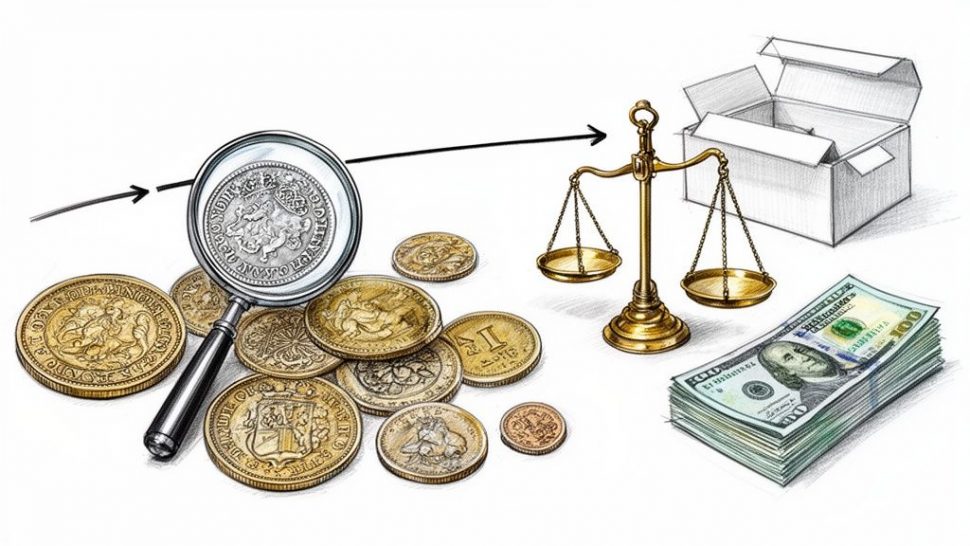
Posted by: Ian Stainton • 18 Mar 2026
Ever stumbled upon a heavy jar of unfamiliar old coins while clearing out an attic or a drawer? You’re not alone. Many people discover old English coinage and are left wondering about its history and, more importantly, its value. This guide will help you make sense of pre-1971 British currency, from the ancient silver pennies of centuries past to the shillings and pence that were in pockets right up until the 1970s.

What to Do with Old English Coinage
Finding a collection of old coins feels like uncovering a small piece of history. But what do you actually do with it? The truth is, for most circulated old English coins, their value lies more in their metal content than in any rare collectable status. This is exactly where our service comes in, offering a fast, easy, and hassle-free way to convert that forgotten currency into cash.
We offer a 100% guaranteed and hassle-free way to exchange your old coins and banknotes. The best part? There’s absolutely no need to sort through anything yourself. Just send us your collection, and we’ll take care of the rest. It's this straightforward approach and our commitment to trust and credibility that has made us a trusted partner for major UK brands, including national charities, supermarkets, airports, and even police forces.
Making Sense of Your Collection
Whether you've got a pocketful of old shillings or a biscuit tin brimming with pre-decimal pennies, our platform is designed to help. We provide practical tips and real-world insights on handling all sorts of money, including:
- Leftover foreign currency from holidays past.
- Old English coinage from before the 1971 decimalisation.
- The ability to convert foreign coins and notes that are no longer even in circulation.
- An option to donate foreign coins to charity, turning your find into a contribution that makes a real difference.
Our entire mission is to make currency exchange simple. We handle everything from identification to valuation, letting you turn a box of unsorted metal into a valuable asset—quickly and securely.
Our service is the perfect solution for anyone looking to exchange foreign coins and notes without the headache of sorting or identifying them first. If you've found a collection of old money, the next step couldn't be easier.
Ready to turn your old coins into cash or a charitable donation? Visit our homepage at We Buy All Currency to see just how easy and hassle-free our process is.
The Silver Penny and Its Anglo-Saxon Roots
If you want to understand old English money, you have to start with one single, incredibly important coin: the silver penny. For hundreds of years, this little piece of silver was the absolute backbone of Britain's economy. Long before anyone was talking about pounds and shillings, the humble penny was the standard coin that fuelled daily life and propped up royal power.
Think about what it was like before a unified national currency existed. The arrival of the silver penny was a game-changer, creating a much-needed standard across the different Anglo-Saxon kingdoms. It was a massive step away from simply bartering goods or using random foreign coins, and the beginning of a truly English money system. The coin’s design and the purity of its silver were a direct message about a king's authority and a reflection of the chaotic times, including the ever-present threat of Viking raids that led people to bury their coin hoards.
The Foundation of English Currency
It’s hard to overstate just how influential the silver penny was. It first appeared around 790 AD, introduced by Offa, the King of Mercia. He cleverly fixed its weight at 22.5 grains of fine silver. This new standard meant 240 pennies were equal to one Tower pound of silver—a system inspired by the Roman denarius that would shape British money for more than a thousand years.
Making these coins was a serious business. By the time King Athelstan was on the throne (924-939), there were already nearly 30 mints scattered across the country. That number ballooned to over 70 under Ethelred II, with major hubs in London, Winchester, Lincoln, and York, each producing pennies with their own slight variations.
What’s really fascinating is that the design was often changed every few years. This wasn't just about the king showing off his new portrait; it was a clever way to control quality by forcing old, worn coins out of circulation to be melted down and re-minted.
From Ancient Silver to Modern Value
Getting your head around the long history of the silver penny is the key to understanding the entire £sd system that came after it. That very idea of 240 pence in a pound? It all started here. While these ancient pennies are true historical artefacts, many of the more common, later pre-decimal coins you might find are valued mostly for their metal content, not their rarity. You can find a lot more detail on this in our guide to pre-decimal coin values.
If you’ve got a collection of old, unsorted coins, you could be holding a real mix of history spanning centuries. Trying to figure out what each one is can be a complicated and time-consuming job. Our service makes it fast, easy, and completely hassle-free to convert all your old coins and notes.
We’re trusted by major UK brands, charities, and even police forces for our credibility and professionalism. Our process is 100% guaranteed—and you don't need to sort or identify a single coin. We convert foreign coins and banknotes as well as old British money, turning it into cash for you or a donation for a charity of your choice.
Understanding Pounds Shillings and Pence
Before Britain went decimal back in 1971, the money in your pocket was a completely different beast. Forget the simple system we have today. We’re talking about pounds, shillings, and pence – or the £sd system, as it was known. It can feel a bit like a puzzle at first.
Think of it this way: you needed 12 pence to make one shilling, and then 20 shillings to make a single pound. That meant a whopping 240 pence made up just one quid! This system, with roots stretching all the way back to Roman Britain, was a part of daily life for centuries. For a deeper dive into this history, Historic UK has a great piece on the changeover.
Meet the Coins
Getting a feel for the main players in the old £sd system is the best way to start identifying what you might have. These coins were the bread and butter of daily transactions, and most had their own unique nicknames.
- Threepence (3d): You'll often hear this one called a 'thrupenny bit'. It's easy to spot, thanks to its distinctive 12-sided shape.
- Sixpence (6d): Known affectionately as a 'tanner', this small silver coin was incredibly common. It was also the coin traditionally popped into Christmas puddings for good luck.
- Shilling (1s): Widely known as a 'bob', a shilling was worth 12 old pence.
- Florin (2s): This was simply a two-shilling piece, so naturally, it got the nickname 'two-bob bit'.
- Half-Crown (2s 6d): As a larger silver coin, the half-crown was worth two shillings and sixpence.
This simple chart shows you how it all fits together.

You can see how 12 pennies built up to a shilling, and 20 shillings were needed to make a pound.
Getting your head around these relationships is the first step, but honestly, trying to sort and value a mixed bag of old coins is a huge time-sink.
That’s exactly why our service is designed to be fast, easy, and completely hassle-free. You don’t need to spend hours sorting or identifying any of your old coins. We are already trusted by major UK brands—including charities, supermarkets, airports, and police forces—to convert foreign coins and notes and other obsolete currency into cash.
Our process is 100% guaranteed. Just send us your unsorted collection of leftover foreign currency and old coinage, and we’ll take care of the rest. Ready to get started? Visit our homepage to see just how simple it is.
How English Coinage Evolved Through History
If you've ever stumbled across a tin of old coins, you're holding more than just bits of metal—you're holding tiny pieces of history. The story of old English coinage is a fascinating tale of royal dramas, economic chaos, and clever innovations. You can see these changes right there in the coins themselves.

One of the most notorious chapters was the ‘Great Debasement’ under King Henry VIII. Drowning in debt, he secretly told the Royal Mint to start mixing cheaper copper into the silver coins. As people used them, the silver wore away, revealing the copper underneath and earning the king the nickname "Old Coppernose." Trust in the currency plummeted.
Restoring Trust and Quality
Fast forward a few centuries, and a different problem arose. By the late 1600s, criminals were ‘clipping’ tiny bits of silver and gold from the edges of hammered coins, effectively stealing money with every snip. This practice led to the Great Recoinage of 1696, a huge undertaking led by none other than Sir Isaac Newton. The solution? Coins with milled (grooved) edges, which made any clipping instantly obvious and brought back faith in the currency.
These historical moments explain why old coins can look and feel so different from one another. Their weight, the metal they're made from, and how they were produced all tell you about the world they came from. For instance, the introduction of the gold Sovereign in 1817 ushered in a new age of stability for British money. You can learn more about the gold value of Sovereigns to get a sense of this important period.
These transformations highlight a key point for anyone with a box of old coins: their value is often tied directly to their metal content, which fluctuated wildly throughout history.
Figuring out what you have can be a real headache. That’s why our service is designed to be fast, easy, and completely hassle-free. You don’t need to sort, identify, or research anything; we do all the hard work for you. It's a 100% guaranteed process, trusted by major UK brands, charities, and police forces to convert foreign coins and banknotes into cash.
Turn Your Old Coins into Cash Today
After diving into the fascinating history of old English coinage, from Anglo-Saxon silver pennies to shillings from Queen Victoria’s reign, you’re probably wondering what to do with them now. While a few rare gems might be worth a pretty penny to a collector, the honest truth is that most circulated old coins are valued simply by their weight and the metal they’re made from. This is exactly where our service comes in, offering a perfect, no-fuss solution for your entire collection.

We’ve designed our process to be fast, easy, and completely hassle-free. There’s absolutely no need for you to sort through your coins, try to identify the monarchs, or separate them by denomination. Just gather up your collection, send it over to us, and let our experts take it from there.
How Our Hassle-Free Process Works
We’ve stripped away all the usual headaches that come with cashing in old money. Forget squinting through a magnifying glass with a heavy reference book in your lap; our system is built for pure speed and simplicity. It’s a straight line from that forgotten tin of coins to money you can actually use.
The whole thing boils down to just a few simple steps:
- Gather Your Currency: Just collect all your unsorted old English coinage, any leftover holiday money, and any other old banknotes you happen to have. Don’t waste a second worrying about separating them.
- Send It To Us: Pop your collection in a secure package and send it to our facility. We handle all sorts of currency, including old British money and any other foreign coins and notes you've got.
- Receive Your Payment: Our team gets to work professionally sorting, verifying, and valuing your currency based on clear, transparent rates. We then send your payment straight to you.
Our service is 100% guaranteed. We’re proud to be a trusted partner for major UK organisations, including well-known charities, supermarkets, airports, and even police forces, who rely on us to convert foreign coins and banknotes efficiently and securely.
No Sorting Needed—Ever
The most common question we get is whether you need to sort your coins first. The answer is always a firm no. Our weight-based system is specifically designed to handle mixed, unsorted collections, making it the perfect way to exchange your coins without any of the tedious prep work.
This approach saves you a massive amount of time and effort. It turns what could be a long, complicated project into a simple and rewarding task. Our helpful advice and practical tips ensure you understand every step.
Whether you have a small bag of leftover currency from a holiday or a big tin packed with pre-decimal money, our promise is always the same: a fast, easy, and reliable exchange. Ready to get started? Our friendly, professional service will make sure you get the best value for your old currency with zero fuss.
Give New Life to Old Coins by Donating to Charity
That collection of old English coinage or leftover holiday money sitting in a drawer holds real power. Instead of letting it gather dust, you can put it to work and make a genuine difference for a cause you care about.
Our charity donation service provides a simple, direct way to turn those forgotten coins and notes into modern-day support for charities doing incredible work. It’s a fast and easy option for anyone who wants their find to have a positive impact.
A Hassle-Free Way to Give Back
We’ve worked hard to make the donation process completely straightforward. That’s why we’re trusted by so many organisations, including major airlines and some of the UK’s best-known national charities, to convert the foreign coins and notes from their own fundraising drives into usable funds.
You can choose to have the entire value of your collection sent directly to one of our trusted UK charity partners. It’s a powerful and incredibly simple way to give.
This service is a perfect solution for both individuals with a small collection and the charities themselves. Many organisations receive a huge amount of foreign and obsolete currency during fundraising campaigns, and our platform gives them a 100% guaranteed way to process it all.
Our promise is simple: no sorting, no stress, and a meaningful new life for your old money. We handle every single step, from identifying the coins to valuation, making sure the maximum possible value is passed on. This means you can donate foreign coins to charity with total confidence, knowing your contribution is handled professionally and with the trust we've built with major brands.
If this sounds like the right path for you, you can learn more about how to send your foreign coins to charity and see a full list of our partners. It’s a fantastic way to make sure your old currency serves a greater purpose.
Common Questions About Exchanging Old Coins
When you're dealing with a pile of old English coinage, it's easy to feel a bit overwhelmed. You've probably got a few questions, and that's perfectly normal. We get asked about exchanging historical coins and leftover foreign currency all the time, so we've put together some clear, straightforward answers to help you out.
Do I Need to Sort My Old Coins Before Sending Them?
Not at all! In fact, our whole service is built around making things as easy and hassle-free as possible for you. The last thing you want to do is spend hours separating coins by country, year, or value.
Just gather up all your old and foreign currency, weigh it, and send it our way. We have a dedicated team that handles all the sorting and checking for you, saving you a huge amount of time. This no-sorting-required approach is what makes our service so fast and simple.
Is Your Service Guaranteed?
Yes, it's 100% guaranteed. We’ve built our reputation on being transparent, professional, and reliable, which is why major UK brands, charities, airports, and even police forces trust us to exchange foreign coins and notes.
Once we receive your currency and work out its value, we'll confirm the final amount with you. If you’re not completely happy with our offer for any reason, we’ll send your currency straight back to you, at our expense. No fuss, no questions asked. Your peace of mind is what matters most to us.
Many early English coins were made from silver, so understanding how antiques are valued can give you some useful context. You might find these tips for collecting antique silver insightful.
We are proud of our reputation for trust and credibility. Our guarantee ensures you can convert foreign coins and banknotes with complete peace of mind, knowing there is zero risk.
Can I Exchange Other Types of Currency?
Absolutely. While this guide is focused on old English coins, our service doesn't stop there. We handle a massive range of currencies from all over the world.
This includes pretty much anything you can think of:
- Current foreign coins and notes
- Leftover foreign currency from your holidays
- Pre-Euro currencies like German Marks or French Francs
- Other obsolete and withdrawn money from across the globe
Think of us as your one-stop shop for all unwanted currency. We make it easy to turn it all into cash or even donate foreign coins to charity.
Ready to unlock the value in your old and foreign currency? At We Buy All Currency, our friendly and professional team makes the process fast, easy, and secure. We offer a 100% guaranteed, hassle-free service to exchange foreign coins and notes. Visit our homepage at https://www.webuyallcurrency.com to get started today.