
A Guide to Old English Pound Notes Value and Exchange
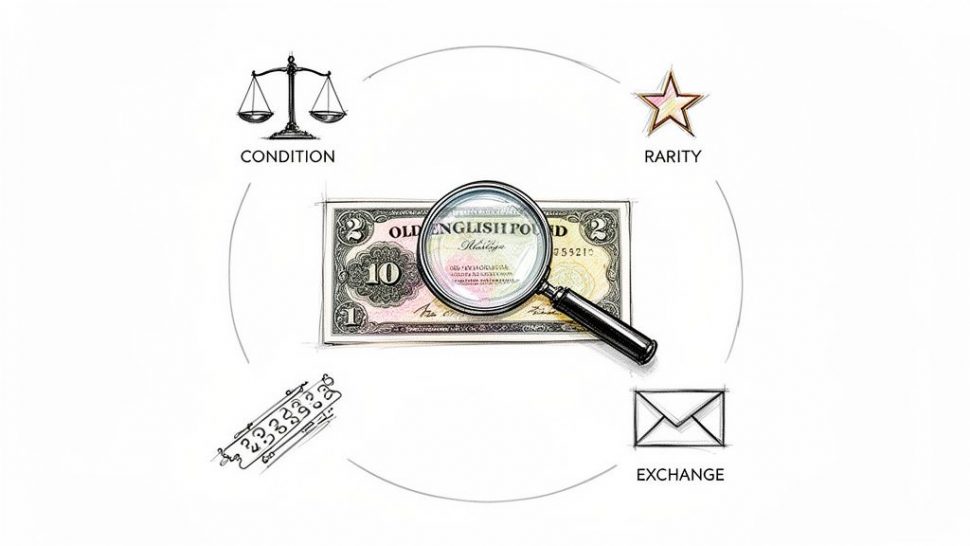
Posted by: Ian Stainton • 11 Jan 2026
Ever found a stash of old paper pound notes tucked away in a drawer? You might be holding more than just memories. This guide will walk you through the real value of old English pound notes, explaining the crucial difference between a note’s guaranteed 'face value' and its potential 'collector value'. Better yet, we’ll show you a fast, easy, and hassle-free way to convert that forgotten currency into cash. Our service is 100% guaranteed, trusted by major brands, and designed to give you peace of mind.
Your Guide to Old English Pound Notes Value
Discovering old paper pound notes—whether it’s a crisp Isaac Newton £1 note or a handful of old fivers—can feel like finding a small treasure. Your first question is probably, "What are these actually worth now?"
The answer really has two parts: what the Bank of England guarantees, and what an enthusiastic collector might be willing to pay.
For any withdrawn Bank of England note, you are always guaranteed its original face value. That means a £10 note will always be worth at least £10. However, certain factors like rarity, pristine condition, and unique serial numbers can make its market worth soar, turning it from simple currency into a valuable collectible.
Face Value vs. Collector Value
Getting your head around this distinction is the key to unlocking the true potential of your old currency.
-
Face Value: This is the rock-solid, guaranteed amount you can exchange the note for. It’s a reliable, fixed sum, but it often represents the absolute minimum you could get.
-
Collector Value: This is the price driven by market demand from collectors. For notes that are rare, in perfect condition, or have special features, this value can be significantly higher than the number printed on it. This is where the real excitement lies.
Just to give you some perspective, the historical purchasing power of these notes was immense. For instance, a £1 note from 1727 had the spending power of about £120 in today’s money. This gradual erosion of value is why many low-denomination notes, like the £1, were eventually replaced by coins, a history you can explore over at the NatWest Group Heritage Hub.
Understanding Old Pound Note Values at a Glance
To make it clearer, here’s a quick summary comparing the guaranteed face value you can always get versus the potential collector value for some common withdrawn banknotes.
| Banknote Series | Typical Condition | Guaranteed Face Value Exchange | Potential Collector Value |
|---|---|---|---|
| Paper £5 'White Fiver' (Pre-1957) | Worn to Good | £5 | £50 – £150+ |
| Paper £5 Series D 'Duke of Wellington' | Good to Fine | £5 | £10 – £30 |
| Paper £10 Series E 'Florence Nightingale' | Good to Fine | £10 | £15 – £40 |
| Paper £20 Series E 'Michael Faraday' | Good to Fine | £20 | £25 – £50 |
| Paper £50 Series E 'Sir John Houblon' | Fine to Uncirculated | £50 | £60 – £100+ |
This table shows that while you're always guaranteed the face value from the Bank of England, many notes are worth much more to the right buyer.
A Simple Path to Cashing In
Navigating the world of banknote collection can feel complicated and time-consuming. That’s why we offer a fast, easy, and completely hassle-free solution to convert foreign coins and banknotes into cash.
There's no need to sort coins or paper money from your collection of leftover foreign currency or old pounds. Just send it all to us. Our 100% guaranteed service is trusted by major UK brands—including charities, airports, supermarkets, and even police forces—to handle their currency exchange needs efficiently and reliably. This real-world insight provides peace of mind that you're dealing with a credible and professional service.
If you're curious about specific denominations, you can check out our detailed guide on the value of old £5 notes. Our goal is to make the process of exchanging foreign coins and notes as straightforward as possible, ensuring you get paid for your old money without any stress.
How to Identify Your Old Pound Notes
Before you can figure out what your old notes are worth, you need to know exactly what you’re holding. At first glance, identifying an old banknote might seem a bit complicated, but it's much simpler than you think. By checking just a few key features, you can quickly categorise your note and take the first step towards discovering its value.
Think of yourself as a currency detective. Every note has clues baked into its design—the portrait, the signature, the historical figure on the back—that tell a story about when and where it was made. You don't need to be an expert to get started; just a keen eye for detail is all it takes.
The Key Visual Identifiers
Every banknote issued by the Bank of England is designed with specific markers. When you're looking at an old note, pay close attention to these three elements to pinpoint its series and era.
- The Monarch's Portrait: The reigning monarch is the most obvious feature. Nearly all modern notes feature Queen Elizabeth II, but the specific portrait changed over the years, which is a massive clue for dating the note.
- The Chief Cashier's Signature: This is a crucial detail for collectors. The signature belongs to the Chief Cashier in office when the note was printed, and different signatures can seriously affect a note's rarity and value.
- The Historical Figure: Most modern series feature a famous historical figure on the reverse. Recognising this person is often the quickest way to identify which series your note belongs to.
It’s important to understand that your old pound note can have two different types of value.
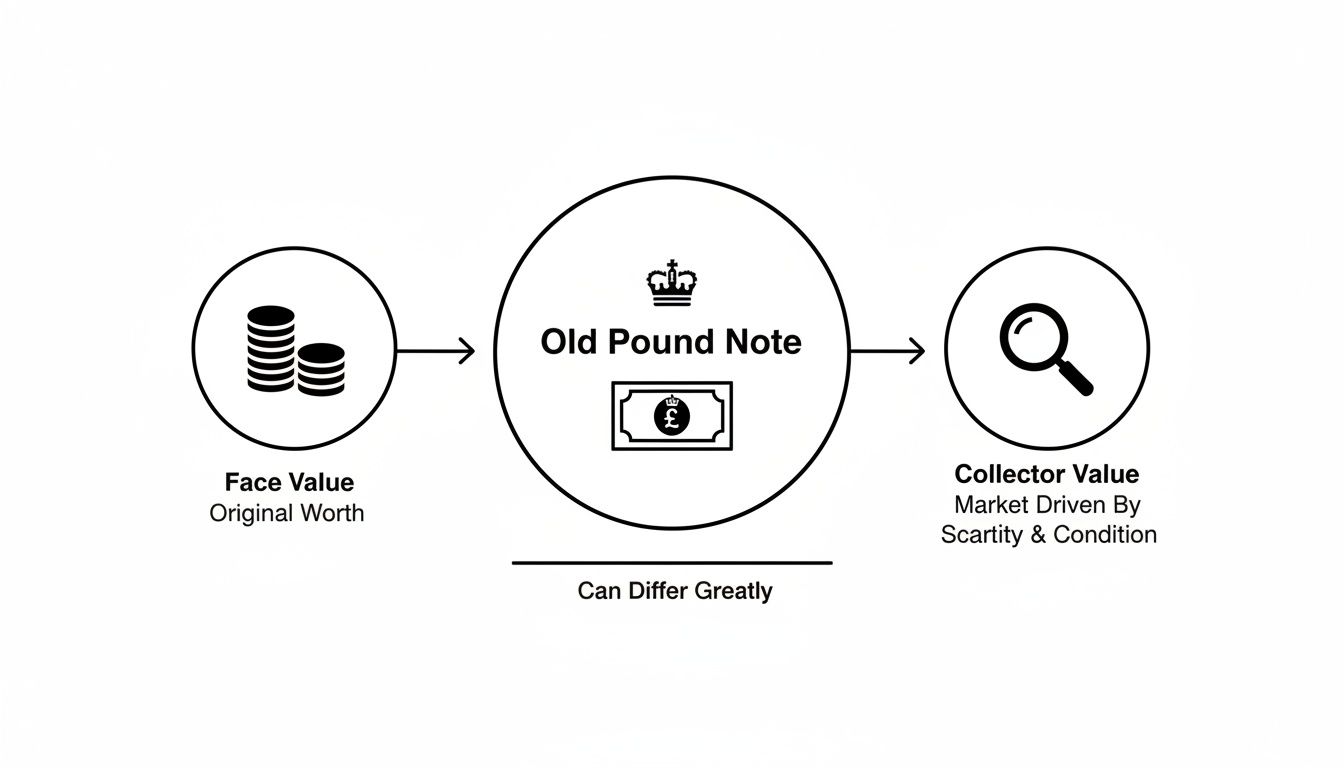
As the diagram shows, every note has its basic face value. But its collector value is a different story altogether, depending on things like how rare it is and what condition it’s in.
Distinguishing Between Common Series
Most old paper notes you come across will likely belong to one of two major series, each with its own distinct look. Learning to tell them apart is pretty straightforward.
Series D (The 'Pictorial' Series): Issued between 1970 and 1994, these notes are famous for their beautiful, artistic designs. The key giveaway is the portrait of a younger Queen Elizabeth II.
The iconic green £1 note featuring Sir Isaac Newton on the back is a perfect example. If you've found one of these, our detailed guide on old £1 pound notes has much more information on its history and potential value.
Other notes from this series include the blue £5 with the Duke of Wellington and the brown £20 note featuring William Shakespeare.
Series E (The 'Historical' Series): This series started appearing in the early 1990s and has a more mature portrait of the Queen. The designs are a bit cleaner and were the first to introduce more advanced security features.
- £5 Note: Features railway pioneer George Stephenson.
- £10 Note: Displays author Charles Dickens.
- £20 Note: Shows scientist Michael Faraday.
- £50 Note: Features Sir John Houblon, the first Governor of the Bank of England.
Once you’ve identified which note you have, you’re ready to dig deeper into the factors that determine what it's really worth to a collector.
Factors That Determine Banknote Value
Ever wondered why one old £10 note is worth just its face value, while another that looks almost identical sells at auction for thousands? The secret is in the details. Valuing old pound notes means looking past the big number printed on the front and learning to spot the subtle clues that can turn everyday cash into a collector's dream.
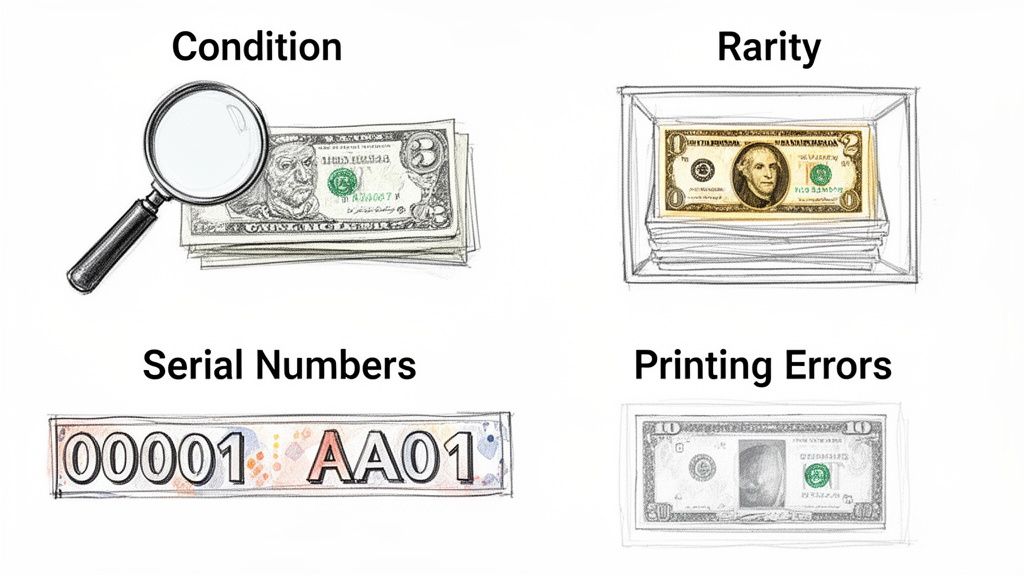
Think of it like valuing a vintage car. You might have two cars of the same model and year, but the one that’s been kept in a garage with low mileage and a rare factory colour will be worth a whole lot more than the one that’s been used for the daily commute. It’s the same with banknotes—condition, rarity, and unique features are everything. Let's dive into the 'Big Four' of banknote valuation so you can start looking at your old notes with an expert eye.
The Condition of the Note
This is, without a doubt, the most important factor. A note’s physical state is graded on a scale, and even a tiny difference in condition can cause a huge swing in its price.
- Uncirculated (UNC): Absolutely perfect. No folds, creases, marks, or any sign it’s ever been handled. It looks like it just rolled off the printing press.
- About Uncirculated (AU): So close to perfect. It might have one single, light fold or a tiny handling mark that you'd have to look closely to find.
- Extremely Fine (EF): A crisp, clean note with a couple of light folds or creases but no real damage. It still feels fresh.
- Very Fine (VF): This note has definitely been in a few wallets. You’ll see obvious folds and signs of use, but it’s still clean and free of tears.
- Fine (F) and Below: These are the notes that have lived a full life. They're often soft, dirty, and might have stains, small tears, or multiple heavy folds. Most old notes you find tucked away in a drawer will fall into this category.
A pristine, uncirculated note is a rare survivor. That’s why it will always fetch the top price.
Rarity and Scarcity
This all comes down to simple supply and demand. How many of a particular note were printed in the first place, and—crucially—how many are still around today? Some notes were only printed for a very short time or were released to mark a special event, making them scarce right from the start.
Other notes become rare as time goes on. For example, the very first notes from a new series, signed by a Chief Cashier who wasn’t in the job for long, are often highly prized by collectors. The fewer that exist, the more someone is willing to pay to have one.
The Magic of Serial Numbers
That unique serial number printed on every banknote is like a treasure map for collectors. The right combination of letters and numbers can turn a common note into something truly special.
The collector value of old pound notes can significantly exceed their face value. While the Bank of England only guarantees the face value for withdrawn notes, the private market tells a different story. A Churchill £5 note with the serial number AA01 000017 sold for £4,150—over 800 times its face value—purely because of its unique number. Discover more about how these rare notes achieve such high prices on The Week.
Here’s what to keep an eye out for:
- Low Serial Numbers: Any note with a number below 100 (e.g., 000001 to 000099) is incredibly desirable.
- 'AA01' Prefix: This is the golden ticket. It means the note is from the very first batch printed for a new series.
- Special Prefixes: Occasionally, certain prefixes like 'AK47' become popular for their novelty value and are sought after by collectors.
- Pattern Numbers: Collectors love patterns. Look for 'radar' numbers (which read the same forwards and backwards, like 123321), 'repeaters' (like 456456), or 'solid' numbers (all digits the same, like 888888).
Printing Errors and Oddities
Even the Royal Mint makes mistakes sometimes. A banknote with a printing error is a rare anomaly, and collectors absolutely love them. These oddities can include everything from mismatched serial numbers and wrong colours to missing design elements.
Sometimes, the paper gets folded during printing, creating a weird and wonderful pattern. These errors are usually spotted and destroyed before they ever leave the mint, so any that slip through into circulation are exceptionally scarce. Finding one is like discovering a misprinted stamp—its imperfection is exactly what makes it so valuable.
The UK's Journey from Paper to Polymer
If you’ve ever found an old paper pound note tucked away in a drawer, you might wonder why it disappeared from circulation. It wasn't by chance; its withdrawal was a deliberate step in the story of UK currency. Understanding this journey from traditional paper to modern polymer helps explain why your old notes can't be spent in shops but still hold real value.
The Bank of England has been issuing banknotes since way back in 1694, but the most significant changes for the money in our pockets started in the late 20th century. For decades, paper notes were the reliable workhorse of the British economy, but they had their flaws. They’d get worn, torn, and tatty, and as counterfeiters got smarter, the old paper notes became an easier target for fakes.
The Beginning of the End for Paper
The first domino to fall was the humble £1 note. As inflation nibbled away at its value over the years, the cost of printing and replacing worn-out notes just didn't make sense anymore. The solution? The chunky little £1 coin, introduced in 1983, which was far more durable and cost-effective.
That single change kickstarted a new era. The English £1 note was officially withdrawn from circulation in 1988, and this set the precedent for what would happen to the higher value notes. This transition from paper to more modern currency is exactly why so many older pound notes are now considered obsolete but are still redeemable assets. You can dig deeper into this history over on the Banknotes of the pound sterling Wikipedia page.
This wasn't just about making money last longer; it was a constant race to stay one step ahead of the criminals. Each new series of banknotes brought in more complex security features, making life much harder for counterfeiters and protecting the integrity of our currency.
The Polymer Revolution
The final nail in the coffin for paper money came in 2016 with the arrival of polymer banknotes. Made from a thin, flexible plastic, these new notes had three huge advantages over their paper predecessors:
- Much More Durable: Polymer notes are tough. They resist dirt, moisture, and tearing, and are estimated to last 2.5 times longer than the old paper ones.
- Seriously Secure: They’re packed with modern security features like transparent windows and holograms, making them incredibly difficult to fake.
- Cleaner and Greener: They stay cleaner in circulation and, over their lifespan, have a lower carbon footprint than paper notes.
The switch to polymer was done systematically, with each denomination replaced one by one. This process instantly made billions of pounds' worth of paper notes obsolete, creating a huge stockpile of currency that was no longer legal tender but still held its face value.
This whole story is precisely why a service designed to exchange foreign coins and notes is so crucial today. With so much old currency sitting in homes across the country, people need a simple, fast, and hassle-free way to convert it back into cash. Our 100% guaranteed service is trusted by major organisations, including police forces and national charities, to do just that. We make it easy to convert foreign coins and banknotes, ensuring you unlock the value in your old money without any fuss.
Your Guaranteed Exchange for Old Currency
It's one thing to get excited about the potential collector's value of an old banknote, but what if you just want to turn it into cash you can actually spend? Maybe you've got a pile of other leftover holiday money sitting in a jar, too. Once you've figured out the old english pound notes value, the next step is finding a simple, reliable way to cash them in.
While some rare notes might be worth taking to an auction, most of us just want a straightforward exchange without needing to become a currency expert overnight.
That's where a specialist exchange service comes in handy. You need a process that isn't just fair, but fast, easy, and completely free of hassle. The last thing you want is a long, complicated procedure for what should be a simple transaction.
A Process Designed for Simplicity and Trust
We’ve built our entire service around one simple idea: making it easy for you. There’s no need to sort coins or spend hours meticulously sorting through different currencies. Our process is designed to handle mixed bags of money, which makes it the perfect solution if you need to exchange foreign coins and notes.
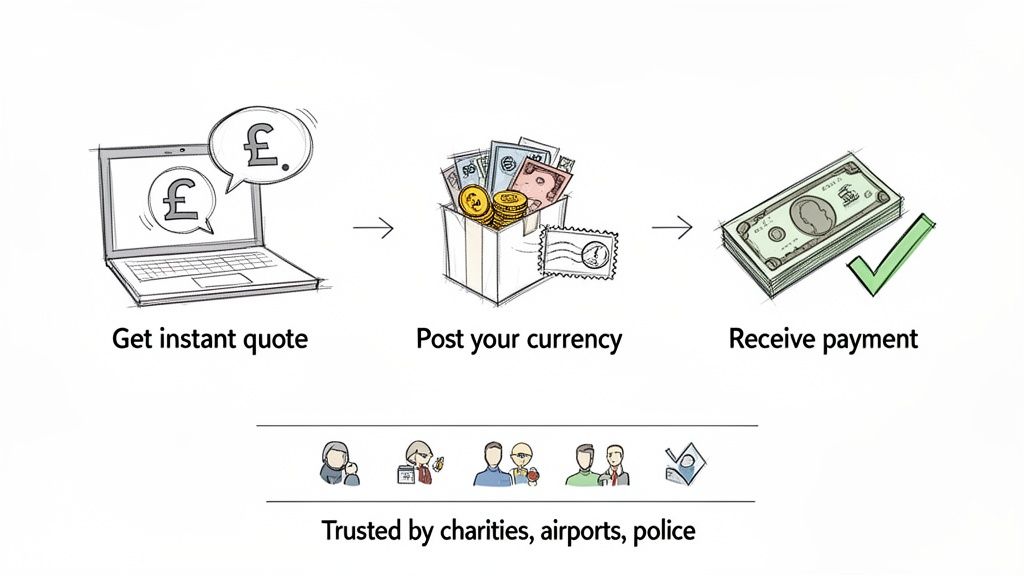
Our simple three-step system gets you paid quickly:
- Get an Instant Online Quote: Pop your currency details into our online calculator for an immediate valuation.
- Post Your Currency: Just package up your notes and coins—no sorting required—and send them to us.
- Receive Your Payment: As soon as we receive and check your currency, we send the payment straight to you.
It's a 100% guaranteed service that takes all the stress out of the exchange. It doesn't matter if you have old pounds, pre-Euro coins, or leftover dollars from a trip years ago. To see just how easy it is, you can learn all about our Bank of England old notes exchange service.
Trusted by Major UK Organisations
When you're sending money, you need to know it's in safe hands. We're proud to be the trusted currency exchange partner for a whole host of major UK organisations who count on our efficiency and integrity.
Our client list includes national charities, major supermarkets, UK airports, and even police forces. These organisations trust us to handle large, unsorted collections of currency because our service is fast, transparent, and completely reliable.
This trust is built on years of providing a hassle-free experience. When you exchange foreign coins with us, you're not just another transaction; you're getting the same proven service that some of the biggest names in the country rely on.
Comparing Your Old Currency Exchange Options
When you're ready to convert your old notes, you've got a few different options. They vary quite a bit in terms of convenience, speed, and what currencies they'll actually accept. To help you decide, here’s a quick comparison of the most common routes.
| Exchange Method | Convenience Level | Processing Speed | Currencies Accepted | Guaranteed Value |
|---|---|---|---|---|
| Our Service | High (Online & Post) | Fast (Payment in days) | All UK & Foreign (Coins & Notes) | Yes, 100% Guaranteed |
| Bank of England | Low (In-person or Post) | Slow (Can take weeks/months) | Bank of England Notes Only | Yes, Face Value Only |
| High Street Banks | Very Low (Often refused) | N/A | Withdrawn Notes Not Accepted | No |
| Collector's Market | Low (Requires expertise) | Variable (Can take years) | Specific Collectible Notes | No (Market Dependent) |
As you can see, for anyone with a mix of old pounds and leftover foreign currency, our service is by far the most practical and efficient solution out there.
An Option for Everyone—Including Charities
Whether you want to put the extra cash towards your next holiday or use it to make a positive impact, our service gives you the flexibility to choose. Many of our customers love turning forgotten money into a meaningful contribution.
You can easily choose to donate foreign coins to charity right at our checkout. We partner with several respected UK charities, allowing you to send the full value of your currency directly to a cause you believe in. It’s a simple, feel-good way to make a difference with money that was just collecting dust.
Ready to turn that old money into cash? If you've got a stash of old notes or leftover holiday currency, we’ve built a simple, secure way to get it sorted.
Finding the old English pound notes value shouldn’t be a chore. Forget spending your weekend sifting through piles of old paper and foreign coins. Just bundle it all up—old fivers, pre-Euro coins, whatever you've got—and send it our way. We’ll handle the sorting for you, because there is no need to sort coins. It’s why so many trusted organisations, from police forces and airports to major supermarkets and national charities, rely on our fast, easy, and hassle-free service.
A Simple Path to Getting Paid
We've boiled the whole thing down to three easy steps, so you can exchange foreign coins and banknotes without any fuss.
- Get a Quote: Pop your currency details into our website for an instant valuation.
- Send Your Currency: Follow our simple instructions to package up your unsorted money and post it to us.
- Get Paid: Once we’ve checked everything over, your payment is sent straight to you. It really is that easy.
Our system is fast and reliable, turning that dust-collecting drawer of currency into money you can actually use.
We back our service with a 100% happiness guarantee. If you're not completely satisfied with our valuation for any reason, we'll send your entire collection back to you, free of charge. Your peace of mind is what matters most.
Convert Your Old Money Today
Why let that old currency sit there any longer? Our trusted, hassle-free service is the perfect way to convert foreign coins and banknotes into something useful. Whether you're saving for something new or you'd like to donate foreign coins to charity, we can make it happen.
Take the first step and see what your collection is worth. Head over to our homepage for a free, no-obligation quote and get your exchange started today. It’s time to unlock the hidden value in your old currency with a service you can count on.
Have a Question? We’ve Got Answers
Exchanging old currency, especially notes you’ve had tucked away for years, can bring up a few queries. We get it. To make things crystal clear, here are the answers to some of the questions we hear most often about how our simple, fast, and hassle-free service works.
Can I Still Exchange My Old Paper £10 and £20 Notes?
Absolutely! While you can no longer spend the old paper £10 and £20 notes in shops, they haven't lost their value one bit. These notes still hold their full face value, and we offer a quick and easy way to swap them for cash you can actually spend – often much faster than going through the Bank of England.
Better yet, we handle all withdrawn UK banknotes alongside any other currencies you might have lying around. This means you can convert foreign coins and banknotes at the same time, making it a convenient one-stop-shop for all your unwanted currency.
Do I Need to Sort My Coins and Notes Before Sending Them?
Not at all – and honestly, this is one of the best parts of our service. We know that sifting through a big bag of mixed coins and notes is a real chore, so we’ve designed our process to take that job completely off your hands. There is no need to sort coins or separate different currencies.
Just gather up all your leftover foreign currency and old pounds, pop it all in a package together, and send it our way. Our system is built to handle unsorted collections efficiently, which is why major charities, airports, and even police forces trust us to process their large, mixed batches of currency. It’s truly a hassle-free way to get it done.
How Do I Know I'm Getting a Fair Price?
Transparency is everything to us. We display all our exchange rates clearly on our website, so you can see exactly what you’ll get before you even send your currency in. We believe in building trust through competitive rates and a straightforward process with no hidden surprises.
Our commitment to fairness is backed by our 100% guarantee. If for any reason you aren’t completely happy with our valuation, we will return your currency to you, completely free of charge. Your peace of mind is our top priority.
Can I Donate the Value of My Old Currency to Charity?
Yes, you can, and it’s a brilliant way to make a difference. Many of our customers choose to turn forgotten money from the back of a drawer into a meaningful contribution for a good cause.
During our simple online checkout, you can easily choose the option to donate foreign coins to charity. We partner with several well-respected UK charities, allowing you to direct the full value of your exchange to a cause you care about. It’s a simple, effective way to support vital work.
Ready to unlock the cash in your old and foreign currency? We Buy All Currency offers a fast, easy, and secure way to get paid. For helpful advice and real-world insights on exchanging your money, visit our homepage to start your hassle-free exchange today at https://www.webuyallcurrency.com.