
Exchange Your One Cent Euro Coins for Cash
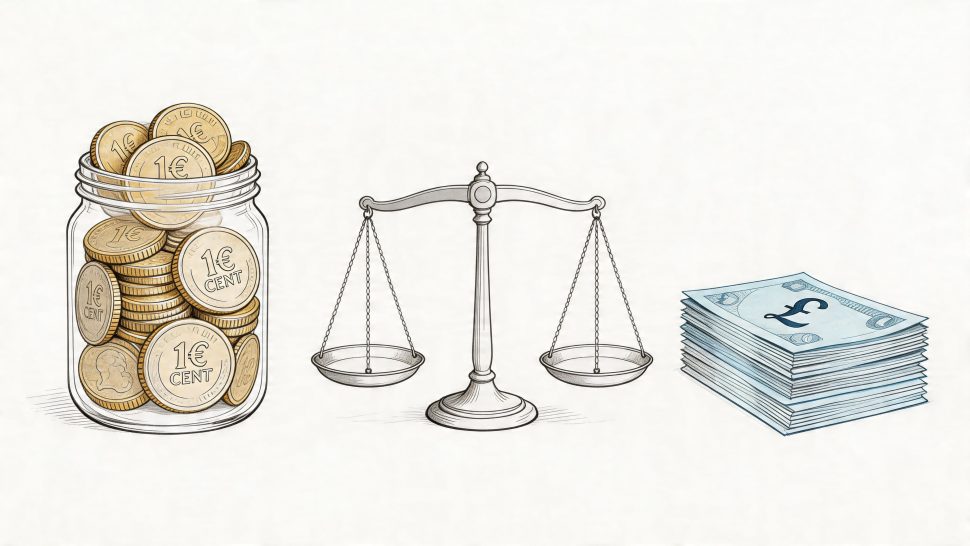
Posted by: Ian Stainton • 20 Apr 2026
TL;DR: A one cent euro coin has a face value of €0.01, and the easiest way to deal with bulk amounts in the UK is a specialist online service that accepts unsorted foreign coins by weight and pays out to your bank or PayPal after verification. You don’t need to sort them by country or denomination first.
A lot of people have the same problem. There’s a jar of loose euro cents from holidays, a tray of mixed till takings, or a charity collection box full of tiny foreign coins that nobody wants to count by hand.
The one cent euro is the classic example of a coin that feels too small to bother with, but too wasteful to throw away. It’s low in individual value, awkward to exchange through normal channels, and very rarely worth selling coin by coin to collectors. That’s exactly why practical bulk exchange matters.
For most UK customers, the primary question isn’t whether a one cent euro coin is rare. It’s how to turn a pile of them into pounds, or into a charity donation, without wasting time.
What Exactly Is a One Cent Euro Coin?
A typical UK customer finds one cent euro coins the same way every time. In a holiday money jar, a charity tin, a shop till, or the bottom of a suitcase. These are ordinary circulation coins, and that is the starting point that saves time.
The one cent euro is an official euro coin with a face value of €0.01. It is legal tender across the euro area, with country-specific versions issued for circulation. In practice, Irish pieces are common in the UK because they cross over easily through travel, retail, and everyday cash handling (Numista listing for the Irish 1 euro cent coin).
Its physical details help with identification in bulk. A one cent euro coin is small, copper-coloured, and magnetic because it is made from copper-plated steel. That is useful in real sorting work, especially when mixed foreign change includes similar-looking low-value coins from other countries.

What you’ll see on the coin
Every one cent euro coin has a shared euro side and a national side issued by the country of mint.
- Common side shows the standard euro-cent design.
- National side varies by country.
- Irish version features the harp, which is one reason UK travellers often recognise it quickly in mixed change.
Different designs do not make the coin unusual by themselves. An Irish one cent euro, a French one cent euro, and a Spanish one cent euro are still the same denomination used in normal circulation.
Why this coin turns up so often in the UK
These coins reach the UK through routine cash movement. Travellers bring them home after short trips. Businesses receive them by mistake with other change. Charities and visitor attractions collect them in donation boxes where foreign coins often pile up over time.
This is a routine leftover currency problem, not a niche collector one.
Practical rule: If a one cent euro came from travel change, a donation box, or a mixed coin pot, treat it first as low-value foreign currency to process in bulk.
Why the technical details matter
Small low-denomination coins create work fast. One or two pieces are easy to ignore. A few hundred become a counting, sorting, and storage problem.
That is the trade-off. The coin is genuine money, but the value per coin is so low that traditional exchange routes usually do not handle it efficiently. In bulk exchange, the practical question is simple. How do you identify it quickly, group it with other foreign coins, and turn the lot into cash or a charity donation without wasting hours on manual sorting?
For ordinary one cent euro coins, rarity is rarely the issue. Volume is.
How Much Is a One Cent Euro Coin Really Worth?
The answer is simple. A one cent euro coin is worth €0.01 at face value. That’s its real monetary value in normal circulation.
The confusion starts when people search online and find articles or videos about rare euro coin errors, unusual mintings, or pristine collector pieces. Those exist, but they aren’t what most UK households, charities, or businesses are holding.
Face value versus collector value
There are really two different markets for this coin.
The first is the currency market, where a one cent euro is just a low-denomination euro coin. The second is the collector market, where condition, rarity, country, and specific dates can matter.
A useful reality check comes from France. France minted 92 million 1 euro cent coins in 1999 alone, which is one reason these coins are so common in circulation and in mixed foreign change received in the UK (video reference covering the French 1999 one cent euro mintage).
Why most one cent euro coins aren’t rare
High mintage changes everything. When a coin was produced in very large numbers, the ordinary circulated examples usually don’t command a meaningful collector premium.
That’s the practical trade-off:
| Type of one cent euro coin | What usually matters | Best route |
|---|---|---|
| Ordinary circulated coin | Face value and quantity | Bulk exchange |
| Bright uncirculated example | Condition | Possible collector interest |
| Clearly unusual error or specialist piece | Specialist rarity | Get expert appraisal first |
For everyday holders, the biggest mistake is assuming every unusual-looking euro cent might be a hidden find. Most aren’t. Different national designs are standard, and common circulated pieces are usually worth their denomination, not a dramatic premium.
A jar full of ordinary one cent euro coins has value because of the total amount, not because each coin is individually special.
What works and what doesn’t
What works is looking at the coins as a bulk foreign currency holding. If you’ve got many of them, the sensible question is how to recover value efficiently.
What doesn’t work is spending hours comparing every common coin against rare-coin listings in the hope that a standard piece from a major issuing country will suddenly be worth far more. That effort rarely pays off for mixed holiday change.
A practical way to judge your batch
If your coins are:
- mixed
- circulated
- held loose in jars, tins, trays, or bags
- from travel or donations rather than a curated collection
then you’re almost certainly looking at exchange value, not collector value.
If your coins are in presentation sets, look untouched, or came from a deliberate collection, then it may be worth checking condition before sending them anywhere.
For the vast majority of one cent euro coins in the UK, the right mindset is simple. Treat them as leftover foreign currency, not as an investment piece. That saves time and usually leads to the most sensible outcome.
Why Banks and Bureaus Won't Exchange Your Euro Cents
People often assume a bank should take any money-like object and convert it. In practice, that isn’t how foreign coins work in the UK, especially not low-value ones like the one cent euro.
The problem isn’t that banks don’t recognise the coin. The problem is that handling it is awkward, labour-heavy, and commercially unattractive.

The economics don’t work
A one cent euro coin carries very little individual value. A bank branch still has to receive it, secure it, store it, count it, and move it through internal processes. That effort costs money.
Traditional exchange bureaux have the same issue. Their business model suits notes and higher-value transactions far better than tubs of small foreign coins.
Machines don’t always like them
There’s also a technical reason many standard systems struggle. The copper plating on 1 euro cent coins can corrode, and that can alter electrical properties enough to cause up to a 10% rejection rate in standard automated sorting machines (technical coin specifications and processing notes from Banque centrale du Luxembourg).
That matters because mainstream institutions rely on predictable, efficient counting and sorting. A coin that is small, low in value, and prone to machine rejection is exactly the sort of item they avoid.
The practical barriers at branch level
In day-to-day terms, banks and high street bureaux tend to run into the same set of problems:
- Too little value per coin means the handling cost looks poor.
- High volume makes storage and transport annoying.
- Mixed foreign lots often arrive unsorted.
- Counter staff aren’t set up to assess bags of low-value euro cents manually.
If a service is designed around convenience at the counter, it usually won’t be designed for sacks, jars, or envelopes full of foreign small change.
Why specialist services exist
Specialist currency buyers solve a different problem from a bank. They aren’t trying to make low-value foreign coins fit into an ordinary branch model. They build around postal handling, verification, mixed currency intake, and bulk valuation methods.
That’s why people who keep trying the same high street options often end up frustrated. Nothing is wrong with the coins. They’re using a channel that wasn’t built for them.
Your Practical Options for Bulk One Cent Coins
If you’ve built up a pile of one cent euro coins, there are only a few realistic routes. You can keep them, donate them, try to sort and sell them yourself, or use a specialist bulk exchange service.
A key trade-off is time versus return. Manual sorting sounds sensible until you tip the jar out.

Option one keeps things simple
The most practical route for everyday holders is to use a service built to exchange foreign coins. That matters because bulk foreign coin exchange is not the same job as changing banknotes at an airport desk.
A specialist process works best when your coins are:
- unsorted
- mixed with other denominations
- mixed with notes
- left over from several trips
- part of a business or charity collection
Option two is manual sorting
You can sort the coins yourself if you want full control. Some people prefer that, especially if they enjoy checking dates and national designs.
If you go down that route, do the practical basics first:
- Separate obvious non-euro coins so you’re not weighing or packing irrelevant pieces.
- Check for collector material only if the batch looks unusual, such as presentation-quality coins or a deliberate collection.
- Pack securely because loose small coins can tear weak envelopes.
- Keep notes of what you think you’re sending so you can compare your expectation with the final verified amount.
What usually wastes time
The least efficient approach is half-doing the job. That means spending ages trying to sort by country, then giving up, then trying a bank, then putting the jar back in the cupboard.
That loop is common because one cent euro coins feel too minor to prioritise. The result is that the same low-value stash sits around for years.
Working rule: If the coins came from ordinary spending, don’t over-process them. Focus on a route that accepts mixed, unsorted currency and handles bulk quantities properly.
Cash or charity
The other decision is what outcome you want. If you want pounds back, bulk exchange is the cleanest answer. If you’d rather turn nuisance coins into something useful, donation is often easier than trying to squeeze every last fraction of value out of a small personal batch.
For businesses and charities, the same logic applies at a larger scale. Once foreign change starts arriving regularly through tills, collection boxes, or customer donations, the winning system is the one that removes sorting friction. Anything else turns into staff time, storage hassle, and boxes of coins nobody wants to deal with.
How to Exchange Leftover Currency With Us
The easiest way to handle one cent euro coins is to treat them as part of a broader leftover currency exchange. That means you don’t need to separate every coin, identify every country, or make the process bigger than it needs to be.
Here’s how the process works in practice.

Step one get your quote
Start with the online valuation tool. This is especially useful when your money is mixed and unsorted, because the process is built around practical bulk exchange rather than perfect hand-counting.
You can use it for:
- coins
- banknotes
- current currency
- withdrawn or obsolete currency
That matters if your one cent euro coins are sitting in a bag with old notes, pre-euro coins, or mixed foreign change from several trips.
Step two pack everything together
Once you’ve got your quote, pack the currency securely. Strong packaging matters more than people think. Small coins are heavy for their size, and weak envelopes split.
You don’t need to turn this into a home sorting project. If the service accepts mixed currency, send the coins and notes together in one organised parcel.
Step three send it by post
Use a tracked postal method. That gives you a clear record of dispatch and delivery, which is the sensible way to send any physical currency.
This is one of the main reasons online specialist exchange works so well for leftover travel money. You’re not hunting for a local branch willing to inspect low-value coins at the counter. You’re using a process designed for mailed-in currency.
Step four receive payment after verification
After the currency is checked, payment is issued by PayPal or bank transfer within five working days, according to the publisher information provided for the service. You see the rate before sending, and if you aren’t happy after verification, the currency is returned free of charge under the happiness guarantee.
The best exchange process is the one that removes unnecessary decisions. If you don’t have to count, sort, or negotiate at a branch desk, you’re far more likely to finish the job.
Why this works better than ad hoc options
High street routes tend to break down when the currency is low value, mixed, or old. A specialist postal process is more practical because it’s set up for exactly those awkward categories.
That includes people who want to exchange foreign coins and notes, businesses clearing out tills, and families finally dealing with years of leftover foreign currency in one go. The point isn’t just getting paid. It’s getting the task off your list without hassle.
Donating Your One Cent Euros to Charity
Sometimes the best use for one cent euro coins isn’t cash back to you. It’s turning a nuisance pile of foreign change into a donation that gets used.
That’s especially true when the coins came from holidays, customer collections, airport trays, or in-flight giving. Small foreign coins rarely feel important one by one, but in aggregate they can become meaningful once someone has a reliable way to process them.
Why donation makes sense for low-value coins
A lot of people keep foreign small change because it feels wasteful to bin it, but not worth the effort to exchange personally. Donation solves that neatly.
There’s also a broader reason this matters. UK charities are seeing a rise in foreign coin donations while the EU continues discussing changes around low-value cent coins, and services that convert unsorted coins by weight are important because they help charities realize value from mixed collections (video discussion on foreign coin donations and low-value cent handling).
How it works in real life
The pattern is usually straightforward.
An individual empties holiday coins into a charity collection. A retailer lets customers drop foreign change into a donation point. An airport or airline accumulates mixed overseas coins over time. The charity then needs a way to convert those coins without asking staff or volunteers to sort every denomination.
That’s where specialist conversion matters. It turns “we’ve got boxes of unusable foreign coins” into “we’ve got a recoverable donation stream”.
If you’re looking for a practical route, it helps to use a service that can donate foreign coins to charity without requiring full manual sorting first.
Small change becomes useful when the processing method is realistic. Without that, donation boxes fill up and stay full.
Good fit for individuals and organisations
Donating one cent euro coins works well for:
- Travellers with leftover coins they won’t use again
- Families clearing mixed holiday currency from drawers and jars
- Retailers and attractions that collect foreign money in error
- Charities receiving mixed coin donations from supporters
- Airports and airlines running collection schemes
The practical advantage is simplicity. You don’t need each donor to be a numismatist, and you don’t need staff to become coin sorters. You just need a route that accepts the reality of unsorted foreign currency and turns it into a usable result.
Common Mistakes to Avoid When Exchanging Coins
You empty a holiday jar onto the table and realise the problem is not the face value. It is the time, hassle, and dead ends that come with trying to turn low-value euro cents into something useful.
That is where people usually go wrong. With common one cent euro coins, the biggest losses come from choosing the wrong route, waiting too long, or creating extra work that never needed doing.
Assuming small coins are not worth the effort
A single one cent coin has almost no spending power on its own. A bag, tub, or charity box full of them is a different job entirely.
People often dismiss these coins because each piece looks insignificant. In practice, bulk is what changes the calculation. If you have enough volume, there may still be recoverable value or a practical donation outcome. Leaving them in storage guarantees neither.
Treating ordinary change like a collector lot
This catches people out regularly.
The average batch of one cent euro coins from travel, retail tills, or donation points is standard circulation money. It is usually not rare, and it usually does not justify hours of checking mint marks, dates, and country designs one by one. If a coin came from a proper collection, looks unusually well preserved, or stands out for an obvious reason, then it may be worth a closer look. For everyday bulk change, the practical answer is usually bulk processing, not collector research.
Going from bank to bureau to bank again
This is a common time-waster in the UK. People try a local bank, get turned away, try a travel money counter, then try somewhere else hoping the answer will change.
It usually does not.
Banks and high street bureaux are set up for notes and standard exchange transactions. Low-value foreign coins, especially mixed or bulk amounts, fall outside what they want to count, verify, store, and ship. Once that is clear, it makes more sense to use a specialist service from the start.
Focusing only on the headline rate
The exchange rate matters, but it is not the only thing that affects the result.
Before sending coins anywhere, check the full process:
- Are the terms clear before you send anything?
- Can coins and notes be handled together?
- Are older or withdrawn currencies accepted too?
- What happens after verification?
- How and when is payment made?
A slightly better quoted rate means very little if the service is awkward to use, excludes half your currency, or leaves you with more sorting and admin.
Sorting far more than necessary
People often turn a simple clear-out into a long sorting project. They separate by country, denomination, year, and “possible rare ones” before they have even chosen who will handle the exchange.
That usually adds effort, not value.
If the service accepts bulk foreign currency, keep it practical. Basic separation for obvious categories can help. Fine-detail sorting of ordinary one cent euro coins usually does not improve the outcome.
Waiting until the coins become a permanent drawer problem
Delay is one of the most expensive habits here, not because the coins change in face value, but because people stop dealing with them altogether.
A jar in the kitchen becomes a bag in a cupboard. A bag in a cupboard becomes a box in the loft. For individuals, that means money sits unused. For charities and businesses, it creates avoidable storage and handling clutter. The best approach is simple. Once you know the coins are not going back into circulation for you, move them on through a service built for bulk foreign change.
Turn Your Unwanted Euros into Pounds Today
If you’ve got one cent euro coins at home, in a till, or in a donation box, the important point is simple. They’re not useless. They’re just awkward for ordinary banks and bureaux to handle.
That’s why specialist exchange exists. It gives people a way to exchange leftover currency, including coins, notes, and older or withdrawn money, without spending hours sorting everything by hand. That works for travellers, families, charities, retailers, and businesses that regularly end up with mixed foreign change.
If your goal is cash, use a service built to convert bulk foreign currency. If your goal is doing something useful with it, donation is a practical alternative. Either way, the best result usually comes from acting now rather than letting another jar of coins sit around for months.
If you’re ready to move everything on in one go, a specialist convert foreign coins and banknotes service is the most straightforward next step.
Frequently Asked Questions About Exchanging Foreign Coins
| Question | Answer |
|---|---|
| Can you exchange one cent euro coins in the UK? | Yes, but usually not through normal banks or travel bureaux. Specialist services are the practical option for bulk foreign coins. |
| Do banks accept euro cent coins? | Usually not for routine exchange in the UK, especially low-value foreign coins. Standard bank processes aren’t set up for this type of handling. |
| Do I need to sort one cent euro coins by country? | Not if you’re using a service that accepts unsorted foreign currency by weight or mixed verification. That’s one of the main advantages of a specialist provider. |
| Can I send coins and banknotes together? | Yes, with the right service. That’s often the easiest way to deal with leftover travel money in one parcel. |
| What if I also have old or withdrawn currency? | Specialist exchange platforms may accept current, withdrawn, and obsolete money together, which is useful if your drawer contains more than just euros. |
| How long does payment take? | Based on the publisher information provided for this service, payment is issued within five working days after verification by PayPal or bank transfer. |
| Is a one cent euro coin ever worth more than face value? | Sometimes, but usually only in unusual collector situations such as exceptional condition or specialist rarity. Most circulated examples are treated as ordinary currency. |
| Can I donate foreign coins instead of cashing them in? | Yes. That’s often the easiest option for low-value mixed change, especially for travellers, charities, and businesses running collection schemes. |
If you’ve got jars, bags, or boxes of one cent euro coins and other leftover travel money, We Buy All Currency gives you a simple way to turn them into cash or a charity donation. You can send coins, notes, and old or withdrawn currency together, get clear rates upfront, and receive payment by bank transfer or PayPal after verification.