
Pound Coin Size: UK £1 Dimensions & Specs
Posted by: Ian Stainton • 12 Apr 2026
A jar of pound coins often looks more valuable than it is. Some are still current. Some are old round pounds that shops and banks no longer take. Some are mixed in with leftover foreign currency from holidays, charity collections, tills, airport donation points, or business cash-ups.
That’s where pound coin size stops being a trivia question and becomes a practical one. Size affects identification, weighing, machine handling, storage, and whether a mixed batch gets counted cleanly or causes delays. If you handle coins in volume, even small differences matter.
Your Guide to UK Pound Coin Sizes
People usually check pound coin size for one of three reasons. They’ve found old £1 coins in a drawer, they’re sorting mixed coins for a charity collection, or they’re trying to work out whether a batch includes obsolete money.
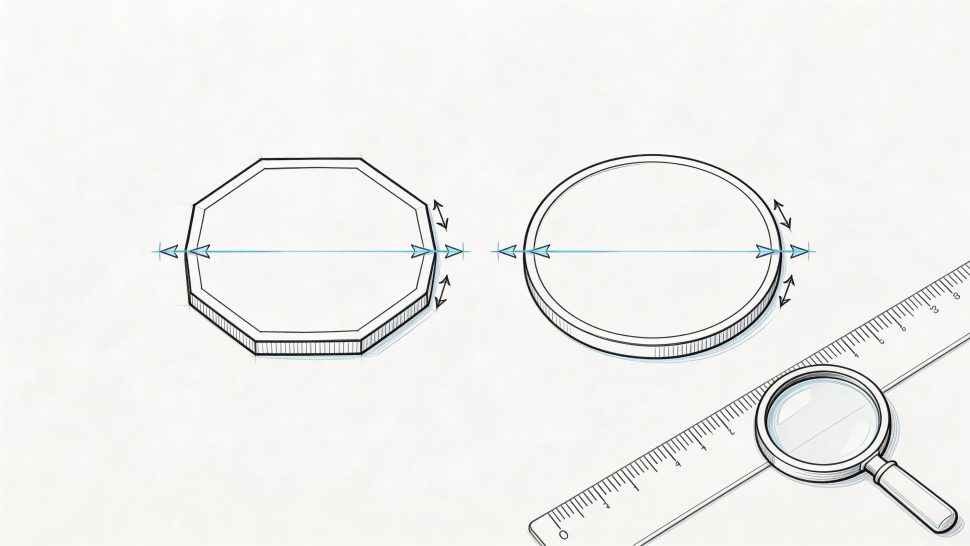
The confusion is understandable. The UK has had two very different £1 coins in recent circulation. The older one is round and single-colour. The current one is 12-sided and bimetallic. If you’re looking at a mixed pot, those details matter far more than most quick spec pages admit.
This guide gives you the practical reference many users need. It covers the dimensions of both versions, shows how to identify them quickly, and explains why those measurements matter when you want to exchange foreign coins, deal with leftover foreign currency, or convert foreign coins and banknotes in bulk.
Old pound coins still turn up in large numbers because they circulated for decades and many were kept back in jars, collections, tills, and donation containers.
The Current 12-Sided Pound Coin Specifications
The current £1 coin is easy to spot once you know what to look for. It was introduced in 2017 and uses a shape and construction designed for stronger security and better machine recognition.

Key measurements
According to Change Checker’s guide to the new 12-sided £1 coin, the coin has these specifications:
- Shape: 12-sided
- Maximum diameter: 23.5mm point-to-point
- Thickness: 2.8mm
- Weight: 8.61g
- Composition: Nickel-brass outer ring and nickel-plated homogeneous non-ferrous inner core
Why those specs matter
The dimensions aren’t arbitrary. The coin sits between the old round pound and the 10 pence piece in size, which helps automated systems distinguish it correctly. That matters in vending, counting, and bulk handling.
The bimetallic construction also makes quick visual checks easier. If you’re sorting a donation tub or checking a mixed till skim, a two-tone £1 coin is the current type. A single-colour gold-toned coin is the older type.
The security side matters too. The same Change Checker reference notes that the coin includes hidden electromagnetic signatures. For everyday users, that means genuine current £1 coins are harder to fake and easier for modern coin-handling systems to recognise.
The Classic Round Pound Coin Specifications
The round pound was a fixture of British cash handling for a very long time. It’s now obsolete for spending, but it still appears constantly in home collections, shop back rooms, fundraising buckets, and bags of unsorted change.

Original round pound specifications
The Royal Mint’s one pound coin specification page gives the core details:
- Introduced: 21 April 1983
- Diameter: 22.5mm
- Thickness: 3.15mm
- Weight: 9.5g
- Composition: Nickel-brass
- Estimated number in circulation by 2016: 1,671 million
What makes it different in practice
The round pound was designed to be thick enough for easy identification by touch. That’s useful context because it explains why it feels chunkier than the current £1 coin when you hold both together.
It also had a long production life, with changing obverse portraits over the years. That means mixed batches of old pounds can look varied even when the core size and metal are the same.
The key operational point is simple. The round £1 coin was demonetised on 15 October 2017 in the same Royal Mint reference above. So if you’ve got round pounds today, they’re not current spending money. They’re old currency that needs specialist exchange handling rather than a normal bank counter.
Quick Reference UK Coin Size Comparison
When coins arrive mixed, the first job is identification. During the 2017 changeover, both £1 coins circulated together between March and October, and handlers had to use separate size checks for each type, as noted in this Royal Mint video reference on the specification transition.
Here’s the quickest working comparison.
UK Coin Specification Comparison
| Coin | Shape | Diameter | Thickness | Weight | Composition |
|---|---|---|---|---|---|
| Current £1 | 12-sided | 23.5mm maximum point-to-point | 2.8mm | 8.61g | Nickel-brass outer ring, nickel-plated homogeneous non-ferrous inner core |
| Round £1 | Round | 22.5mm | 3.15mm | 9.5g | Nickel-brass |
| 10p | Round | 24.5mm | Not listed here | Not listed here | Not listed here |
Fast reading of the table
- Current £1 is larger across its widest points but thinner.
- Round £1 is slightly smaller across but heavier and thicker.
- 10p is wider than the old round pound, which helps explain why sizing matters in coin mechanisms.
If you only need one takeaway, use shape first. Then use colour and thickness.
Why Pound Coin Size Matters for Currency Exchange
Many individuals think size only matters if they want to identify a coin manually. In practice, it matters much more once coins are handled in bags, trays, till scoops, charity collections, or unsorted postal lots.
Small differences create real handling problems
The old round pound and the current 12-sided coin differ by 0.35mm in thickness and 0.75g in weight, according to the referenced casebook material in this Wharton casebook PDF. Those sound like tiny gaps. They aren’t tiny to coin counters.
Retail counters, charity sorting points, and general-purpose machines often struggle when mixed lots include both types. That’s one reason people get confused totals, jammed feeders, or batches that need to be rechecked by hand.
Practical rule: Mixed £1 coins are exactly where casual counting methods stop being reliable.
What works and what doesn’t
What works
- Separating by obvious physical traits if you’re doing a quick manual check
- Using weight-based systems built for mixed currency
- Sending unsorted old and foreign coin batches to specialists rather than trying to force them through generic machines
What doesn’t
- Estimating by eye from a full jar
- Relying on one coin counter setting for mixed £1 batches
- Assuming all gold-coloured £1 coins are the same
For anyone trying to exchange foreign coins and notes, this matters beyond sterling. Mixed batches often contain obsolete UK coins alongside leftover holiday money. If the exchange process starts with inaccurate assumptions, the result is slower verification and more room for disputes.
That’s why specialist weight-based exchange systems are more useful than home sorting in many real cases. They’re built around the physical specs of the coins rather than guesswork.
A Visual Guide to Identifying Your Pound Coins
You can usually identify the coin in seconds without measuring anything. Start with what your eyes and fingers pick up first.

If you also want help spotting suspicious pieces, this guide to pound coin counterfeits is a useful companion.
Three fast checks
Shape
This is the easiest one.
- The current £1 has a 12-sided outline.
- The old £1 is fully round.
If the coin isn’t round, it’s the current style. If it’s circular, it’s the old round pound.
Colour
The second check is the metal appearance.
- The current £1 is bimetallic, with two tones.
- The old £1 is single-metal and gold-toned throughout.
This helps when coins are piled up and you don’t want to handle them one at a time.
Edge and feel
Run a finger around the edge.
- The round pound feels like a solid circular coin with a milled edge.
- The current £1 feels structurally different because of its 12-sided profile.
If a coin is round, single-colour, and feels thicker than the current one, treat it as an obsolete round pound.
How to Measure Your Coins at Home
You don’t need specialist kit to do a basic check. A ruler and a kitchen scale are enough for rough identification.
A simple home method
Place the coin on a flat surface
Don’t try to hold it in the air while measuring. You’ll lose accuracy immediately.Measure the widest part
For a round pound, check straight across the centre. For the 12-sided coin, measure the widest point-to-point span.Use a digital kitchen scale if you have one
Weigh one coin at a time. If the result is close to the current £1 weight, it’s likely the 12-sided coin. If it feels heavier and thicker, it’s likely the old round pound.
What to look for
A home measurement won’t replace professional verification, but it can answer the common question: “Are these old pounds or current ones?”
Use these clues together:
- Round and chunkier usually means old round pound
- 12-sided and thinner usually means current £1
- Two-tone metal points to the current coin
- Single-tone metal points to the old coin
When not to bother measuring
If you’ve got a large bag of mixed coins, home measuring quickly stops being worth your time. The useful move then is to keep the batch together, avoid over-sorting, and use a specialist route to convert foreign coins and banknotes or old UK coins in one go.
Exchange Your Old Coins for Cash The Fast and Easy Way
Old pound coins don’t need to sit in a jar just because they’re awkward to sort. The same goes for leftover foreign currency, pre-euro coins, withdrawn banknotes, and odd travel money that never made it back into circulation.

The process that works best
For many, the easiest route is simple.
1. Gather the currency
Put the coins and notes together. That can include old round pounds, foreign coins, withdrawn notes, and other mixed holdings. You don’t need to create neat categories first if you’re using a service designed for unsorted batches.
2. Check the exchange option
Use a service that accepts obsolete UK currency as well as foreign money. If your batch includes old £1 coins, this page for old pound coins is the relevant starting point.
3. Pack and send securely
Use sensible packaging so coins don’t split the parcel. A sealed inner bag and a sturdy outer mailer usually works better than a thin envelope.
Why this beats DIY sorting
Manual sorting sounds economical until you’ve spent an evening separating coin types and still aren’t sure what half of them are. It’s even less efficient for businesses, attractions, and charities that receive coin donations in error or in mixed form.
A proper exchange service is usually the cleaner answer because it is:
- Fast, since you don’t need to pre-sort every coin
- Easy, because mixed batches can be handled together
- Hassle-free, especially for obsolete and foreign currency
- Guaranteed, when the provider offers a clear satisfaction or return policy
That’s the practical point. Coin specs matter, but only because they help turn unsorted money into an accurate exchange result.
Donate Foreign Coins and Notes to Charity
A mixed coin jar isn’t only a personal cash-out opportunity. It can also become a charity donation with less friction than many expect.
For charities and attractions, pound coin size is more than a technical detail. Charities and attractions collecting donations often miscalculate bulk £1 lots due to size and weight variations in mixed bags, leading to significant unclaimed value yearly in the UK.
Why specialist handling helps
That problem usually starts with mixed bags. A donation point might contain current £1 coins, old round pounds, foreign pieces, and miscellaneous low-denomination coins all together. Generic counting methods don’t handle that well.
Professional exchange services with precise weighing protocols are useful because they can:
- Recover value from mixed donations
- Handle obsolete and foreign currency together
- Reduce the risk of undercounting
- Give charities a clearer route to funds that would otherwise sit unused
Good uses for donation exchange
This works well for:
- Airports and airlines collecting travel change
- Retailers inviting customers to donate leftover foreign currency
- Charities running coin appeals
- Attractions with visitor donation points
- Businesses that receive foreign coins and notes through trading
If you want to donate foreign coins to charity, the biggest mistake is assuming small mixed change isn’t worth processing. In volume, it often is.
Realize the Value of Your Unused Currency Today
Unused currency rarely looks urgent. It sits in drawers, jars, safes, back offices, till trays, and fundraising tubs for years. Old round pounds are a classic example. So are mixed bags of holiday change and foreign notes no one wants to sort.
The practical answer is simple. Don’t leave value trapped in a format that’s inconvenient to spend. If you want to exchange foreign coins, deal with leftover foreign currency, or exchange foreign coins and notes alongside obsolete UK money, use a service built for exactly that job.
The right service should be straightforward, secure, and transparent. It should also let you send mixed currency without turning identification into your problem.
Turn old pound coins, leftover foreign currency, and unsorted notes into cash with We Buy All Currency. The service is fast, easy, hassle-free, and 100% guaranteed, with no need to sort coins yourself. It’s trusted by major brands including charities, supermarkets, airports, and police forces, and it’s built for people who want to convert foreign coins and banknotes without wasting time on manual sorting.