
Riga Latvia Currency Guide: Euros, Fees & Tips for 2026
Posted by: Ian Stainton • 9 Jun 2026
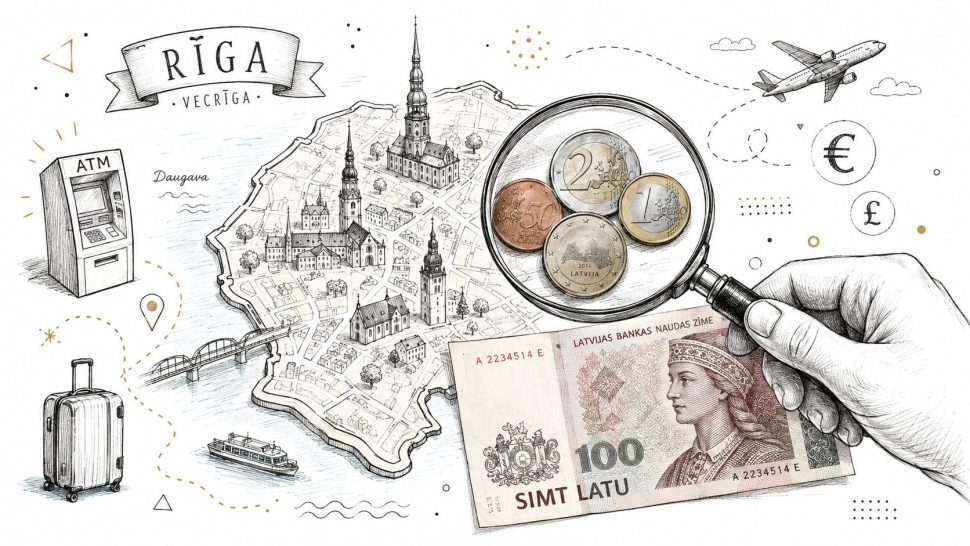
Riga uses the euro (EUR), and Latvia replaced the old Latvian lats (LVL) on 1 January 2014. So if you're heading to Riga now, take euros, but if you've found old lats from an earlier trip, that's withdrawn currency and needs handling differently.
That's the bit many travellers miss. You check flights, hotels, and card fees, then open a drawer at home and realise you've still got a few coins, some mixed euro notes, and maybe an old Latvian note from years ago. The spending part is simple. The clean-up afterwards is where people get stuck.
If you want the practical version, here it is. Use euros in Riga, avoid lazy exchange choices, keep leftover cash together when you get home, and don't assume banks will help with coins or obsolete notes. They usually won't.
What Currency Is Used in Riga Latvia
You're packing for Riga, checking your wallet, and wondering whether you need anything unusual. You don't. Riga uses the euro (EUR), split into 100 cents, as noted by Revolut's guide to Latvian currency.
That gives you a simple rule for your trip. Bring euros if you want cash, use a card that handles euro spending properly, and ignore any idea that Riga has its own separate city currency. It doesn't.
A common source of confusion is older money from previous visits. Latvia used the Latvian lats before switching to the euro, so travellers still find old notes and coins at home and assume they might still be useful. They aren't useful for spending in Riga now.
Practical rule: If your money says euro, you can use it in Riga. If it says lats or santīmi, it is old Latvian currency and needs to be exchanged separately, not packed for your next trip.
That matters because leftover cash comes in different categories, and each one needs a different decision. Current euro notes are simple. Euro coins can still be worth sorting out, especially if you want to exchange leftover euro coins after your trip. Old Latvian lats are a different job altogether.
What this means in practice
For a current trip to Riga, the answer is clear:
- Use euros for cash spending
- Use your card for larger purchases if your bank gives you a fair euro rate
- Keep any old lats separate so you do not mix withdrawn currency with spendable money
That last point catches people out. They come home with a few euro coins, a note or two, and an old Latvian note from years ago, then leave the lot in a drawer because banks and high street exchange counters rarely make this easy. Sort it properly from the start and you save yourself hassle later.
A Traveller's Guide to Using the Euro in Riga
Cash in Riga is easy once you stop overthinking it. You're dealing with euros, the same currency used across much of Europe, so the basics are familiar to most UK travellers.

Cash or card in Riga
In practice, a mix of both works best. Card payments are convenient for hotels, restaurants, and regular shopping. Cash is still useful for smaller purchases, markets, tips, or the odd moment when you don't want to rely on a terminal or mobile signal.
My advice is simple. Don't arrive with a huge wad of cash, and don't rely on card only. Take some euros for flexibility, then use your card for larger day-to-day spending.
A few sensible habits help:
- Carry small change: Euro coins are handy for quick purchases and simple cash payments.
- Use your card for bigger spends: It's cleaner for budgeting and easier to track when you get home.
- Keep leftover coins together: If you return with mixed euro change, you can still exchange euro coins rather than letting them sit in a jar.
ATM and payment traps to avoid
The biggest mistake isn't using cash. It's accepting bad conversion choices.
If an ATM or card machine offers to charge you in pounds, decline that option and stay with the local currency, which is euro. That usually gives you a cleaner route through your own card provider instead of a poor on-the-spot conversion.
Pay in the local currency unless you've got a very specific reason not to.
Also keep your receipts until the end of the trip. Not because you'll enjoy sorting them later, but because they help if you want to reconcile spending or check whether a machine applied an unwanted conversion.
Tipping and day-to-day handling
Tipping doesn't need to become a stress point. Keep it modest and sensible. If service feels good, rounding up or leaving some small euro change is usually the easiest approach.
For everyday handling, think practical rather than perfect:
- Don't overbuy cash before you travel: Leftover currency is common, especially on short city breaks.
- Separate spendable euros from keepsakes: If you collect commemorative coins or old notes, don't mix them into travel money.
- Check your wallet after the trip: That's when leftover foreign currency builds up unnoticed.
What About the Old Latvian Lats
You get home from Riga, empty your coat pocket, and find a few old Latvian notes from a trip years ago mixed in with current euros. That catches people out all the time. The euro is what you use in Riga now, but older cash from Latvia still turns up in drawers, coin jars, and travel wallets.

The Latvian lats, abbreviated as LVL, was Latvia's national currency before the euro replaced it in 2014. It was divided into santīmi, and it had a formal conversion into euros during the changeover. That matters for one reason. Old lats are withdrawn currency, not fake money, souvenir tokens, or something you should automatically write off.
Why old lats still matter
Lats no longer work as spending money in Riga. Shops, cafés, hotels, and transport providers expect euros, full stop.
What still matters is what happens after the trip, or years after it. Travellers often keep leftover cash without sorting it properly, then realise too late that old notes and coins do not fit the usual bank or bureau de change process. If your Latvian cash has been sitting around since before the euro switch, you need to treat it as obsolete currency and deal with it deliberately.
That is especially important if your leftover money is mixed. A lot of people have one wallet compartment with current euros, another with random foreign coins, and somewhere in the middle a few old lats they forgot they had.
What you can and can't do with it
You cannot spend old lats in Riga now.
You also should not expect a standard travel-money counter to welcome them. Most of those services are built for current banknotes they can resell quickly. Withdrawn currency creates more work, more checks, and less resale value, so they usually avoid it.
Old Latvian cash usually falls into one of these groups:
- Forgotten travel leftovers: notes or coins from a trip before Latvia adopted the euro
- Collected keepsakes: money saved because the designs were memorable or nostalgic
- Mixed leftover currency: lats bundled with euros and other foreign cash from several trips
If that sounds familiar, it helps to see where the lats now sits among other former European currencies that are no longer in normal circulation.
Old lats still have a practical next step. Ignoring them is usually the only bad option.
Your Options for Exchanging Leftover Currency
A common misstep involves people assuming any place with “exchange” in the window can handle whatever they've brought back. That's rarely true, especially when coins, mixed notes, or withdrawn currency are involved.

Currency exchange options compared
| Exchange Option | Accepts Foreign Coins? | Accepts Withdrawn Currency (e.g. Lats)? | Best For |
|---|---|---|---|
| High street bank | Usually no, or very limited | Usually no | Current banknotes if you already bank there |
| Airport bureau de change | Rarely | No | Last-minute current travel cash |
| Standard online travel-money provider | Often notes only | Usually no | Buying or selling mainstream current notes |
| Specialist currency buyer | Yes, typically designed for this | Yes, often the main advantage | Leftover foreign currency, mixed coins and notes, old or obsolete money |
Why normal options fail
Banks and bureaux de change are built around speed and standardisation. They want currencies they can move on quickly, in predictable formats, with low handling effort. Coins are bulky. Old currency is harder to process. Mixed bags of holiday leftovers are exactly the kind of thing they don't want on the counter.
That's why travellers often hear some version of:
- “We only take notes.”
- “We only accept current currency.”
- “You need to have an account with us.”
- “We don't deal with coins.”
None of that is unusual. It's how those businesses operate.
The smart way to think about your options
If you've come back from Riga with a few euro notes, a pocketful of coins, and maybe some older Latvian money from years back, you don't need a glamorous solution. You need one that precisely matches the problem.
A specialist service is usually the practical answer when you want to:
- Exchange foreign coins
- Exchange foreign coins and notes
- Convert foreign coins and banknotes from mixed trips
- Exchange leftover currency that banks won't touch
- Handle withdrawn money such as old lats
That matters for travellers, but also for charities, businesses, airports, supermarkets, and even police forces that end up receiving mixed foreign cash. Standard consumer exchange counters aren't designed for that. Specialist handlers are.
Common mistakes to avoid
People lose time and value by repeating the same errors.
- Waiting too long: Leftover foreign currency tends to disappear into drawers, jars, coat pockets, and luggage.
- Assuming coins are worthless: They're inconvenient, not worthless.
- Mixing current and obsolete cash without checking: Euros and old lats are not the same category.
- Using airport desks for everything: They're about convenience, not solving unusual currency problems.
- Sorting only the “easy” money: The awkward pieces are often the ones that need a specialist route most.
How to Exchange Foreign Coins and Notes The Easy Way
You get home from Riga, empty your pockets, and end up with a familiar mess. A few euro coins. One or two notes. Maybe an old stash of Latvian lats from a trip years ago. At that point, the right move is simple. Use a specialist service that can handle the lot together and pay you without the usual back-and-forth.

A simple step-by-step process
Gather all your cash
Pull everything together in one place. Include euro notes, euro coins, mixed foreign change from other trips, and any old Latvian lats you still have. That lets you convert foreign coins and banknotes in one go instead of leaving the awkward bits behind.
Get your quote before sending
Check the rate first. A good service shows you what it accepts and what you can expect back before you commit. That is how you avoid vague pricing and last-minute surprises.
Pack and post the currency
Keep the process practical. You should not have to sort every last coin into perfect piles just to get started. Specialist services exist for mixed travel money, including the leftovers regular providers tend to reject.
Receive payment
After the currency is checked and processed, payment is sent by bank transfer or PayPal. According to the publisher information, payment is issued within five working days after verification.
Why this route works better
Regular exchange options are built for straightforward transactions. Leftover travel money from Riga usually is not straightforward. It often includes small euro change, random notes, and sometimes old lats that have been sitting in a drawer for years.
A specialist route fits that reality better because it can deal with:
- Current euros from Riga
- Foreign coins and notes in the same package
- Mixed currencies from more than one trip
- Withdrawn money, including old Latvian lats
- Charity collections of foreign cash
That last point matters more than people expect. If you brought money back from Riga recently, you may only have euros. If you are clearing out older travel cash, you may also have lats. Handling both current and obsolete money in one process is the useful part here.
Real-world scenarios
A traveller comes back from Riga with €14 in coins and two notes. A regular bank option is often more trouble than the money feels worth.
Another traveller finds old Latvian lats mixed in with euros from a later trip. That is exactly the kind of combination standard exchange counters handle badly.
Or a family empties bags, wallets, and coat pockets after several holidays and ends up with a pile of unsorted cash. In all three cases, the smart choice is the same. Send it to a service built for leftover currency, not one built mainly for selling fresh holiday cash.
Frequently Asked Questions About Riga's Currency
Can I exchange Latvian lats at a UK bank?
Usually, no. UK banks and regular travel-money counters typically focus on current, mainstream banknotes. Withdrawn currencies like the old lats are a specialist job.
Can I still spend Latvian lats in Riga?
No. Riga uses the euro for normal spending now. Old lats are obsolete for day-to-day purchases.
Can I exchange foreign coins in the UK?
Yes, but not usually through ordinary banks or standard bureaux de change. If you want to exchange foreign coins and notes together, a specialist service is normally the practical route.
Is it worth exchanging small amounts of euro coins?
Yes, especially if you regularly come home with change. Small amounts build up. The mistake is leaving them in a drawer for years because they feel too awkward to deal with.
What if I have both euros and old Latvian money?
Treat them as two categories. Euros are current foreign currency. Old Latvian lats are withdrawn currency. A specialist buyer that accepts both is the cleanest option.
Do I need to sort every coin and note before sending it?
Not always. Specialist services are built for mixed currency, which is exactly why they're useful. That's a big improvement over options that only want neatly separated, current notes.
How long does payment take?
According to the publisher details for the service behind this article, payment is issued within five working days after the currency is verified. That's far more straightforward than hanging onto leftover foreign currency indefinitely.
Can I donate foreign coins to charity instead of exchanging them?
Yes. If you don't want the cash yourself, donating leftover foreign currency to charity can be a smart option. It's especially useful for coins and small balances that would otherwise sit unused.
If you've got euros from Riga, old Latvian lats, or a mixed pile of leftover holiday money, We Buy All Currency gives you a practical way to exchange foreign coins, notes, and withdrawn currency without the usual hassle. It's a simple option when banks and bureaux fall short, and it works whether you want to cash out, clear a drawer, or turn old travel money into something useful.