
Convert Spanish Pesetas to Pounds: 2026 Exchange Guide
Posted by: Ian Stainton • 2 May 2026
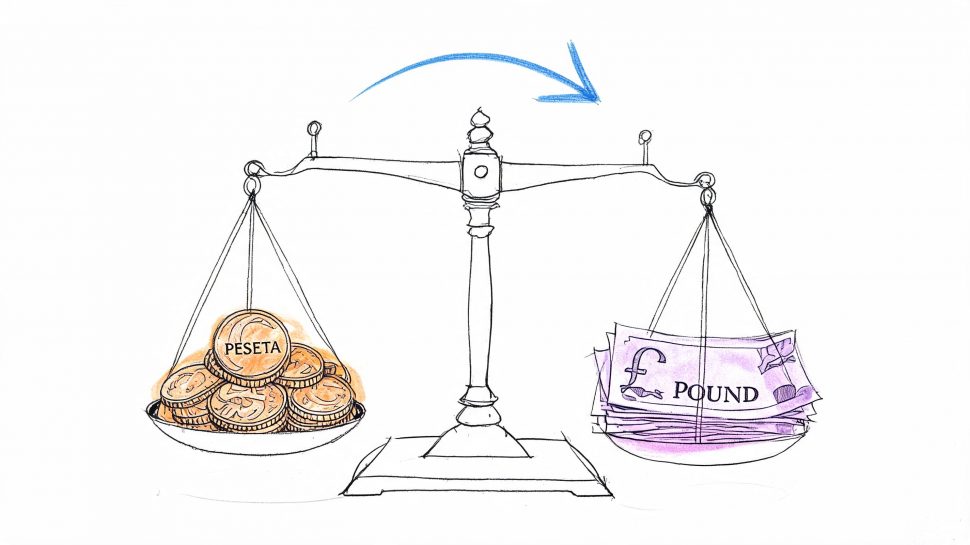
In practical terms, old Spanish pesetas can still be turned into pounds. The key benchmark is that the peseta was fixed at 166.386 ESP to 1 EUR, and Bank of England data shows around 269 pesetas to £1 in 2000, so 1,000 pesetas from that period was worth about £3.72.
That’s the answer often sought upon finding a jar of coins, an old travel wallet, or a bundle of pre-euro notes in a drawer. The part that usually causes confusion is not whether pesetas had value. It’s how to exchange physical peseta coins and notes in the UK now that banks and most bureaux de change won’t handle withdrawn currency.
In the UK, the best route is typically a specialist online service that accepts withdrawn currency. The process is usually simple: get a quote, send the pesetas by post, and receive payment by bank transfer or PayPal. If you’ve been trying to work out how spanish pesetas to pounds works in real life, not just on a historical converter, this is the practical version.
Found Old Spanish Pesetas? Here’s What to Do Next
Finding pesetas is common. People uncover them while clearing a loft, emptying a parent’s house, sorting charity donations, or opening an old holiday money tin that somehow survived every clear-out.
The first thing to know is that pesetas are not spendable currency anymore, but that doesn’t make them worthless. Spain joined the euro at the fixed rate of 166.386 ESP per 1 EUR, and physical conversion remained available through Spanish banks until 31 December 2021, as noted in this historical peseta exchange overview.

The practical answer
If you’re in the UK and holding physical peseta notes or coins, a practical route is to use a specialist service that can exchange foreign coins and notes, including withdrawn currency. That matters because most ordinary exchange providers focus on current banknotes only.
What usually works is straightforward:
- Get a quote first so you know the likely pound value before sending anything.
- Send coins and notes together if the service accepts mixed, unsorted currency.
- Choose payment by bank transfer or PayPal once the currency has been checked.
Practical rule: Don’t assume old foreign money belongs in a souvenir box forever. Withdrawn currency often still has recoverable value, but only if you use the right type of exchanger.
Why people get stuck
The usual mistake is checking a basic online converter and then trying to take the physical money to a bank branch. That breaks down fast. Online converters show historic or reference values. They don’t solve the physical handling problem, especially for old coins.
That’s why pesetas often sit untouched for years. People know they were once money, but they don’t know who still accepts them. The gap isn’t valuation alone. It’s access.
What Are Your Spanish Pesetas Really Worth?
The first question is usually, “Are these worth anything in pounds?” The practical answer is yes, but the value depends on what kind of pesetas you have and what route fits them.
There are really two markets for old pesetas. One is exchange value for ordinary leftover currency. The other is collector value for better pieces that have appeal beyond face value.

Exchange value and collector value are different
If your pesetas came home in a holiday purse, a kitchen drawer, or an old travel wallet, they usually belong in the exchange category. Their value is normally modest, and the goal is to turn physical coins and notes into pounds without wasting time.
Collector value is different. Crisp notes, unusual dates, commemorative pieces, complete sets, and coins or notes in noticeably better condition can attract more interest from collectors than from a standard currency buyer. Condition matters a lot here. So does rarity.
That distinction matters because many UK residents check a converter, see a tiny headline figure, and assume everything is only worth scrap-level money. Sometimes that is correct. Sometimes a small part of the lot deserves a separate look before you send it off.
How to tell which route makes sense
A quick sort is usually enough.
- Loose mixed coins with wear are usually best treated as standard exchange stock.
- Bundles of notes deserve a closer look, especially if they are clean, flat, and lightly handled.
- Matching dates, commemoratives, or unusually well-kept pieces may be worth checking against sold collector listings before accepting an exchange offer.
You do not need expert numismatic knowledge to make a sensible decision. You just need to separate everyday spendable leftovers from anything that looks unusually well preserved or intentionally collected.
For most peseta holdings, the best result comes from a simple specialist exchange. For standout pieces, pause first and check whether collector demand changes the picture.
A realistic benchmark in pounds
For ordinary exchange stock, historic conversion value is still useful as a rough frame of reference. Spain joined the euro at a fixed conversion rate of 166.386 pesetas to 1 euro, as recorded by the European Commission on euro conversion rates. That gives you a grounded starting point before fees, handling costs, and buyer margins are applied.
In plain terms, even a few hundred pesetas will not produce much in pounds. Larger mixed holdings can still be worth sending, especially if they include notes as well as coins. The mistake is expecting a face-value calculation from 20 years ago to match what a physical buyer in the UK can offer today.
If you want context on how specialist buyers differ from banks and bureaux de change, this comparison of foreign currency exchange options helps explain the trade-offs.
What usually pays off in practice
For standard peseta coins and notes, selling one item at a time often creates more work than value. You have to photograph everything, write listings, answer questions about condition, pack low-value sales, and accept the risk that a buyer disputes the grade.
A specialist postal exchange is usually the cleaner option in 2026 for UK residents who want physical pesetas turned into pounds. It suits mixed lots, withdrawn notes, and old coins that no longer fit normal high street exchange channels.
The key is to value the lot accurately. Treat ordinary pesetas as exchange stock unless something about them clearly suggests collector interest. That approach saves time, avoids inflated expectations, and helps you choose the right conversion route first time.
Comparing Your UK Exchange Options for Pesetas
Three routes are typically considered. A bank, a bureau de change, or a specialist online service. In practice, they don’t all solve the same problem.
Where can you exchange Spanish pesetas?
| Exchange Option | Accepts Peseta Notes? | Accepts Peseta Coins? | Best For |
|---|---|---|---|
| High Street bank | Usually no for withdrawn currency | Usually no | Current mainstream banking needs |
| Bureau de change | Sometimes current notes only, rarely withdrawn currency | Usually no | Current travel money |
| Specialist online service | Yes, where withdrawn currency is supported | Yes | Old, mixed, obsolete, and leftover foreign currency |
If you want a wider view of how these routes differ for old money, this foreign currency exchange comparison is useful.
Why banks usually say no
Banks are built for account services and mainstream transactions. Old pesetas create several problems for them:
- No resale channel because the currency is withdrawn.
- Handling costs for low-value foreign coins are disproportionate.
- Operational limits mean branch staff often can’t assess or process obsolete money.
- No appetite for mixed lots where coins and notes arrive unsorted.
This isn’t staff being awkward. It’s a systems issue. The branch network isn’t designed to convert foreign coins and banknotes that fell out of circulation years ago.
Why bureaux de change also fall short
Bureaux de change are better at live travel exchange, but they still tend to focus on current currencies that can be traded on quickly. Withdrawn coins are the weakest fit of all.
That’s why people walk in with pesetas and walk out with the same pesetas. The service exists for holiday cash, not for legacy currency.
If your money is old, mixed, or withdrawn, the problem isn’t the exchange rate first. The problem is finding a buyer set up to handle the format.
What the specialist route does differently
A specialist service is built around the awkward cases. Coins. Old notes. Pre-euro currencies. Mixed foreign cash from homes, charities, attractions, and businesses.
That matters if you want to exchange leftover currency without sorting every piece yourself. It also matters if your pesetas are bundled in with other foreign coins and banknotes from multiple trips or donation collections.
How to Convert Spanish Pesetas to Pounds Step-by-Step
The process feels complicated until you see it once. After that, it’s mostly admin. The main difference from a normal travel-money exchange is that you’re sending physical old currency to a specialist that knows how to price and process it.

Start with a realistic valuation
The smartest first move is to request a quote rather than trying to reverse-engineer every peseta yourself. Historical benchmarks matter here. The peseta was fixed at 166.386 ESP per 1 EUR, and Bank of England data from 2000 shows around 269 pesetas per £1, which is why specialist services use those reference points, adjusted through euro conversion methods, to produce a fair current valuation, as explained in this Bank of England peseta rate reference.
If your currency is unsorted, a weight-based wizard can make this much easier. That’s especially useful for people trying to exchange foreign coins and notes from a mixed drawer, a charity bucket, or a business till where everything has ended up together.
Package the currency properly
Once you accept a quote, the practical task is simple. Pack the pesetas securely and send them by post using a tracked service.
A few habits make this easier:
- Keep coins contained in sealed bags or small pouches so they don’t tear the outer packaging.
- Separate notes from coins inside the parcel, even if the service accepts them together.
- Use sturdy outer packaging rather than a thin paper envelope.
- Retain postage records until payment arrives.
This part matters because old currency often has more physical bulk than modern note-only exchange. Coins shift around. Good packaging prevents avoidable problems.
Verification and payment
After the parcel arrives, the service checks what was received and confirms the final value against the quoted method. Payment then follows through the option you selected, typically bank transfer or PayPal.
For customers, the important detail is predictability. You want to know the rate before sending, avoid hidden deductions, and know what happens if you change your mind.
A good obsolete-currency process should be clear before dispatch, secure in transit, and boring at the payment stage. Boring is good when money is involved.
Why this works for mixed or awkward holdings
A lot of peseta sellers aren’t sending neat collector folders. They’re sending practical leftovers:
- holiday coins from the 1990s
- notes left in an old passport wallet
- mixed foreign change gathered by a charity
- odd foreign cash accepted by a shop in error
That’s why specialist systems are designed to handle messy reality. You don’t need a perfect inventory. You need a service that can process what people have.
When to pause before sending
There is one caveat. If some of your pesetas look unusually crisp, complete, or collectible, check whether they might deserve separate review first. Most holdings won’t fall into that category. Some will.
For everything else, the specialist postal route is usually the cleanest way to turn spanish pesetas to pounds without wasting time on options that were never built for obsolete currency in the first place.
Common Mistakes to Avoid When Exchanging Old Currency
People rarely lose value because pesetas are impossible to exchange. They lose value because they make a rushed decision before checking their options.
Throwing them away or leaving them forever
This happens more often than people admit. Someone assumes old pesetas are just souvenirs, so they stay in a tin for another decade or end up in a house clearance pile.
A better move is to treat them like any other dormant asset. Check whether they have exchange value, and only then decide whether to cash them in, hold them, or donate foreign coins to charity.
Selling too fast on a general marketplace
Auction sites can work for some collectible pieces. They’re much less reliable for ordinary mixed lots. If the seller doesn’t know what they have, buyers usually benefit from that gap.
The safest approach is to get a specialist valuation first, especially for mixed peseta coins and notes. That gives you a reference point before you entertain private offers.
Assuming banks know more about obsolete currency
People trust banks, which makes sense for current money. But for withdrawn foreign currency, a branch refusal doesn’t mean the money has no value. It usually means the branch doesn’t handle that category.
That distinction matters. “We don’t accept this” is not the same as “this cannot be exchanged anywhere.”
Paying attention only to the headline rate
A quoted rate means very little if the process adds friction elsewhere. Hidden fees, poor communication, awkward sorting rules, or no route for coins can reduce the actual return.
Look for practical details instead:
- Can they handle coins as well as notes
- Do they accept withdrawn currency
- Can you send unsorted holdings
- Is the quote clear before dispatch
- Will they return the currency if you’re unhappy
Those points usually tell you more than the headline figure alone.
Real-World Scenarios From Peseta Sellers
A personal stash is only one type of peseta holding. In practice, old Spanish currency turns up in very different places.
The family holiday drawer
One common case is a household clear-out. Someone finds leftover pesetas from pre-euro Spain, mixed in with francs, lira, and old escudos. The amount doesn’t look exciting at first, but it’s enough to justify a simple postal exchange, especially when the service can exchange foreign coins without demanding perfect sorting.
The charity collection tin
Charities often receive a surprising mix of coins and notes through donation jars, travel collections, and community drop-offs. Pesetas still appear because people keep old holiday money for years, then finally decide to donate it. A specialist service makes sense here because volunteers shouldn’t have to identify every coin before turning it into usable funds.
Old foreign money is awkward for general cash handling, but very useful once it reaches a processor built for obsolete and mixed currency.
The business that took them by mistake
Retailers, visitor attractions, and travel-facing businesses sometimes end up with foreign cash in tills or back-office collections. That includes withdrawn money accepted in error or dropped into charity boxes on site. For them, the goal isn’t collecting. It’s recovery. A specialist route turns nuisance currency back into pounds and clears space at the same time.
These are different situations, but the pattern is the same. The value isn't realized by historical curiosity alone. It's realized by using a service that handles physical obsolete money.
Frequently Asked Questions About Exchanging Pesetas
A lot of peseta questions come up at the point where someone is ready to act. The usual situation is simple. You have coins or notes in hand, you want pounds in a UK account, and you need to know whether they still have practical value.
Can you still exchange Spanish pesetas in the UK?
Yes. The workable route is a specialist service that accepts withdrawn currency and handles physical cash by post. High street banks and standard travel-money counters usually focus on current currencies, so pesetas fall outside what they process.
Are Spanish pesetas completely worthless now?
No. Withdrawn currency can still hold value. Ordinary pieces may qualify for exchange through a specialist service, while better-preserved or less common issues can be worth more to a collector.
How much are 1,000 Spanish pesetas worth in pounds?
As noted earlier, a historical benchmark from 2000 put 1,000 pesetas at about £3.72. That figure is only a reference point. What you receive now depends on what you hold, whether it is notes, coins, or both, and how the specialist prices obsolete currency for payment in pounds.
Do UK banks accept foreign coins?
Usually not, especially for old foreign coins and withdrawn money. If your pesetas are mostly coins, that detail matters because it rules out many ordinary exchange routes straight away.
Can I exchange peseta coins as well as notes?
Yes, if the service accepts both. That is one of the main reasons people use a specialist instead of a travel-money provider. Notes are easier for many firms to handle. Coins are where specialist processing really matters.
What if my pesetas are mixed with other currencies?
That is common in real submissions. Pesetas often arrive alongside French francs, Italian lira, German marks, or old euro-era leftovers. A specialist that accepts mixed currency saves time because you do not need to identify and separate every item before sending it.
Can old pesetas be donated to charity?
Yes. Some services let you assign the exchange value to a charity instead of receiving the payment yourself. That can be a sensible option for low-value mixed coins that have been sitting unused for years.
How long does payment usually take?
Payment is usually made after the currency has arrived and been checked. Good services explain the verification step clearly, because condition, denomination, and authenticity affect what can be paid. In practice, many postal exchanges pay within a few working days of receipt.
Should I sell pesetas to collectors instead?
Sometimes. It depends on the material.
For standard circulated pesetas, exchange is usually faster and more predictable than listing coins or notes one by one. If you have unusual dates, proof sets, error coins, or crisp high-denomination notes, it is worth checking collector demand first. The trade-off is time. Collector sales can produce a better result for the right items, but they also involve research, listing, postage, and buyer risk.
If you’ve found old pesetas and want a simple way to turn them into cash, We Buy All Currency offers a practical route for current, withdrawn, and mixed foreign money. You can exchange foreign coins and notes, convert leftover holiday money, or use their currency buy back service for old banknotes and coins that banks won’t accept.