Symbol for Dirhams Currency: UAE & Morocco Guide 2026
Posted by: Ian Stainton • 22 Jul 2026
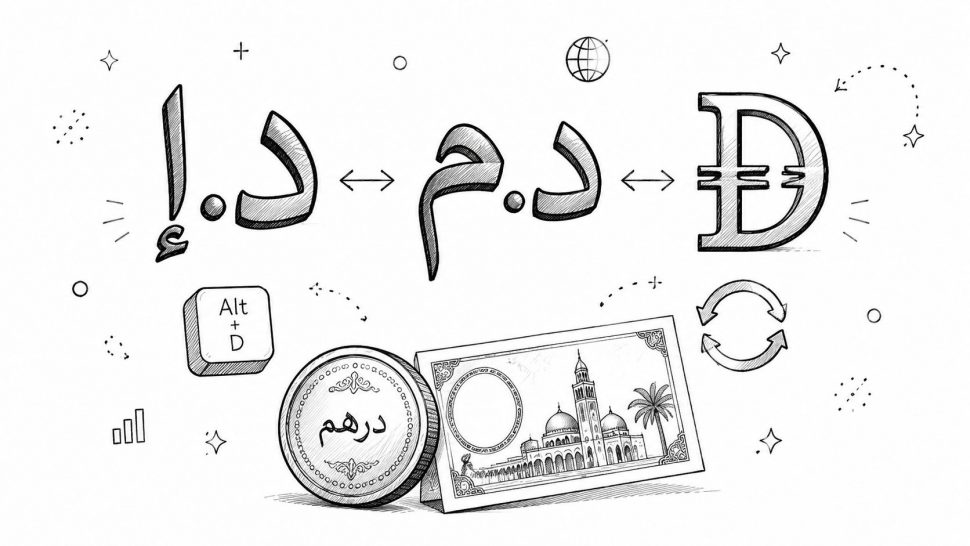
The UAE dirham symbol is د.إ, and the new official UAE sign is a stylised D with two horizontal bars, with the ISO code AED. The Moroccan dirham uses د.م. or DH, with the ISO code MAD.
You've probably tipped out a holiday wallet, found a handful of coins and notes, and realised the awkward part isn't the money itself, it's figuring out which dirham you've got. That matters because UK travellers often mix up the UAE dirham and the Moroccan dirham, and they're not interchangeable when you want to exchange foreign coins and notes or exchange leftover currency.
What Is the Symbol for Dirhams Currency
If you've just come back from Dubai, Abu Dhabi, or Marrakech and found loose cash in your bag, the first job is simple, identify the currency before you try to value it. People searching for the symbol for dirhams currency usually need help separating the UAE dirham (AED) from the Moroccan dirham (MAD), because both are called dirhams but they use different symbols and codes. The UAE dirham is shown as د.إ, Dh, or the newer official sign, while the Moroccan dirham is commonly written as د.م. or DH. That distinction matters for UK travellers who need to sort and value mixed leftover cash correctly before they exchange foreign coins and notes. Towerstone's dirham symbol guide
Practical rule: If you can't tell whether the cash is from the UAE or Morocco, treat the written name, the symbol, and the destination city as clues before you assume the exchange value.
The quickest way to think about it is this, the symbol tells you the script or format, but the ISO code tells you exactly which currency you have. In UK-facing financial systems, that code is often the clearest label, especially when you're trying to convert foreign coins and banknotes or sort a mixed pile of holiday money.
A lot of confusion starts because older notes, older retail signage, and travel receipts may still show informal forms. That's normal. What matters is matching the symbol to the right currency before you decide whether to exchange leftover currency locally, keep it, or send it into a specialist service that handles coins as well as notes.
UAE Dirham (AED) vs Moroccan Dirham (MAD) A Quick Comparison

When UK travellers say “I've got dirhams left over,” they usually mean one of two very different currencies. A side-by-side check makes the difference obvious, especially if you're sorting a wallet full of mixed travel cash before you exchange foreign coins or exchange foreign coins and notes.
| Feature | UAE Dirham (AED) | Moroccan Dirham (MAD) |
|---|---|---|
| Full currency name | United Arab Emirates dirham | Moroccan dirham |
| ISO code | AED | MAD |
| Common symbols | د.إ, Dh, Dhs, new stylised D | د.م., DH |
| What UK travellers usually notice | Seen in Dubai, Abu Dhabi, and wider UAE travel contexts | Seen in Marrakech and other Morocco travel contexts |
| Practical note | Often appears in older written forms and newer symbol-first formats | Often appears in legacy signage and simple Latin abbreviations |
The easiest visual cue is the context in your hand, not just the symbol on the note. If the cash came from a UAE hotel, airport, or Dubai shopping receipt, it's likely AED. If it came from Morocco, you're dealing with MAD.
Money changers sort currency by code, not by guesswork. That's why AED and MAD should be your final check, especially if the symbols are faded or handwritten.
For UK consumers, that distinction is more than academic. It decides whether your cash is quoted, accepted, or passed to a specialist who can handle leftover foreign currency properly.
A Deeper Look at the UAE Dirham Symbol

The UAE dirham has carried several written forms over time, and that's why UK readers still see د.إ, Dh, and Dhs in different places. The most authoritative modern reference is the UAE Central Bank's 2025 decision to introduce an official sign for the dirham, described as a stylised Latin D with two horizontal bars. It sits alongside the official code AED, and older informal abbreviations still appear in circulation. UAE national currency details
The practical takeaway is simple, if a system, email, or invoice doesn't render the new glyph cleanly, AED is still the safest format for banking and FX work. That matters in the UK because the symbol is only one part of the currency's identity, while the code is what exchange systems and payment rails use.
The UAE dirham also has a stable exchange backdrop. It has been pegged to the US dollar at 1 USD = 3.6725 AED since 1997. For UK users, that historical peg means its sterling value mainly moves with GBP/USD, not with a floating AED rate, which is useful when you're valuing leftover cash after a trip.
A further point worth knowing is that the dirham was introduced in 1973 as the UAE's unified national currency, and the currency is subdivided into 100 fils. Common smaller coins such as 25 fils and 50 fils still show up in travel leftovers, which is why a simple “only notes matter” approach doesn't work well for this currency. Legacy circulation and denomination reference
See how we handle coins from the United Arab Emirates
How to Type Dirham Symbols on a Keyboard
If you're typing about dirhams in a spreadsheet, email, or customer note, the best move is usually to use the currency code rather than hunt for a special character. The new official UAE dirham symbol is scheduled for Unicode 18.0 as U+20C3 in September 2026, and until broad device support arrives, AED is the most reliable fallback in UK software systems. Unicode reference for the new dirham sign
The practical options
- Windows and office tools: Use the symbol only if your font supports it. If not, type AED or MAD so the amount displays cleanly in documents and internal systems.
- Mac and design work: Character Viewer can help you insert special currency characters, but the glyph may still fail on older fonts or older apps.
- HTML and web content: If you need universal readability, codes beat symbols in most business contexts, especially where invoices, ledgers, or booking forms need to stay consistent.
Use the symbol when design matters, but use the code when accuracy matters.
The common mistake is chasing a perfect glyph when the task is clear identification. For UK banking, FX, and exchange workflows, AED and MAD are easier for systems to process, easier for staff to check, and less likely to break on older devices.
That's especially true when you're preparing leftover travel cash for exchange. If you're dealing with mixed coins, old notes, or currency that might not display properly, the code keeps everything readable even when the symbol doesn't.
How to Exchange Your Leftover Dirham Coins and Notes

A lot of UK travellers assume their leftover dirhams are too awkward to deal with, especially when there are coins mixed in with folded notes. That's exactly the kind of case where a specialist currency-buyback route is useful, because banks and many high-street bureaux are set up for easier retail cash, not every odd coin and older note.
- Gather everything in one place. Put the coins, notes, and any withdrawn or unfamiliar pieces together. Don't spend time sorting by denomination unless your chosen exchange route asks for it.
- Check the currency type. Confirm whether you've got AED or MAD. If the bag contains both, separate them only if you can do so easily.
- Get a quote through the exchange service. Use the relevant page for the currency type, such as exchange Moroccan dirham, so you're working with the right currency from the start.
- Send the money in. Pack the coins and notes securely and post them as directed. A specialist service can handle mixed leftovers, which is the whole point when you want to exchange foreign coins and notes without hassle.
- Receive payment after verification. Once the currency has been checked, payment is issued by the method you selected.
The biggest benefit is convenience. You don't need to build piles of coins, match every note to a chart, or hope a branch will accept a small, awkward balance. That's especially useful for holiday leftovers, charity collections, and business cash clearouts where the mix is messy.
In short, the service route is built for exchange leftover currency cases that standard counters often decline, which makes it far better suited to coins, mixed bags, and older currency.
Frequently Asked Questions About Dirham Exchange
Can foreign dirham coins be exchanged in the UK
Yes, foreign dirham coins can be exchanged in the UK, but the practical route matters. Banks often prefer notes or only accept limited currencies, while specialist services are designed to exchange foreign coins as well as banknotes.
Do banks accept dirham coins
Usually not in the way travellers hope. Coins are awkward for branch handling, they're time-consuming to count, and many branches focus on straightforward note exchange. That's why people trying to exchange foreign coins and notes often need a dedicated currency-buyback service.
Do old or withdrawn dirham notes still have value
Sometimes they do, but not every counter will take them. If you've got older UAE material or mixed currency from earlier trips, a specialist exchanger is often the most practical option because it can assess current, withdrawn, or obsolete items together.
Why do exchange rates vary between providers
Because providers price differently by amount and by service model. The Post Office's own converter showed UAE dirham spend-tier rates of 4.603 for 100+, 4.7116 for 500+, and 4.7808 for 1000+ on 21/07/2026, which shows that the amount you exchange can affect the rate. Post Office currency converter
How long does payment usually take
That depends on the provider and the verification process. In a specialist postal exchange model, payment is typically issued after the currency is checked, so the timeline is tied to postage and verification rather than a branch visit.
Can I donate foreign coins to charity
Yes, many travellers prefer to donate foreign coins to charity instead of leaving them in a drawer. That can be a good use for leftover holiday money, especially when the coins are small-value and awkward to spend.
What if I have mixed currencies in the same bag
That's common after a trip. Start by separating AED from MAD, then identify any other currencies before you send them for valuation. Mixed leftovers are one of the main reasons people look for a specialist service rather than a regular counter.
What's the safest way to avoid confusion next time
Keep the airport receipt, note the destination country on a phone photo, and check the ISO code before you pack your wallet away. The code is usually clearer than the symbol, especially when you're dealing with dirhams.
If you've got leftover dirhams, mixed coins, or old holiday cash sitting in a drawer, now's the time to turn it into something useful. Visit We Buy All Currency to exchange foreign coins, exchange leftover currency, or convert foreign coins and banknotes quickly and securely.