
What Is Scotlands Currency? A Complete Guide for Travellers
Posted by: Ian Stainton • 13 Jan 2026
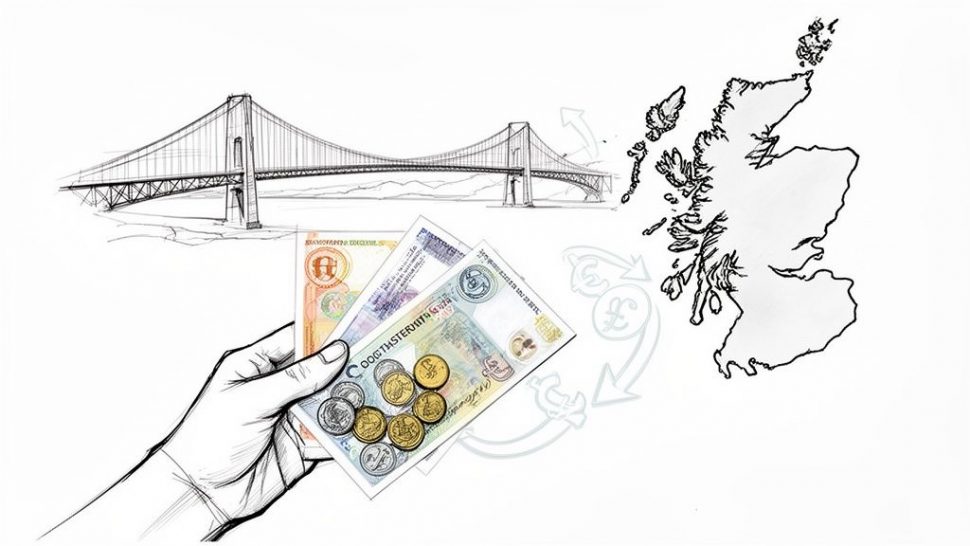
Right, let's get one thing straight from the start: Scotland uses the pound sterling (GBP), just like the rest of the United Kingdom. It's a common point of confusion for travellers, but even though Scotland has its own unique banknotes, it's not a separate currency.
Think of it this way: it’s a bit like how different states in the U.S. have their own unique quarter designs. They might look different, but they all spend the same.
Your Quick Answer to Money in Scotland
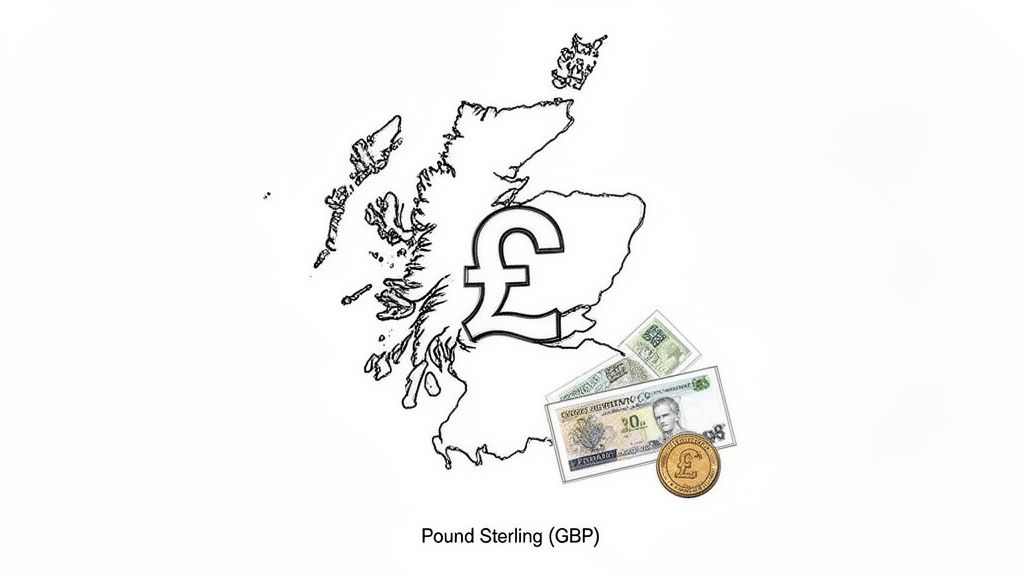
So, you’re planning a trip to the majestic Highlands or the historic streets of Edinburgh? The first question on most people's minds is, "what money do I need in Scotland?" The simple answer is pound sterling, often shown with the £ symbol or the currency code GBP. This means any cash you have from England, Wales, or Northern Ireland is good to go.
What you will notice pretty quickly, though, is that the banknotes look different. Three major Scottish banks issue their own versions of the pound, each with distinct designs that celebrate Scotland's rich heritage.
Key Takeaway: All UK banknotes, whether from the Bank of England or a Scottish bank, share the exact same value. A £20 note is always a £20 note, no matter whose face is on it or where it was printed.
To give you a quick summary of the essentials, here’s a handy table.
Scotland's Currency At a Glance
| Attribute | Details |
|---|---|
| Official Currency | Pound Sterling (GBP) |
| Symbol | £ |
| Banknotes | Issued by Bank of England, Bank of Scotland, Royal Bank of Scotland, Clydesdale Bank |
| Coins | Standard UK coins issued by the Royal Mint |
| Denominations | Notes: £5, £10, £20, £50, £100 |
| Acceptance | All UK currency is accepted throughout Scotland |
This table covers the basics, but there's a bit more to know to make your trip completely seamless.
This guide will walk you through everything, from telling the different notes apart to practical tips for spending your money. And when you get back home with leftover notes—whether they're Scottish pounds or any other foreign currency—we offer a fast, easy, and hassle-free way to exchange them. Our 100% guaranteed service is trusted by major UK brands, including charities, supermarkets, and airports, making it easy to convert foreign coins and banknotes without any sorting required.
So, What's the Deal with Scottish Money?
First things first: Scotland’s official currency is the pound sterling, just like in the rest of the UK. But this is where things get a bit more interesting. While the Bank of England is the sole issuer of banknotes in England, Scotland has a unique tradition. Three major banks are authorised to print their own money:
- Bank of Scotland
- Royal Bank of Scotland
- Clydesdale Bank
This means you’ll come across a fantastic variety of colourful and beautifully designed banknotes during your trip. Think of them as miniature pieces of art in your wallet, each one celebrating a piece of Scotland's rich history and culture.
Don't worry, these notes are completely legitimate. They're used interchangeably with Bank of England notes all over Scotland. A £10 note is a £10 note, no matter which bank’s name is on it. So, if you're handed a note featuring the poet Robert Burns or one with the iconic Forth Bridge, rest assured it’s real money.
Designs and Denominations
Scottish banknotes come in the same denominations you're used to: £5, £10, £20, and £50. The big difference is the designs, which are proudly Scottish. For instance, a Royal Bank of Scotland £20 note might feature Kate Cranston, a pioneer of Glasgow's famous tea rooms, while a Bank of Scotland note of the same value depicts the novelist Sir Walter Scott.
This variety adds a wonderful local flavour to spending cash in Scotland, but it can cause a bit of a headache once you head home. Even though Scottish notes are pound sterling, some retailers in other parts of the UK might be reluctant to accept them, simply because they don’t recognise the designs.
It's a common problem for travellers returning with leftover foreign currency. If you find yourself with a wallet full of Scottish notes after your trip, you don't have to worry. Our service offers a fast, easy, and hassle-free way to exchange them.
We provide a 100% guaranteed service to convert foreign coins and banknotes into cash. There's no need to sort anything yourself. As a company trusted by major UK brands—including charities, police forces, and supermarkets—we make the process simple and secure. You can easily exchange foreign coins and notes right from the comfort of your home.
Are Scottish Banknotes Actually Legal Tender?
This is where things can get a bit confusing for visitors. We’ve all heard the term ‘legal tender’, but its official meaning in the UK is surprisingly narrow and often misunderstood. It’s really just a technical term for settling debts in court, not for buying a coffee or a souvenir.
Here’s the interesting part: in Scotland, no banknote is technically considered 'legal tender'—not even one from the Bank of England. So, the best advice for any traveller is to forget the legal jargon. What really matters is what shops and businesses will actually accept. Scottish banknotes are pound sterling and are, of course, accepted everywhere in Scotland. The moment you cross the border into England, Wales, or Northern Ireland, however, things can get a little inconsistent.
This diagram shows how all the different banknotes fall under the single umbrella of Pound Sterling.
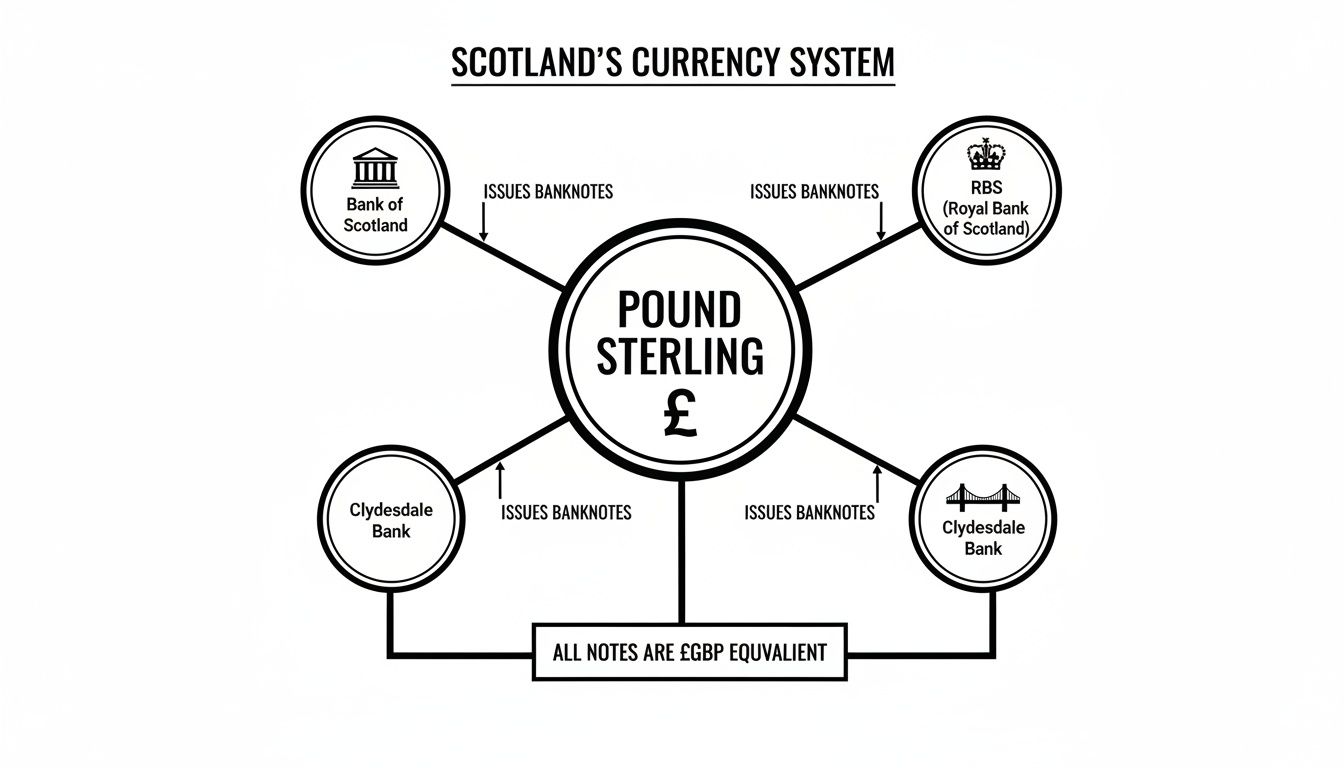
As you can see, even though three different banks issue the notes, they are all just branches of the same Pound Sterling tree. Keeping this in mind will help you avoid any awkward moments at the till.
Avoiding Hassle with Leftover Currency
It’s a frustrating moment for any traveller: you get home, unpack, and realise the leftover Scottish notes in your wallet might not be so easy to spend. This is a common headache with any foreign currency.
While a shopkeeper in England isn't legally obliged to take Scottish notes, many larger chains and retailers will. Smaller, independent shops, on the other hand, might politely decline them, often just because they aren’t familiar with the designs.
This uncertainty is exactly why you need a simple solution for your leftover money.
Instead of trying to offload your leftover notes at shops or facing poor rates at exchange bureaus, there’s a much easier way. Our service turns this common travel problem into a smooth, hassle-free experience, letting you convert foreign coins and banknotes from the comfort of your own home.
We provide a fast, easy, and 100% guaranteed way to exchange foreign coins and notes. We’re trusted by major organisations, including charities, supermarkets, airports, and even police forces, to handle their currency. There's no need to sort anything—just send us your coins and notes, and we'll take care of the rest. Our goal is to make exchanging your leftover foreign currency a simple and rewarding process.
A Glimpse Into Scotland's Rich Monetary History
To get a real handle on Scotland's currency today, it helps to take a quick trip back in time. Long before the pound sterling we know now, Scotland had its own unique money called the pound Scots. It was first introduced way back in the 12th century by King David I.
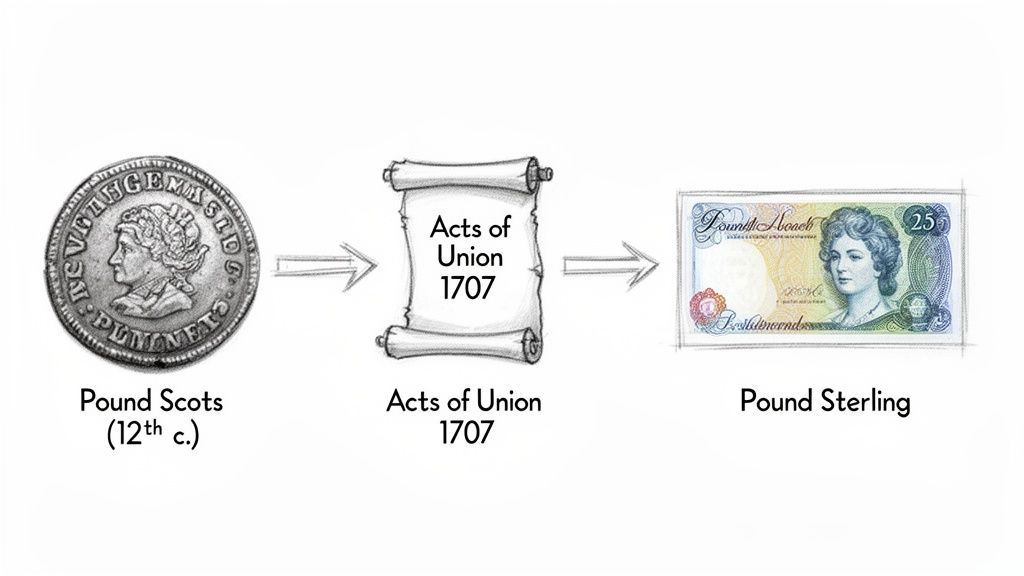
For centuries, the pound Scots and the English pound sterling were two completely different things. But as time went on, the value of the Scottish pound started to slip compared to its English neighbour.
By the time King James VI of Scotland also took the English throne as James I in 1603, the exchange rate had been fixed at 12 pounds Scots to one pound sterling. This was all made official with the Acts of Union in 1707, when the pound Scots was replaced entirely by pound sterling, cementing the monetary union between the two countries.
From Obsolete Coins to Modern Value
This rich history is exactly why Scotland proudly keeps printing its own banknotes – it’s a nod to a long heritage of monetary independence. It also brings up a fascinating point for anyone who travels or collects currency: just because a note or coin is old, it doesn't mean it's worthless.
Currencies have come and gone all over the world, not just in Scotland. The good news is, if you've stumbled upon some old pre-Euro coins or other withdrawn banknotes from your travels, they can often still be exchanged for cash. This is a practical tip for anyone with leftover foreign currency.
Loads of us have jars of forgotten coins gathering dust, with no idea they might still have value. Whether it's old French francs, Spanish pesetas, or even pre-decimal British coins, these little pieces of history can be converted into spendable money.
If that’s sparked your curiosity, you might find our guide to the former currencies of Europe interesting. This is precisely why we created our service – to give you a fast, easy, and hassle-free way to exchange foreign coins and notes, old or new, without any fuss.
Practical Tips for Using Money During Your Trip
Getting around Scotland and paying for things is a breeze, as you'd expect. Modern payment methods are king, so your credit cards, debit cards, and contactless payments will be welcomed in almost every shop, pub, and restaurant you pop into. This is especially true in the bustling cities of Glasgow and Edinburgh, making your day-to-day spending nice and simple.
Of course, sometimes you just need good old-fashioned cash. You’ll find ATMs—or 'cashpoints' as they’re usually called here—all over the place. Just look for one at a bank, post office, or in any major supermarket. They'll dispense pound sterling, and you'll likely get a mix of both Bank of England and Scottish notes.
Managing Your Scottish Banknotes
Here’s a golden rule for a smooth trip home: try your best to spend any Scottish notes before you leave the country. This helpful advice can save you a real-world headache later on. While they are pound sterling through and through, their unique look can sometimes throw off shopkeepers in other parts of the UK who just aren't used to seeing them.
If you know your next stop is England, a simple, polite question can save you a hassle later. When you're getting your change, just ask if they can give you Bank of England notes instead. Most people will be happy to help if they have them in the till. For anyone in the middle of their travel prep, you'll find some great ideas when planning a short break in Scotland.
Ultimately, the easiest way to deal with leftover currency is to not have to deal with it at all. Don't get stuck with notes you can't easily spend once you're back home.
This is where a dedicated service can be a lifesaver. Instead of a last-minute dash to spend your remaining cash, you can relax and enjoy the end of your trip, knowing there's a quick and easy fix waiting for you. For a bit more on this, our guide on the best places to exchange foreign currency is a great read. It'll show you how to convert any leftover foreign coins and banknotes from your trip, completely stress-free.
The Easiest Way to Exchange Leftover Holiday Money

So, your incredible trip to Scotland is over, and you’re back home with a wallet full of Scottish notes. It’s a classic traveller's dilemma. Even though these notes are pound sterling, you might hit a wall when trying to spend or exchange them back home.
But what if there was a simple, stress-free solution? Instead of letting that cash gather dust in a drawer, you can easily convert foreign coins and banknotes into money you can actually use. Our service is designed to be fast, easy, and completely hassle-free.
A Trusted and Guaranteed Service
We offer a 100% guaranteed process for exchanging your leftover currency. Forget spending hours sorting through different coins and notes—just send it all to us, and we’ll handle the rest. Simple as that.
Our credibility is built on trust. We are the chosen currency exchange partner for major UK brands, including well-known charities, supermarkets, airports, and even police forces. They rely on us for our efficiency and transparency, and you can too. That backing means you get a reliable and secure service every time you need to exchange foreign coins and notes.
The process is refreshingly straightforward: get an instant online quote, use our free postage service to send us your unsorted currency, and get paid quickly. We turn a common travel headache into a simple, profitable task.
More Than Just Modern Currency
Our service isn't just for the Scottish notes from your recent holiday. It's a comprehensive solution for all sorts of leftover foreign currency and even old or obsolete money.
Think about charities, airports, or businesses that end up with a mix of foreign coins and old UK notes. We Buy All Currency provides a seamless, fast, and easy way to deal with it all. Just pack up the currency—no need to sort coins—get a quote, and receive payment quickly.
This is a perfect fit for businesses or charities that get mixed foreign cash from donations and need to convert it into usable funds. If you're ever unsure about the best way to go about it, our guide on how to exchange leftover foreign currency is packed with practical advice.
Your Scotland Currency Questions Answered
To help you get sorted before your trip, here are a few quick answers to the questions we hear all the time about money in Scotland.
Can I Use English Money in Scotland?
Absolutely. You'll have no trouble at all spending notes issued by the Bank of England anywhere in Scotland. Since the whole of the UK uses the pound sterling, any sterling notes you have from England are good to go.
Is the Scottish Pound Different From the English Pound?
Nope, they're exactly the same currency and have the same value. A £10 note printed by the Royal Bank of Scotland is worth the same as a £10 note from the Bank of England. The only thing that changes is the design on the front.
What Is the Best Way to Deal with Leftover Scottish Notes?
Honestly, the easiest way to handle leftover Scottish notes is to use a dedicated currency exchange service. It saves you the headache of trying to spend them back home, where many shops and banks might not recognise them. We offer a fast, easy, and 100% guaranteed way to convert your leftover notes and coins.
Can I Donate My Leftover Currency to a Good Cause?
Yes, you can! We make it incredibly simple to donate foreign coins to charity. Our service is trusted by major UK charities and brands, allowing you to turn that spare holiday change into a meaningful donation for a cause you care about.
Ready to exchange your leftover holiday money, foreign coins, or obsolete currency? We Buy All Currency offers a fast, easy, and hassle-free service with a 100% guarantee. There's no need to sort coins—just send us your leftover currency and get paid. Visit us at https://www.webuyallcurrency.com to get your free and instant quote today